
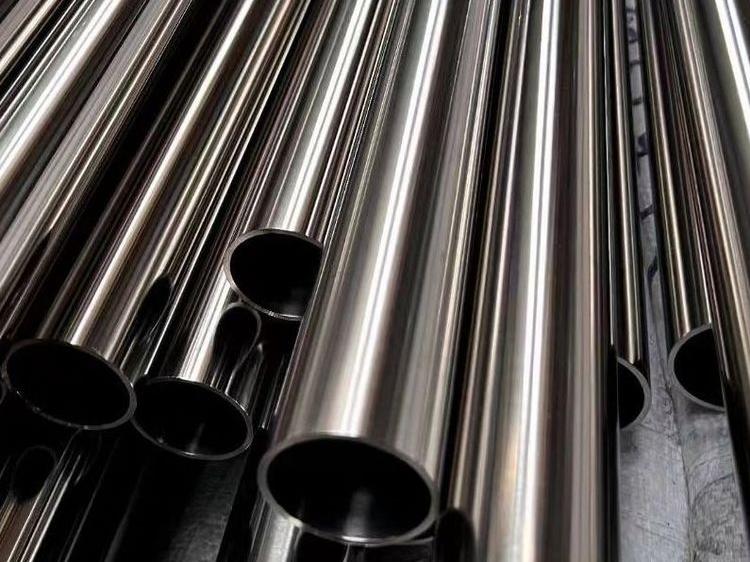
Stainless Steel Pipe
Outer Diameter(OD): 6mm – 1219mm
Wall thickness (WT): 1.0mm – 60mm
End Type: Plain end, bevel end
What Is Stainless Steel Pipe?
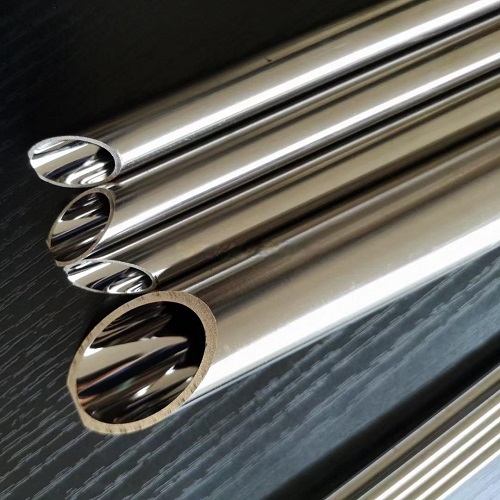
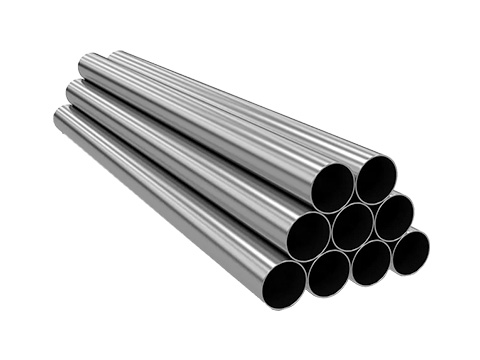
A stainless steel pipe is a hollow cylindrical length of steel alloyed with chromium — at least 10.5% — so it resists rust and corrosion far better than carbon steel. You see it in process plants, on ships, in food lines, and inside buildings. The chromium forms a thin passive film on the surface. When that film is damaged, it reforms automatically in the presence of oxygen, which is why stainless stays cleaner longer than regular pipe.
We differentiate pipe from tube by usage more than by shape. Pipe is sized by nominal diameter and schedule — that is, by what fits standard fittings and valves. Tube is sized by actual outer diameter and wall thickness, and it is the go-to when you are bending, structural, or fitting it into a tight assembly. Both are round. Both come in seamless and welded. Both can be 304, 316, or something more specialized. The difference is in how you buy it and how you join it.
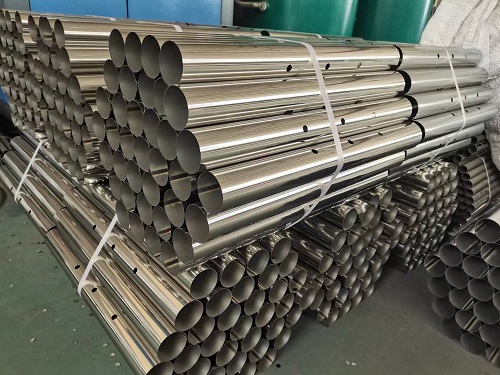
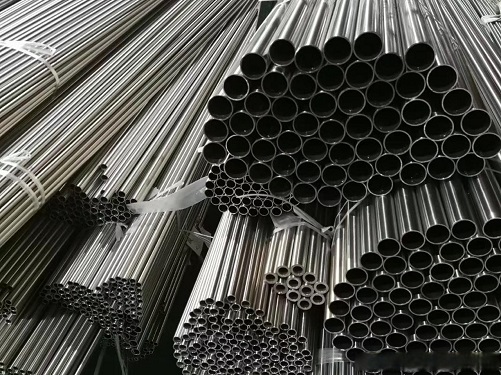
Pipe Size and Weight Reference
Stainless pipe is sold by nominal bore, schedule, and length. Nominal bore is a label, not the actual diameter. The outside diameter is fixed for a given NPS, and the wall thickness grows with schedule number. That is why a NPS 4 SCH 40 and a NPS 4 SCH 80 have the same OD but very different weights and pressure ratings.
Below is a quick reference for common sizes in SCH 10s through SCH 160s. The weights are for 304/316 (density 7.93 g/cm³). For 430, knock about 3% off. For duplex 2205, add about 1%.
| NPS (inch) | OD (mm) | SCH 10s WT (mm) | Weight kg/m | SCH 40s WT (mm) | Weight kg/m | SCH 80s WT (mm) | Weight kg/m |
|---|---|---|---|---|---|---|---|
| 1/2 | 21.3 | 1.65 | 0.97 | 2.77 | 1.56 | 3.76 | 2.09 |
| 3/4 | 26.7 | 1.65 | 1.26 | 2.87 | 1.99 | 3.91 | 2.65 |
| 1 | 33.4 | 1.91 | 1.81 | 3.38 | 3.10 | 4.55 | 4.09 |
| 1 1/2 | 48.3 | 2.11 | 2.88 | 3.68 | 4.89 | 5.08 | 6.58 |
| 2 | 60.3 | 2.11 | 3.74 | 3.91 | 6.62 | 5.54 | 9.14 |
| 3 | 88.9 | 2.77 | 6.75 | 5.49 | 12.6 | 6.35 | 14.3 |
| 4 | 114.3 | 3.05 | 9.63 | 6.05 | 18.0 | 8.05 | 23.5 |
| 6 | 168.3 | 3.40 | 15.5 | 7.11 | 30.5 | 10.97 | 45.6 |
| 8 | 219.1 | 4.78 | 29.7 | 8.18 | 48.9 | 12.70 | 72.7 |
| 10 | 273.1 | 5.08 | 40.0 | 9.27 | 69.6 | 15.09 | 108 |
| 12 | 323.9 | 6.35 | 58.5 | 11.07 | 97.4 | 17.48 | 149 |
| 18 | 457.2 | 6.99 | 84.7 | 13.49 | 158 | 21.44 | 242 |
| 24 | 609.6 | 8.74 | 149 | 17.48 | 287 | 26.19 | 417 |
To estimate weight without a table, use this formula for meters per kilogram by dividing the square of the OD in mm by the wall in mm, then multiplying by 0.02466. For a quick yard estimate, a NPS 4 SCH 40 304 pipe runs about 18 kg per meter, and a NPS 8 SCH 40 runs about 49 kg per meter.
Standards and Certifications
When you order stainless pipe, the standard tells the mill what to check and what tolerances to hold. Mismatched standards are a common source of surprise on site.
| Standard | Scope | Typical use |
|---|---|---|
| ASTM A312 | Seamless and welded austenitic chromium–nickel stainless steel pipe | Process, power, chemical, oil & gas |
| ASTM A269 | Seamless and welded austenitic stainless steel tubing for general service | Heat exchangers, condensers, structural |
| ASTM A213 | Seamless ferritic and austenitic alloy-steel furnace tubes | Boilers, heat exchangers, superheaters |
| EN 10216-2 | Pressurised purposes — non-alloy and alloy steel pipes | European projects, PED compliance |
| EN 10217-2 | Welded steel pipes for pressure purposes | European welded pipe spec |
| JIS G3459 | Stainless steel pipes for general structure | Japanese equipment and plant |
| ASME B36.19 | Dimensional table for stainless pipe | Reference for NPS and SCH sizes |
Seamless vs Welded Pipe
This is the decision that affects price and performance the most.
| Feature | Seamless | Welded (ERW / Austenitic) |
|---|---|---|
| How it is made | Pilger mill or extrusion from a solid billet | Formed and welded along a longitudinal seam |
| Homogeneity | No seam, uniform cross-section | Weld zone is a metallurgical difference to manage |
| Pressure rating | Generally higher for a given size and schedule | Good, but the seam is the weak point under extreme cyclic load |
| Surface quality | Inside can be rougher unless reamed | Smooth inside and out after finishing |
| Size range | Up to about 323.9 mm OD as standard, larger on request | Wide range, up to 1219 mm OD and beyond |
| Cost | Higher, because of more processing | Lower, especially in larger diameters |
| Lead time | Longer for non-stock sizes | Shorter for standard sizes |
Seamless is the default for high pressure, high temperature, and aggressive service. Think hydraulic lines, boiler tubes, and chemical process piping. Welded austenitic pipe is what you see in food, water, architecture, and general plant service where the pressure is moderate and the inside finish matters. If you are unsure, ask us which route fits your pressure, temperature, and fluid. The right choice is rarely the most expensive one.
Grades We Supply
The grade sets corrosion resistance and strength. Here is what we keep in coil, plate, and pipe form, and where each one belongs.
| Grade | Type | Key features | Best for | Avoid |
|---|---|---|---|---|
| 304 / 304L | Austenitic | 18% Cr, 8% Ni, low carbon L version | General process, food, architecture. The default pipe grade. | Heavy chlorides, marine immersion |
| 316 / 316L | Austenitic, 2–3% Mo | Molybdenum boosts resistance to chlorides and many acids | Coastal, chemical, pharma, offshore, desalination | Warm stagnant seawater (step up to duplex) |
| 321 | Austenitic, Ti-stabilized | Titanium prevents intergranular corrosion after welding | High temperature exhaust, continuous heat up to about 800°C | Cold general service where 304L is cheaper |
| 310S | Austenitic, high Cr/Ni | Excellent heat and oxidation resistance | Furnace parts, heat exchangers, annealing boxes | Routine piping (over-spec and pricey) |
| 2205 (duplex) | Duplex | Roughly twice the yield of 304, good chloride resistance | Oil & gas, chemical, seawater cooling, pulp & paper | Light-duty indoor use (cost not justified) |
| 2507 (super duplex) | Duplex, higher alloy | Superior stress-corrosion and pitting resistance | Severe offshore, sour service, high chloride plants | Non-corrosive service |
| 904L | Austenitic, super-austenitic | Very high alloy for aggressive acids | Sulfuric, phosphoric, acetic acid service | General water service |
| 430 | Ferritic, no nickel | Magnetic, cheaper, decent atmospheric resistance | Decorative, dry indoor, exhaust trim | Wet, food-contact, or exterior marine |
304L and 316L are the low-carbon versions. The ‘L’ means carbon is capped at 0.03% instead of 0.08%, which reduces the risk of sensitization when you weld. If the pipe will be welded in service or during installation, spec the L grade. If it stays bolted or mechanically joined, regular 304 or 316 is fine.
Surface Finishes
The finish affects hygiene, pressure drop, and appearance. Inside finish matters most for process and food piping. Outside finish matters for architecture and exposed plant.
- Mill finish: As-produced. Industrial use only.
- Pickled: Acid treated to remove scale after annealing. The standard for process pipe.
- Bright annealed: Heated in a controlled atmosphere so no scale forms. Very clean, good for food and pharma.
- Ground outside: For visible architectural pipe where weld seam and scale must be removed.
- Polished inside and out: For sanitary process lines. Ra values are specified per client request.
For drinking water and food, pickled or bright annealed is usual. For chemical service, pickled is enough unless the product is very sensitive. For architecture, ground or polished gives the look people expect.
Key Advantages
- Corrosion resistance without paint or coating in most environments.
- High strength to weight, especially duplex grades, which lets you use thinner walls.
- Clean surface that resists biofilm buildup in food and pharma lines.
- Long service life with low maintenance, often decades in the right grade.
- Weldable with standard TIG and MIG methods across the austenitic range.
- Heat and cold resistant, so the same pipe can serve process and cryogenic service.
- Recyclable at end of life with no loss of properties.
Where Stainless Steel Pipe Is Used
| Sector | Typical service | Common grade |
|---|---|---|
| Oil & gas | Gathering lines, produced water, offshore | 316L, 2205, 2507 |
| Chemical & pharma | Process piping, CIP lines, acid transfer | 316L, 904L, 2205 |
| Food & beverage | Dairy, brewery, bottling, sanitization | 304L, 316L, bright annealed |
| Power generation | Boiler feed, condenser, superheater | 304H, 321, 310S |
| Marine & offshore | Seawater cooling, ballast, deck piping | 316L, 2205 |
| Construction | Handrails, structural, facade support | 304, 316, ground finish |
| Water treatment | Desalination, reverse osmosis, effluent | 316L, duplex |
| Pulp & paper | Black liquor, bleach plant, digesters | 2205, 2507, 904L |
One practical note on marine and desalination service: 316L is good, but warm, stagnant, or high-chloride water will attack it over time. Duplex 2205 or super duplex 2507 is the usual step up, and it cuts weight because you can use a thinner wall for the same pressure rating. That is the same logic we apply when we move from 304 to 316 on the equipment side, as explained in our 304 vs 316 brewery tank comparison.
FAQ
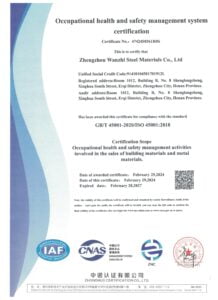
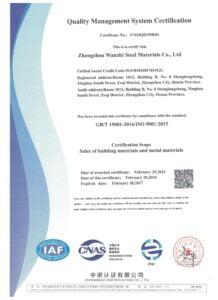
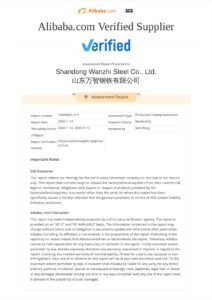
Our Certificates


Why Wanzhi Group
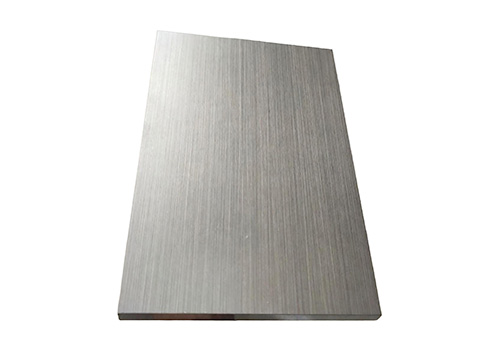
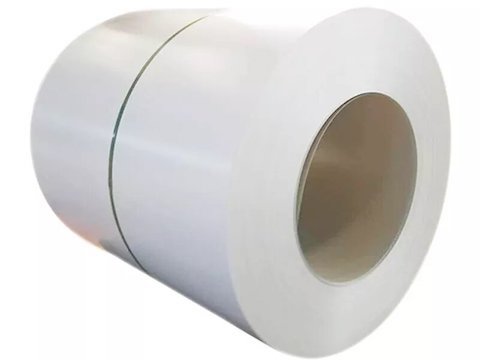
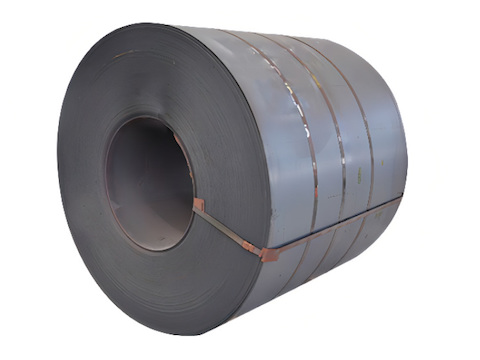
We make the steel and we make the equipment, so the pipe you buy is the same material our tank division fabricates. That traceability matters when a spec fails and you need to know where the heat came from. We stock 304, 316L, 321, 2205, 2507 and 904L in common sizes, cut and process to order, and ship against EN 10204 3.1 mill certificates with PMI verification. If you are already buying cold rolled stainless sheet, hot rolled plate, or 304, 316, 430 sheet from us, the pipe comes from the same mill relationship. Browse the full catalogue at all products or the stainless steel category.
From Pipe to Finished Equipment
A lot of the pipe we ship ends up as the skeleton of a larger system. Our sister company builds stainless equipment, and the stainless steel tanks they make, from fermentation tanks to jacketed mixing tanks and heating and cooling tanks, are fabricated from the same 304 and 316L pipe and sheet we stock. If you need the material and the fabricated vessel from one source, that is the setup we offer. The 304 vs 316 brewery tank piece on the equipment side goes into the molybdenum and chloride reasoning in more detail.
Contact us
Company: Erqi District, Zhengzhou City, Henan Province, China
Factory: Binzhou City, Shandong Province, ChinaList item
E-mail: info04@wanzhisteel.com
WhatsApp: +86 18736065220
Website: https://wanzhisteels.com

Hot Tags: stainless steel tube, ss pipe, Seamless Stainless Steel pipe, 316L stainless pipe, 304 stainless pipe supplier, 316l stainless pipe, astm a312 pipe, manufacturers, suppliers, factory, price


 English
  Русский
  العربية
  Español
  Français
  فارسی
فارسی  繁體中文
繁體中文  O‘zbekcha
  Tiếng Việt
  Українська
  Türkçe
  ไทย
ไทย  日本語
日本語  한국어
한국어  简体中文
简体中文