
Q235B vs Q355B is the grade decision behind almost every steel structure workshop enquiry. Both grades are weldable, both roll into H-sections, and both appear on Chinese mill certificates. Yield strength is where they part company: 235 MPa for Q235B and 355 MPa for Q355B in material up to 16 mm thick. That gap changes the member size, the welding procedure, the tonnage and the price of a frame. Contractors and factory owners ask the same question in different words, namely whether the stronger grade pays for itself on their span and their crane load. The short answer sits in the thickness table below. What matters next is which check governs the member and what the certificate has to say on delivery day.
Wanzhi Steel supplies both grades in rolled and welded sections. Numbers here come from GB/T 700-2006 and GB/T 1591-2018, cross-checked against the product pages linked below. Design values still belong to the project engineer, so treat this as a selection guide rather than a structural calculation.
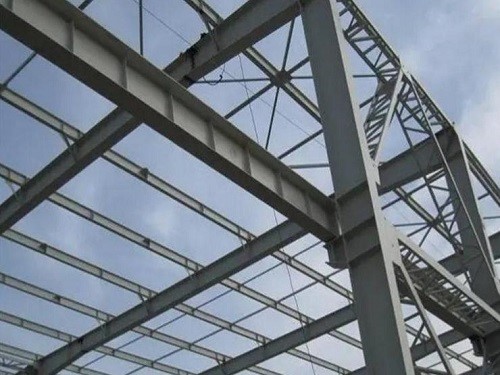
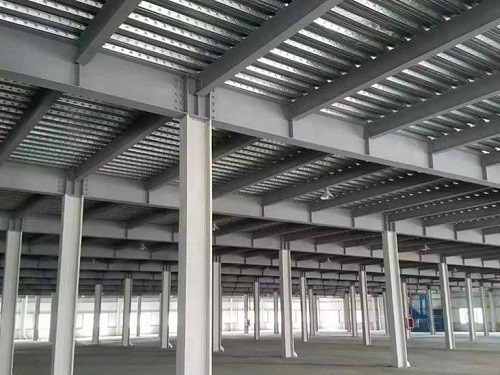
what the grade numbers mean
reading Q235B and Q355B
Q stands for qu, the Chinese term for yield. The three digits give the minimum yield strength in MPa for the thinnest thickness band, while the letter B sets the impact test at plus 20 degrees C. GB/T 700-2006 covers Q235B as a plain carbon structural steel. Under GB/T 1591-2018, Q355B belongs to the high strength low alloy group, where small additions of niobium, vanadium or titanium raise strength without a large carbon increase.
why Q355B replaced Q345B
GB/T 1591-2018 replaced the older Q345 designation with Q355, which lines the Chinese grade up with EN 10025-2 S355 and makes cross-border substitution easier to document. Chemistry and mechanical properties stayed close to the old grade. Export buyers now see Q355B on quotations and mill certificates where Q345B used to appear, so a drawing that still calls for Q345B needs written confirmation before anyone orders.
Grade suffixes describe toughness, not strength. B is tested at plus 20 C, C at 0 C, D at minus 20 C and E at minus 40 C. Specifying Q355B for a heated factory in a mild climate is routine; putting the same B grade into an unheated cold store is a different decision. Section forms for either grade are listed on our steel profiles page.
yield and tensile strength by thickness
the numbers from the two standards
Both standards reduce the guaranteed yield as the section gets thicker, because slower cooling and coarser grain in heavy plate lower the measured value. Designers who copy 355 MPa from a brochure into a 40 mm flange are using a number that no longer applies to that thickness. The table gives minimum values in MPa for hot rolled material; exact band limits differ slightly between the two standards, so the mill certificate is the final reference.
| Thickness | Q235B min yield | Q355B min yield | Q235B tensile | Q355B tensile |
| up to 16 mm | 235 | 355 | 370 to 500 | 470 to 630 |
| over 16 to 40 mm | 225 | 345 | 370 to 500 | 470 to 630 |
| over 40 mm | 215 (to 60 mm) | 335 (to 63 mm) | 370 to 500 | 470 to 630 |
Values are minimums in MPa under GB/T 700-2006 for Q235B and GB/T 1591-2018 for Q355B; confirm the delivered figures against the MTC.
what the 51 percent gap really buys
Dividing 355 by 235 gives roughly a 51 percent increase in yield strength. Supplier comparison pages tend to stop there. Bearing capacity does not scale the same way. Stiffness comes from the elastic modulus and the section geometry rather than from the grade, so a Q355B beam of identical size deflects about as much as a Q235B beam under the same service load. Strength helps where stress controls, and it does nothing for a deflection limit or a slender column that buckles first.
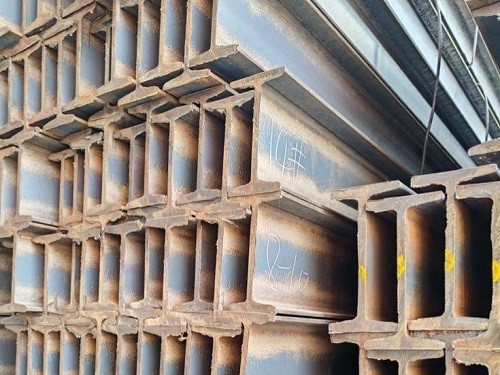
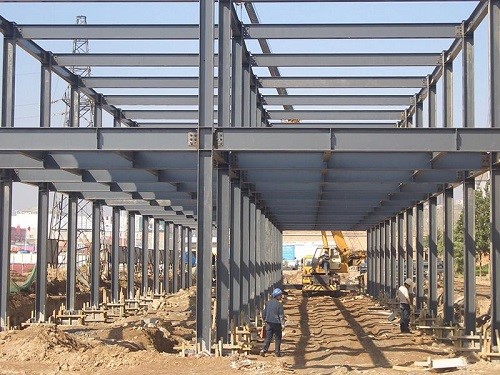
how the grades behave in beams and columns
where strength governs
Short, heavily loaded members are where the higher grade earns its keep. Crane beams, column bases under high axial load, deep girders over a long span and joints carrying concentrated loads all reach the yield limit before they reach a serviceability limit. Switching to Q355B lets the engineer keep the section and gain capacity, or keep the capacity and cut section weight. Welded H beams in Q355B cover depths outside the rolled range, and our Q355B welded H beam page lists the sizes, the 355 MPa minimum yield and the 15 ton minimum order.
where deflection and buckling govern
Long span roof beams in a portal frame often fail the deflection check while the stress is still well below yield. Columns fail by buckling, which depends on slenderness and section shape. GB 50017-2017 covers both checks, and neither one improves when the certificate changes from 235 to 355. Buyers who pay a premium for Q355B on a deflection controlled frame only get a lighter frame if the designer reworks the sections, not by swapping the grade on the bill of materials. Our H-beam vs I-beam comparison explains how section shape changes that same buckling behaviour.
how to choose a grade for a workshop project
questions to settle before the grade
Start with the span, the column spacing and the crane tonnage, since these set the bending moment and the axial load. Note whether the building is heated, whether the site sees sub zero temperatures, and whether any member carries dynamic or fatigue loading. Cheaper quotations sometimes list “structural steel” with no grade at all, which is the most common trap in the enquiries we see. The hot rolled coil and hot rolled H-section pages show the supply forms those questions apply to.
match the grade to the member
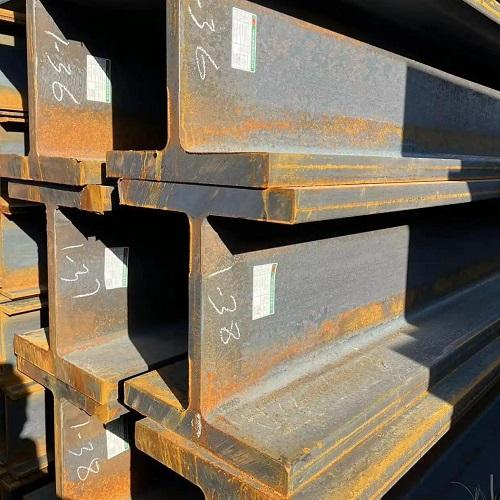
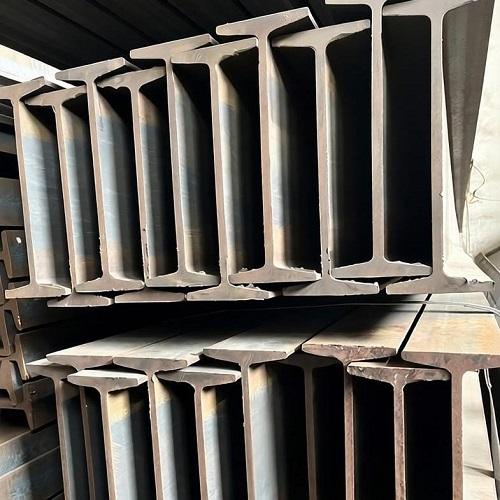
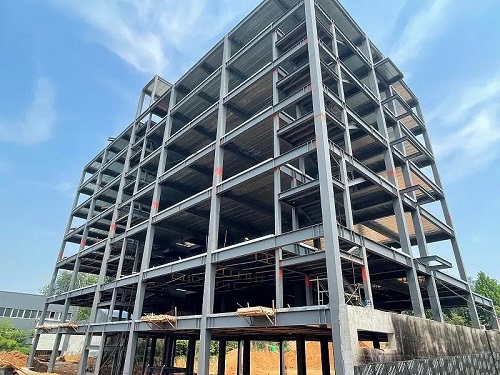
Light single storey workshops, mezzanines, platforms, stairs and secondary bracing suit Q235B, where easy welding and low price matter more than spare strength. Main beams and columns in a long span factory, a building with a 10 t or heavier crane, or a frame carrying suspended conveyors point to Q355B. Mixed frames are common and sensible: Q355B on the primary members, Q235B on carbon steel channel, angle steel and other secondary parts. Lighter rolled sections are listed on our I beam steel and I-beam pages.
fabrication, welding and temperature
welding and preheat
Low carbon content makes Q235B forgiving in the shop: ordinary consumables, no preheat at normal thickness, and little risk of cold cracking. Q355B carries a higher carbon equivalent because of the microalloying, so thick flanges and webs call for low hydrogen consumables and a preheat step agreed in the welding procedure. Winter erection and restrained joints push the same requirement further. Fabricators should settle the procedure before the material is cut, not after the first crack appears. Our hot rolling and cold rolling guide explains why the as-rolled condition matters here.
impact grade and service temperature
Choose the suffix from the site rather than from the price list. B grades are impact tested at plus 20 C, which suits a heated plant in a temperate region. Unheated buildings in cold regions need C, D or E grades tested at 0 C, minus 20 C or minus 40 C. Rolled sections in those grades are listed on the hot rolled H-section steel page.
cost, tonnage and what the quote hides
price per tonne versus cost per frame
Q355B costs more per tonne than Q235B, and the premium moves with the market, so a fixed number would be wrong within a month. Total cost moves on tonnage, fabrication, transport and foundations. Where stress governs, a lighter Q355B section can reduce steel weight, cut freight and shrink foundation loads. When deflection governs, the section stays the same size and the only change is a higher invoice.
when Q235B stays cheaper
Small spans, light roofs and secondary members rarely use the extra strength, so the cheaper grade wins on those line items. Mixed purchasing also protects the schedule, since Q235B sections are stocked more widely. Ask for two priced bills of materials, one in each grade, and compare total tonnage rather than the per tonne figure. Equivalent materials such as S355 hot rolled plate and ASTM A36 plate sit in the same carbon alloy steel category if the project follows EN or ASTM instead of GB.
paperwork, acceptance and common traps
what the mill certificate must show
Every batch should arrive with a mill test certificate naming the grade, heat number, thickness, chemical analysis, yield and tensile results and the impact test temperature. GB 50205-2020 governs acceptance of the fabricated structure, and the certificate is what ties a delivered bundle back to a tested heat. Third party inspection and a retest clause in the contract are reasonable requests on a large order.
traps seen in workshop enquiries
Several problems recur in workshop enquiries. Quotes that name no grade let a supplier ship whatever is in stock. Drawings that still say Q345B cause disputes when the certificate says Q355B. Thick sections specified with thin-section yield values produce a design that does not match the delivered plate. Put the grade, the suffix and the thickness band into both the drawing and the purchase order.
how Wanzhi supplies both grades
sections available
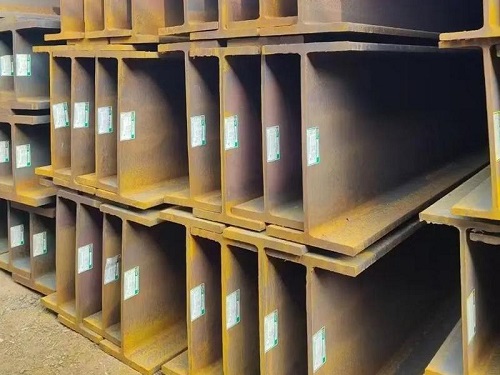
We supply hot rolled H-section steel listed in Q235B and Q355B alongside A36, A992 and A572 Grade 50, plus Q355B welded H beams for depths outside the rolled range and Q235B carbon steel channel for secondary members. Sizes run from 100 to 900 mm in rolled H-sections and 200 to 1500 mm in welded H beams, with minimum orders of 10 and 15 tons respectively and lead times of 7 to 15 working days as listed on those pages. Use those figures in the enquiry; the offer and the mill certificate settle the rest.
what to send with the enquiry
Send the span, column spacing, crane tonnage, design standard, grade suffix, section list and destination port. Our team prices the bill of materials in both grades and marks which members actually need the higher strength. Use the contact page for a quote, or browse the full product range first if the frame is still at concept stage.
FAQ
Is Q355B stronger than Q235B?
Yes, by roughly 51 percent on minimum yield strength at up to 16 mm thickness, 355 MPa against 235 MPa. Both figures drop as thickness increases.
Can Q355B replace Q235B on the same section size?
Structurally it can carry more, but substitution on a signed drawing needs engineer approval, and it does not cure a deflection or buckling failure.
Does a higher yield strength reduce beam deflection?
No. Elastic modulus is effectively the same for both grades, so deflection depends on section geometry and load, not on the grade.
What is Q355B equivalent to in EN and ASTM standards?
S355JR under EN 10025-2 and ASTM A572 Grade 50 are the usual cross-references. Q235B is broadly comparable to S235JR or ASTM A36 class material. Substitution still needs design approval.
Which grade suits a workshop with an overhead crane?
Q355B is the normal choice for primary beams and columns once crane loads are involved, because stress rather than deflection governs those members. Secondary parts can stay Q235B.
When is preheat needed for Q355B welding?
Thick flanges, restrained joints and cold site conditions call for low hydrogen consumables and preheat. Agree the exact temperature in the welding procedure qualification rather than taking a figure from a blog.
Where does the B suffix come from?
The letter sets the impact test temperature at plus 20 C for both grades. C, D and E move that test to 0 C, minus 20 C and minus 40 C.
How should the mill test certificate be checked?
Match the grade, suffix, heat number and thickness band to the purchase order, then check the yield, tensile and impact results against the standard named on the drawing.Match the grade, suffix, heat number and thickness band to the purchase order, then check the yield, tensile and impact results against the standard named on the drawing.
Request a quote
Email: [email protected]
WhatsApp: +86 18736065220
Company: Erqi District, Zhengzhou City, Henan Province, China
Factory: Binzhou City, Shandong Province, China
 English
 Русский
 العربية
 Español
 Français
 فارسی
 繁體中文
 O‘zbekcha
 Tiếng Việt
 Українська
 Türkçe
 ไทย
 日本語
 한국어