
Specifying the wrong coating on a color coated steel project is rarely a visible mistake on day one — but it is an expensive one by year five. A roof that chalks white under the sun, a façade that fades to a patchy, uneven tone, a wall panel that cracks along the bend after a cold winter: these are the classic symptoms of a coating chosen for price instead of environment. If you are weighing PE vs SMP vs HDP vs PVDF, you are already asking the right question. The difference between these four resin systems decides whether your building still looks new at year three or at year twenty-three — and whether you re-coat on your own budget or on your client’s patience.
This guide is written for international buyers, distributors, architects and contractors who procure prepainted coils and sheets from Chinese mills and need a neutral, fact-based way to match coating chemistry to real site conditions. We are supplier-neutral: the most expensive resin is not always the right answer, and the cheapest is rarely the safe one. One thing worth saying up front: the re-coat bill almost never lands on the supplier’s desk — it lands on yours.
Key Takeaways
- Coating is the single biggest driver of appearance life. PE lasts 7–10 years, SMP 10–15, HDP 15–20, and PVDF 20–25+ years in realistic service.
- Flexibility runs opposite to durability. PE bends best (T1–T2); PVDF bends worst (T4–T5) and can crack on deep-formed parts.
- PVDF has a trap. Genuine PVDF resin content should be ≥70% (70/30 resin/ceramic). Many suppliers substitute 50/50 or lower and still invoice it as “PVDF.”
- Substrate matters as much as coating. Coastal and industrial sites need Galvalume (AZ150) under a PVDF top coat, not bare galvanized steel.
- Cheapest is usually costliest. On a 1,000 m² roof, PE re-coated at year 8 often costs more over 15 years than HDP or PVDF bought once.
- Write the microns into the contract. Top coat 20 µm minimum (25 µm for premium), back coat 8–10 µm, confirmed by a third-party film-thickness report.
1. Why Coating Selection Determines Your Project’s Service Life
Color coated steel is not “steel with paint.” It is a precision-built, multi-layer system whose outermost film is the only thing standing between your substrate and the sky. When that film loses gloss, chalks, or cracks, corrosion begins at the cut edge and the panel’s structural protection is compromised long before the steel itself fails.
The four dominant resin families in the global PPGI/PPGL market are polyester (PE), silicone-modified polyester (SMP), high-durable polyester (HDP), and polyvinylidene fluoride (PVDF). They sit on a clear ladder of durability and price. The table below is the single most useful reference you will use when scoping a project.
In a moderate climate, typical exterior service life ranks as follows: PE 7–10 years, SMP 10–15, HDP 15–20, and PVDF 20–25+ years — durability climbs as flexibility falls.
| Coating | Typical service life (exterior, moderate climate) | AAMA grade |
|---|---|---|
| PE (Polyester) | 7–10 years | 2604 (typical) |
| SMP (Silicone Modified Polyester) | 10–15 years | 2604 |
| HDP (High Durable Polyester) | 15–20 years | 2604 |
| PVDF (Polyvinylidene Fluoride) | 20–25+ years | 2605 |
FOB China, 0.5 mm / Z100-equivalent baseline. Prices fluctuate with resin and zinc costs; treat as planning ranges.
The gap between PE at ~8 years and PVDF at ~23 years is not just a number — it is the difference between one and three re-coating cycles over a building’s life. For a deeper look at the base product, see our overview of prepainted galvanized steel coil (PPGI).
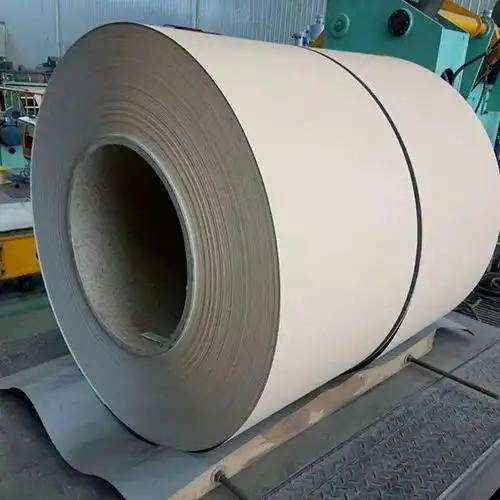
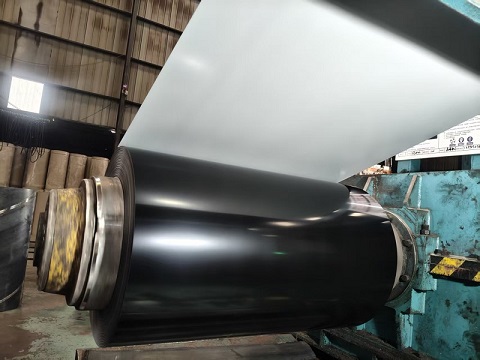
PE Coated
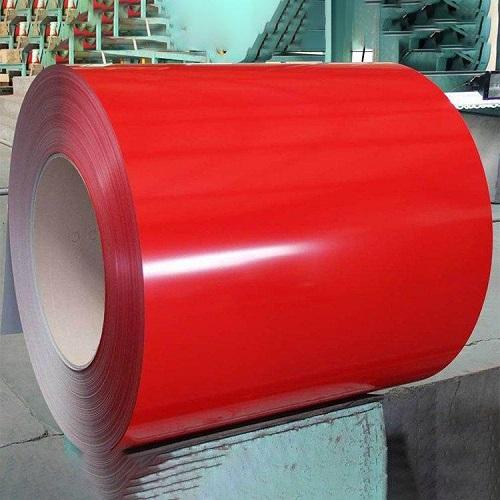
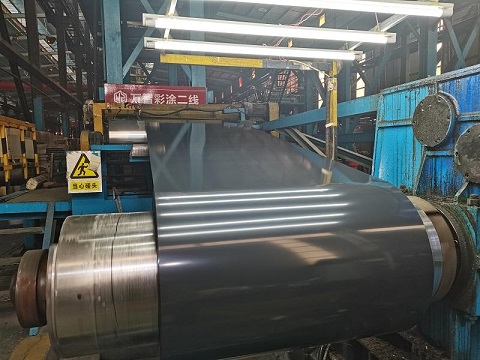
HDP Coated
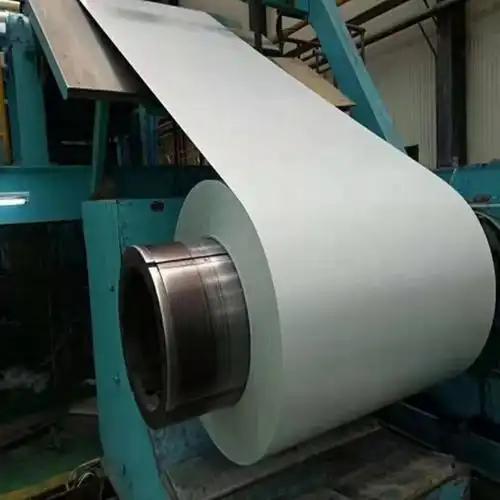
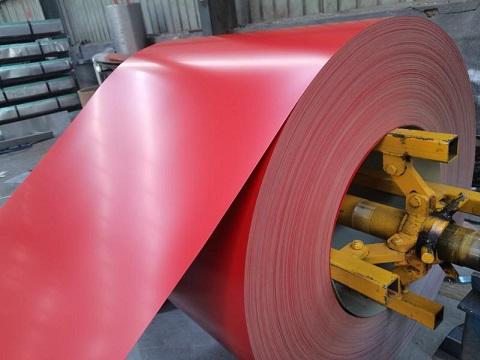
SMP Coated
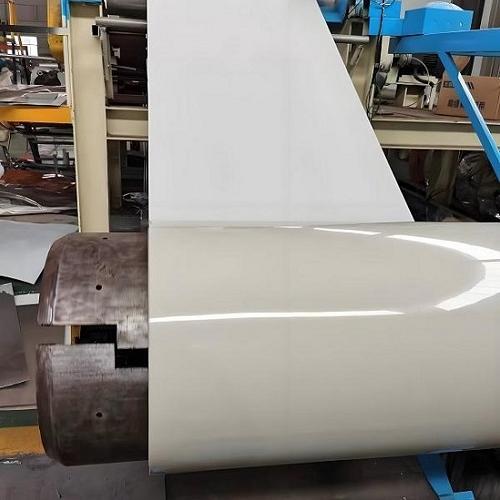
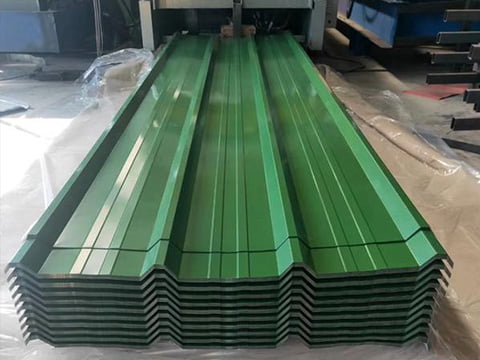
PVDF Coated
2. Understanding the Color Coated Steel Structure
Before comparing resins, understand what you are actually buying. Quick decode: GI = galvanized (zinc-only coating); GL / Galvalume = aluminium-zinc alloy (far better at the cut edge). A coil of color coated steel is a five-layer laminate, each layer with a job:
- الركيزة — galvanized (GI) or galvalume (GL/Galvalume) steel strip. This is the corrosion backbone.
- Chemical pretreatment — chromate-free conversion coating that bonds paint to metal and slows under-film creep.
- Primer — the adhesion and corrosion-inhibition layer between pretreatment and top coat.
- Top coat (finish) — the decorative, UV-resistant film (PE, SMP, HDP or PVDF). This is what buyers argue about.
- Back coat — the reverse-side film, often a thinner epoxy or polyester, protecting the unseen face.
The substrate choice interacts with the coating choice. GI (galvanized) suits ordinary inland work: a zinc layer sacrifices itself to protect the steel. GL / Galvalume (AZ50–AZ150) replaces most zinc with an aluminium-zinc alloy, giving markedly better cut-edge and atmospheric corrosion resistance — essential near coasts and in industry. Our galvanized steel substrate (GI) guide explains the metallurgy, and the GI and GL steel coil substrate comparison covers when to step up to galvalume.
A useful mental model: coating protects appearance; substrate protects structure. A PVDF top coat over weak GI still fails at the edge in a salt-spray climate. The right answer is almost always coating و substrate specified together.
3. PE (Polyester) Coating: The Cost-Effective Standard
Polyester is the workhorse of the color coated steel world — the default resin on the majority of architectural and general-purpose coils. Its chemistry gives it the best flexibility of the four families: typical T-bend performance of T1–T2, meaning it survives tight bends, deep drawing and roll-forming with minimal risk of micro-cracking.
That flexibility is exactly why PE dominates applications with complex shaping: sandwich panels, deep corrugated profiles, appliance bodies and interior partitions. PE also takes color and gloss well and is the cheapest resin per ton.
The trade-off is durability. Under sustained UV, standard PE loses gloss and chalks — a permanent, powdery white bloom on the surface (the resin has literally broken down; it cannot be washed off) — within roughly 7–10 years in exterior service, and color shifts noticeably. It is the wrong choice for a sun-exposed roof in a high-UV region, but it is the right choice for a budget-limited project that must be formed into tight shapes. We will say it plainly: if your job is “limited budget + needs forming,” PE is the correct answer, not a compromise you should apologize for.
4. SMP (Silicone Modified Polyester): Hardness and Heat Resistance
SMP modifies polyester with silicone (typically 10–30% silicone content) to lift two properties PE lacks: surface hardness and heat resistance. The result resists abrasion, scuffing and thermal aging better than straight PE, which is useful for touch-prone surfaces and moderately hot environments.
The cost is flexibility. SMP typically performs at T3–T4 on the T-bend scale — a noticeable step down from PE. Over-bend it and you invite hairline cracks at the forming line. sap’s service life lands at 10–15 years, sitting just above PE and below HDP, while its price band ($845–960/ton) actually sits above HDP in many Chinese mills’ books because silicone resin is costly. For that reason SMP is increasingly a niche choice — specified when hardness/heat matter more than bendability, and less often when the buyer simply wants “more life for the money” (where HDP wins).
5. HDP (High Durable Polyester): The Value Sweet Spot
HDP is the resin most often recommended by experienced mills when a buyer says “I want PVDF-like life without PVDF price.” By tuning polyester chemistry and pigment loading, HDP reaches roughly 60–80% of PVDF’s weathering performance while costing about the same as — or a little more than — standard PE.
Realistic exterior life is 15–20 years, with far better gloss and color retention than PE under sun. Flexibility stays respectable at T2–T3, so it handles most roll-forming and moderate profiling without cracking. At $775–875/ton it is the best value in the entire range for the majority of commercial and institutional buildings.
If you remember one recommendation from this guide, make it this: for a typical building façade or roof in a normal-to-hot climate, HDP over a sound substrate is the rational default. It is the sweet spot where durability, formability and price cross. See specifications and available widths for HDP color coated steel coil.
6. PVDF (Polyvinylidene Fluoride): Premium Performance for Harsh Environments
PVDF is the premium end of the ladder and earns it through chemistry. The carbon–fluorine (C–F) bond is one of the strongest in organic chemistry, so a PVDF top coat shrugs off UV, chemicals and pollutants that destroy softer resins. Properly made PVDF holds color and gloss for 20–25+ years and meets AAMA 2605 performance requirements (now maintained by FGIA), the highest durability class for architectural coatings.
What is the PVDF 70/30 vs 50/50 trap?
This is the warning buyers most often miss. Genuine, warrantied PVDF is a 70/30 resin-to-ceramic (pigment) blend — about 70% Kynar 500 / Hylar 5000 PVDF resin and 30% ceramic pigment. That resin ratio is what delivers AAMA 2605 performance.
Many suppliers invoice “PVDF” at a 50/50 blend, or even lower resin content padded with cheaper polyester, and the panel looks identical on the truck. But a 50/50 film loses color and gloss years earlier and will not pass AAMA 2605. Before you pay PVDF prices, confirm the resin brand (Kynar 500 or Hylar 5000) and the ≥70% resin content in writing, backed by a resin certificate from the resin maker — not just the mill’s word. See the questions to ask before you approve a PPGI spec for a full pre-order checklist.
The flexibility limitation
PVDF is also the least flexible of the four: typical T4–T5 performance. In cold weather, a deeply formed PVDF part can crack at the bend. There is a real case of a cold-storage roof in coastal Vietnam — a tightly rolled profile deeper than 25 mm — where a client specified PVDF, watched hairline cracks appear after a single cool season, and had to accept PE or HDP for the re-order. If the part is deep-drawn or tightly bent, PVDF may be the wrong resin regardless of budget.
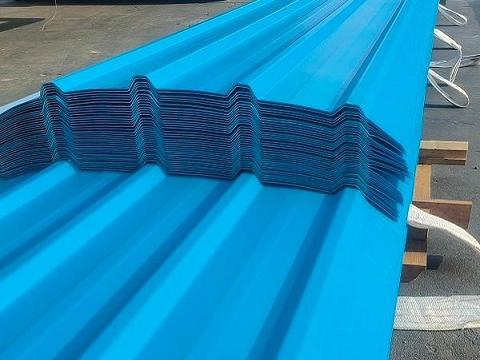
PE PPGI board
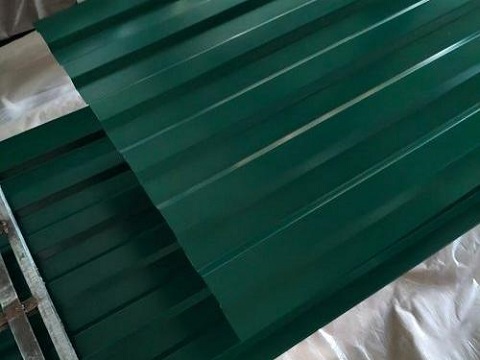
HDP Coated Roof sheet
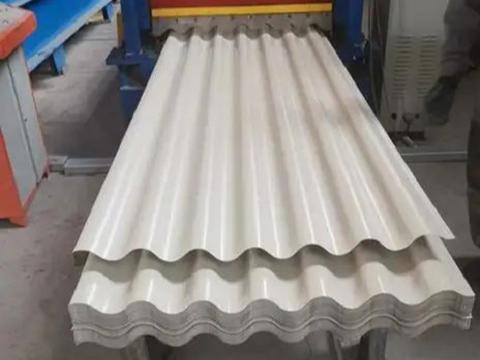
PVDF PPGL Roofing
7. Head-to-Head Comparison: PE vs SMP vs HDP vs PVDF
The table below puts all four resins side by side across twelve decision dimensions. Scan the rows and a clear trade-off emerges: durability climbs as flexibility falls.
| Dimension | PE | SMP | HDP | PVDF |
|---|---|---|---|---|
| 1. Resin chemistry | Saturated polyester | Polyester + silicone | Enhanced polyester | PVDF (Kynar/Hylar) |
| 2. Service life | 7–10 yrs | 10–15 yrs | 15–20 yrs | 20–25+ yrs |
| 3. Flexibility (T-bend) | T1–T2 (best) | T3–T4 | T2–T3 | T4–T5 (worst) |
| 4. UV / chalk resistance | Fair | Good | Very good | Excellent |
| 5. Color retention | Fair | Good | Very good | Excellent |
| 6. Hardness / abrasion | Fair | Good | Good | Good |
| 7. Heat resistance | Fair | Good | Good | Excellent |
| 8. Gloss retention | Fair | Good | Very good | Excellent |
| 9. AAMA grade | 2604 | 2604 | 2604 | 2605 |
| 10. FOB China price | Low | Medium | Medium | High |
| 11. Best use case | Formed/low-budget | Hard/heat surfaces | Best all-round value | Harsh/long-life |
| 12. Watch-out | Chalks by yr 8 | Poor bendability | Slightly less life than PVDF | 50/50 fake; cracks if bent |
*0.5 mm / Z100-equivalent baseline.
The flexibility reverse trade-off
Notice the diagonal: PE bends best, PVDF bends worst. Every step up the durability ladder is a step down the formability ladder. This is why a single “use PVDF everywhere” rule is wrong — and why a supplier who defaults to PVDF for every part may be oversimplifying your spec.
FOB China price reference
| Coating | Price band (USD/ton) | vs PE premium |
|---|---|---|
| PE | $675–775 | baseline |
| HDP | $775–875 | +15–25% |
| SMP | $845–960 | +25–40% |
| PVDF | $1,015–1,200 | +50–75% |
For exact, current mill pricing, request a PPGI coil quote with resin certification.
8. How to Choose: Environment-Based Selection Matrix
Which coating is best for coastal buildings? For coastal and high-humidity sites, specify PVDF over a Galvalume (AZ150) substrate. The aluminium–zinc alloy resists cut-edge salt-spray corrosion that ordinary galvanized steel cannot. PE or bare GI will chalk and fail at the edge within years in a marine environment.
Standards give you the vocabulary; the site gives you the answer. Two reference systems dominate spec sheets:
- EN 10169 (European prepainted steel standard) grades corrosion resistance RC1 (very low) through RC5+ (very high — industrial/coastal) and UV exposure Ruv2 (moderate) through Ruv5 (extreme).
- ISO 12944 gives the familiar C1–C5 corrosion categories used across projects worldwide.
The practical selection combines three axes — coating × substrate × environment — as the matrix below shows.
| Environment / project type | Recommended coating | الركيزة | Standard reference |
|---|---|---|---|
| Inland, low corrosion (warehouse, interior liners) | PE | GI (Z100+) | RC1–RC2, C2 |
| Moderate urban / general exterior | HDP | GI or GL (AZ50) | RC2–RC3, Ruv2 |
| High UV, hot roofs (Middle East) | HDP or PVDF | GL (AZ100+) | Ruv3–Ruv4, C3 |
| Coastal / high humidity (SE Asia, Africa coast) | PVDF | GL (AZ150) | RC4–RC5, Ruv4 |
| Industrial / chemical / severe | PVDF | GL (AZ150) | RC5+, Ruv4–Ruv5 |
| Deep-drawn / tightly roll-formed parts | PE or SMP (avoid PVDF) | GI | T-bend constraint |
Regional climate notes:
- Southeast Asia — high humidity and coastal salt; coastal roofs want GL AZ150 + PVDF, inland warehouses are fine on HDP.
- Middle East — extreme UV and heat dominate; HDP is the value pick, PVDF for prestige/long-life façades.
- Africa — split between coastal (salt, → PVDF/AZ150) and arid interior (heat/UV, → HDP); logistics favor fewer re-coats, so lean durable.
- Latin America — diverse; Andes/cold zones must respect PVDF’s cold-crack limit, tropical coasts follow the coastal rule.
For coastal and high-humidity programs, our prepainted galvalume (PPGL) with AZ substrate page details the galvalume options that pair with PVDF.
9. Total Cost of Ownership: Why the Cheapest Coating Often Costs More
Procurement teams feel the coil price; they rarely feel the re-coat invoice five years later. Model a 1,000 m² roof over a 15-year horizon:
- PE route: material ~$700/ton is cheap, but realistic chalking by year 8 forces a re-coat (scaffold, labor, paint, downtime, lost rent). One re-coat plus the original easily exceeds the PVDF material premium.
- HDP / PVDF route: higher upfront material, but the film survives the full 15 years with no major intervention. The “expensive” coil is the cheaper project.
The crossover is usually around year 6–8.
Beyond that, the PE saving has evaporated and turned negative. Total cost of ownership, not ex-works price, is the number your CFO should approve. The exception remains the formed, low-budget, short-tenure building — where PE’s low entry cost and superior bendability are genuinely the rational choice.
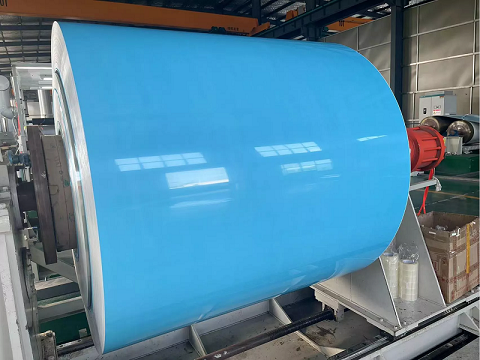
PE PPGI
SMP PPGI
HDP PPGI
PVDF PPGI
10. Specification Checklist: What to Confirm Before You Order
A coating dispute is won or lost in the purchase order, not on site. Confirm and document the following before pay the final payment:
- Film thickness, written as microns. Top coat 20 µm minimum (25 µm for premium/PVDF); back coat 8–10 µm. State “top/back coat microns” explicitly so it cannot be “interpreted.”
- Resin proof for PVDF. Kynar 500 or Hylar 5000 certificate showing ≥70% resin content. Reject “PVDF-type” or unspecified blends.
- Third-party test reports: salt-spray (neutral salt spray hours), T-bend result, gloss retention, and color-difference.
- Standard alignment: EN 10169 RC/Ruv grade, ASTM A755, or AAMA 2604/2605 as applicable to your market.
- Substrate spec: GI Z100/Z140 or GL AZ50/AZ100/AZ150, matching the environment row in the matrix above.
Red flags:
- A PVDF quote far below $1,000/ton with no resin certificate.
- “Top coat 20 µm” stated as a range with no minimum floor.
- Reluctance to provide T-bend or salt-spray data.
- Back coat omitted from the spec entirely.
For corrugated applications specifically, our PPGI corrugated roofing sheet resource covers profile and coating pairing.
Before you pay the final payment, download our one-page PPGI spec sheet — it includes a micron and resin-certificate template you can paste straight into your purchase order.
11. Frequently Asked Questions
Q1. Which coating lasts longest on color coated steel?
PVDF lasts longest at 20–25+ years of exterior service, meeting AAMA 2605. HDP follows at 15–20 years. PE and SMP are shorter-lived at 7–15 years. Longevity also depends on substrate and climate, not coating alone.
Q2. Is PVDF always worth the higher price?
No. PVDF’s premium is justified for coastal, industrial or long-life prestige projects, but it is the least flexible resin (T4–T5) and can crack on deep-formed parts. For a normal building in a moderate climate, HDP delivers most of the benefit at far lower cost.
Q3. What does “70/30 PVDF” mean and why does it matter?
It means 70% PVDF resin (Kynar 500 / Hylar 5000) and 30% ceramic pigment — the blend that earns AAMA 2605. Suppliers sometimes substitute a 50/50 or polyester-diluted mix at PVDF prices; always demand a resin certificate proving ≥70% content.
Q4. Can I use PE on a roof in a hot, sunny climate?
You can, but expect chalking and noticeable color fade within 7–10 years, often sooner under intense UV. For sun-exposed roofs, HDP is the value choice and PVDF the premium one. PE suits formed, budget-limited or short-tenure buildings.
Q5. Does the substrate matter as much as the coating?
Yes. Coating protects appearance; substrate protects structure. Coastal and industrial sites need Galvalume (AZ150) under PVDF. A premium top coat over weak galvanized steel still fails at the cut edge in salt spray.
Q6. What film thickness should I specify in the contract?
Top coat 20 µm minimum, 25 µm for premium/PVDF systems; back coat 8–10 µm. Write “top/back coat microns” into the purchase order and require a third-party film-thickness report before shipment.
Q7. How do EN 10169 RC/Ruv grades map to my site?
RC1–RC2 covers low-corrosion inland use; RC4–RC5+ covers coastal and industrial severity. Ruv2 is moderate UV, Ruv4–Ruv5 is extreme. Match your climate to these grades, then pick the coating and substrate from the selection matrix.
Q8. Why might PVDF crack during installation?
PVDF has the lowest flexibility of the four resins (T4–T5). Deep drawing, tight roll-forming, or bending in cold weather can open hairline cracks. If the profile is complex or the site is cold, choose PE, SMP or HDP instead.
ملخص
Choosing between PE vs SMP vs HDP vs PVDF comes down to one rule: specify for the climate you have, not the budget you wish you had. Match the coating to the site, pair it with the right substrate, write the microns into the contract, and confirm the resin proof for PVDF. Do that, and your building will still look new when the cheaper alternative next door has already been re-coated.
For current mill pricing with resin certification and sample lead times, request a free quote or download the full PPGI specification sheet from our team.
 English
  Русский
  العربية
  Español
  Français
  فارسی
فارسی  繁體中文
繁體中文  O‘zbekcha
  Tiếng Việt
  Українська
  Türkçe
  ไทย
ไทย  日本語
日本語  한국어
한국어  简体中文
简体中文