
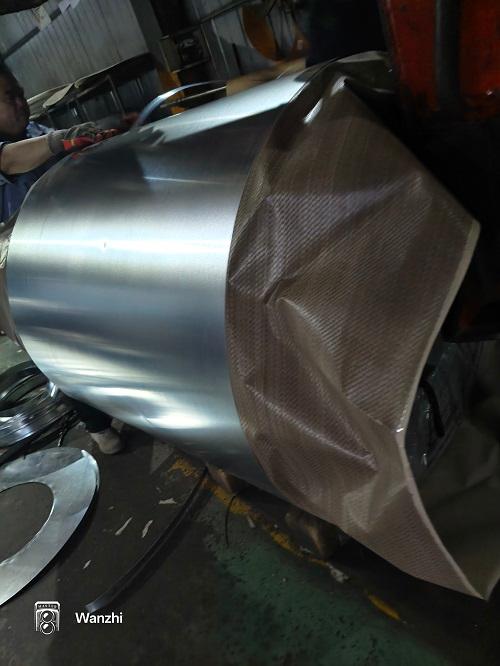
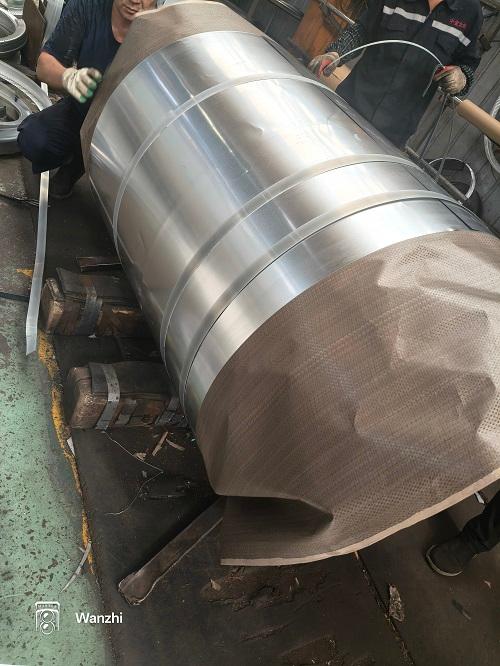
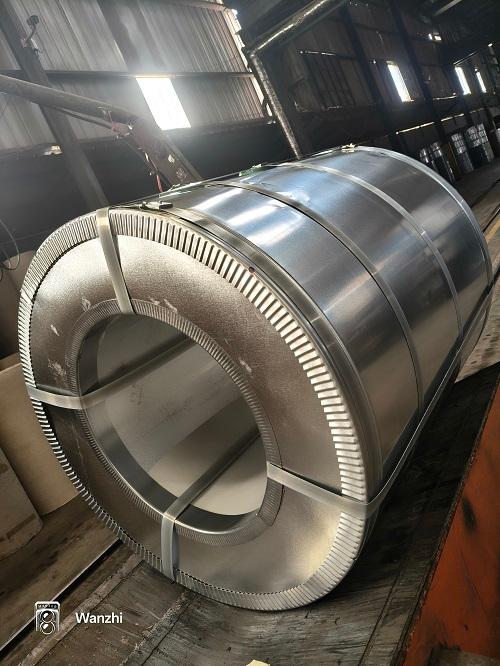
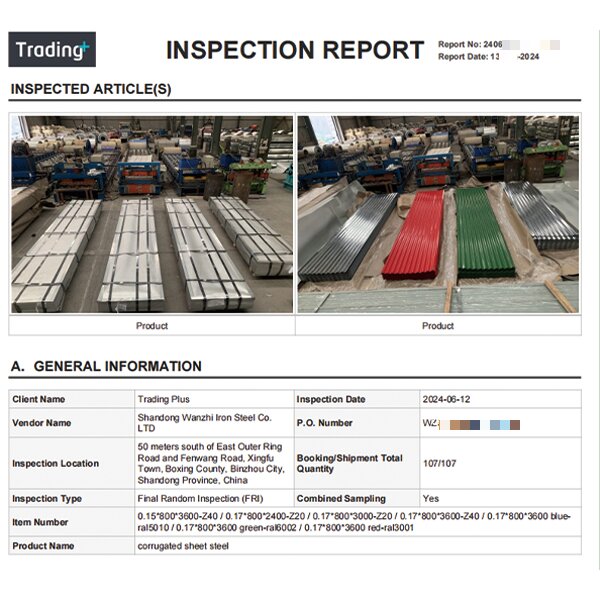
A Kenyan distributor opened an inquiry with us on July 12, 2026. Five weeks later they had placed two separate purchase orders for color coated steel coil (PPGI), 226 tons each, and the second payment just 15 days after the first payment. The trigger for that second order was simple: the first batch came off the line, the customer’s appointed third-party agency ran the mandatory PVOC/COC inspection, and it passed.
This post walks through the full specification, the RAL color mix, why the gauges are thin, what Kenya’s PVOC/COC actually checks, and why a clean inspection result turns into a repeat order faster than any sales pitch.
I. PPGI Coil Kenya Project Overview
| Field | Detail |
|---|---|
| Inquiry opened | July 12, 2026 |
| First order (PO-1) | August 17, 2026, 226 tons |
| Second order (PO-2) | September 1, 2026, 226 tons |
| Gap between orders | 15 days |
| Total volume | 452 tons of PPGI coil |
| فحص | Customer-commissioned PVOC/COC by third party, after PO-1 production |
| Destination | Kenya (Mombasa, then inland distribution) |
The sequence matters. The customer did not place one big order and wait. They placed 226 tons, watched the production and the inspection, and the moment the PVOC/COC certificate was issued they placed the next 226 tons. For a thin-gauge roofing coil going into Kenya’s building-supply trade, that is about as clear a vote of confidence as you get.
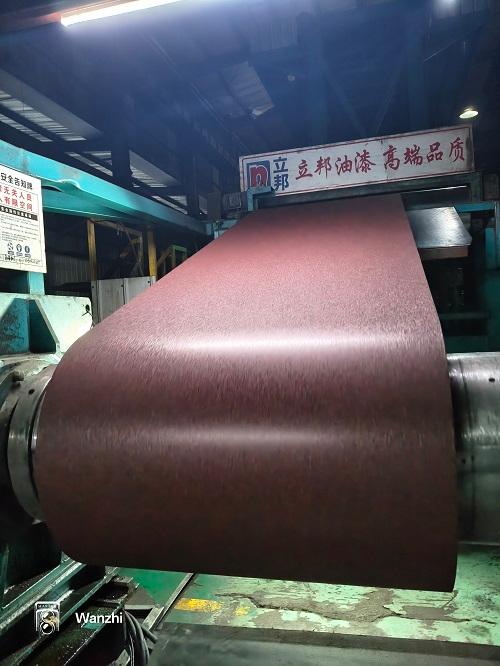
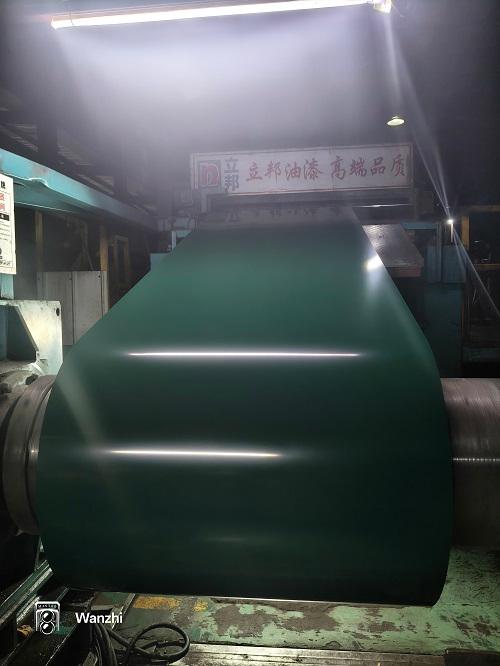
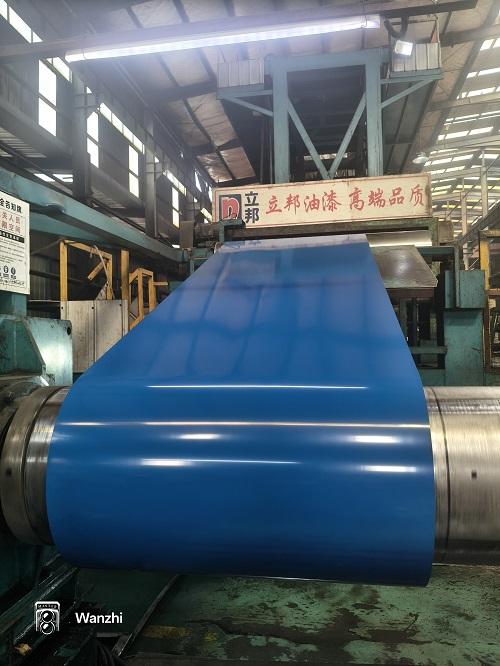
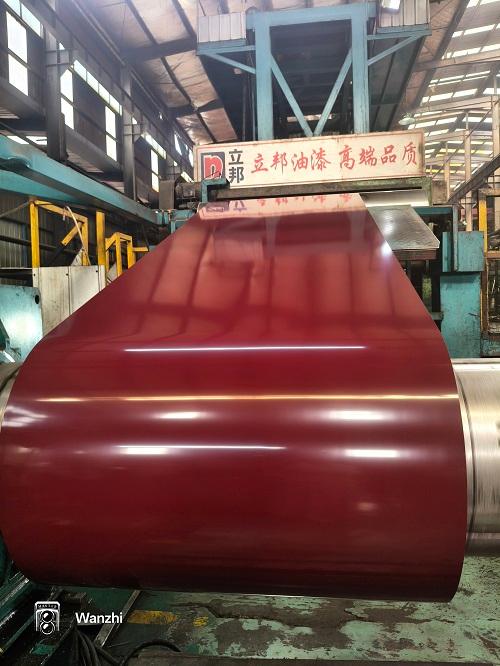
II. Order Specifications at a Glance
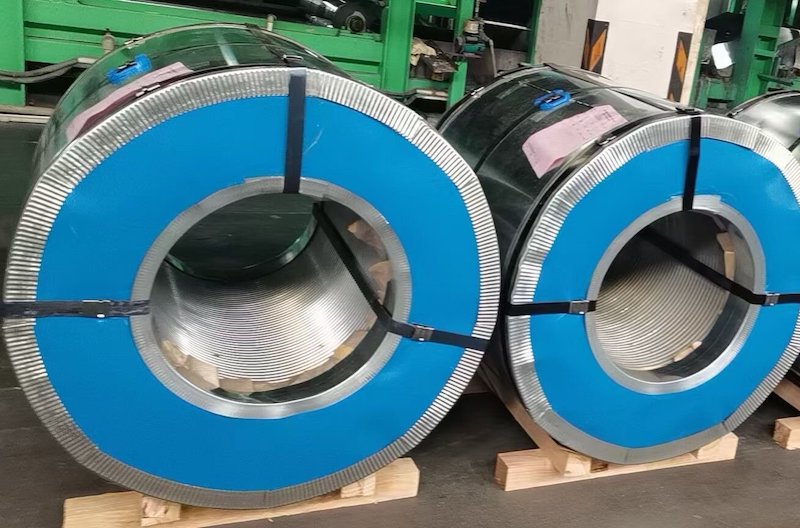
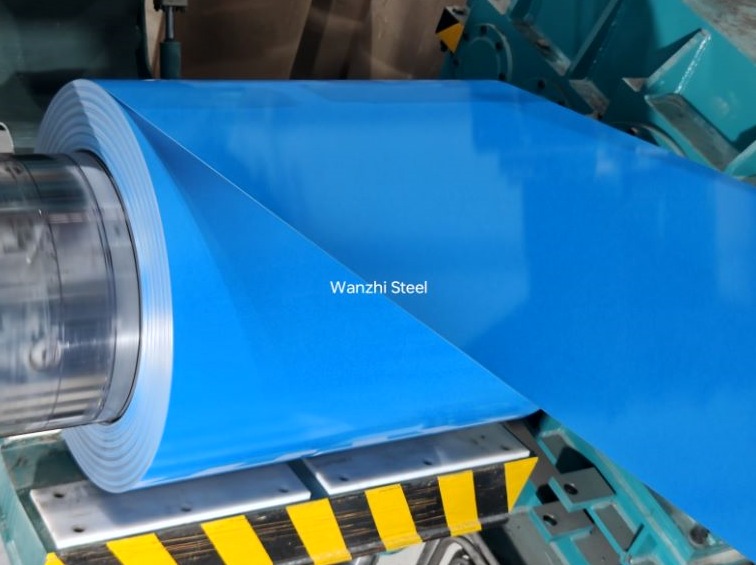
Both orders were PPGI coil built on a galvanized substrate, coil-coated in the customer’s chosen RAL colors. The two orders shared the same color language but the thicker gauge moved from 0.298 mm to 0.30 mm between batches.
Batch 1, ordered August 17 (226 tons)
| لون | لون Code | Finish | سماكة/Base | سماكة/Finished | طلاء طلاء |
|---|---|---|---|---|---|
| Blue | RAL5005 | Glossy | 0.288mm | 0.298mm | 10/5μm |
| Grey | RAL7021 | Matte | 0.288mm | 0.298mm | 20/5μm |
| Maroon | RAL3005 | Matte | 0.288mm | 0.298mm | 20/5μm |
| Chocolate | RAL8017 | Matte | 0.288mm | 0.298mm | 20/5μm |
| Grey | RAL7021 | Glossy | 0.225mm | 0.235mm | 10/5μm |
| Mlue | RAL5005 | Glossy | 0.225mm | 0.235mm | 10/5μm |
| Maroon | RAL3005 | Glossy | 0.225mm | 0.235mm | 10/5μm |
| Green | RAL6005 | Glossy | 0.225mm | 0.235mm | 10/5μm |
| Grey | RAL7021 | Matte | 0.225mm | 0.235mm | 20/5μm |
| Chocolate | RAL8017 | Matte | 0.225mm | 0.235mm | 20/5μm |
| Maroon | RAL3005 | Matte | 0.225mm | 0.235mm | 20/5μm |
Batch 2, ordered September 1 (226 tons)
| لون | لون Code | Finish | سماكة/Base | سماكة/Finished | طلاء طلاء |
|---|---|---|---|---|---|
| Blue | RAL5005 | Glossy | 0.29mm | 0.30mm | 15/5μm |
| Grey | RAL7021 | Matte | 0.29mm | 0.30mm | 20/5μm |
| Maroon | RAL3005 | Matte | 0.29mm | 0.30mm | 20/5μm |
| Chocolate | RAL8017 | Matte | 0.29mm | 0.30mm | 20/5μm |
| Grey | RAL7021 | Glossy | 0.225mm | 0.235mm | 15/5μm |
| Mlue | RAL5005 | Glossy | 0.225mm | 0.235mm | 15/5μm |
| Maroon | RAL3005 | Glossy | 0.225mm | 0.235mm | 15/5μm |
| Green | RAL6005 | Glossy | 0.225mm | 0.235mm | 15/5μm |
| Grey | RAL7021 | Matte | 0.225mm | 0.235mm | 20/5μm |
| Chocolate | RAL8017 | Matte | 0.225mm | 0.235mm | 20/5μm |
| Maroon | RAL3005 | Matte | 0.225mm | 0.235mm | 20/5μm |
A note on the color lists above: Across both orders the working palette is five colors: RAL 5005, RAL 6005, RAL 7021, RAL 3005, and RAL 8017.
III. The RAL Color Palette
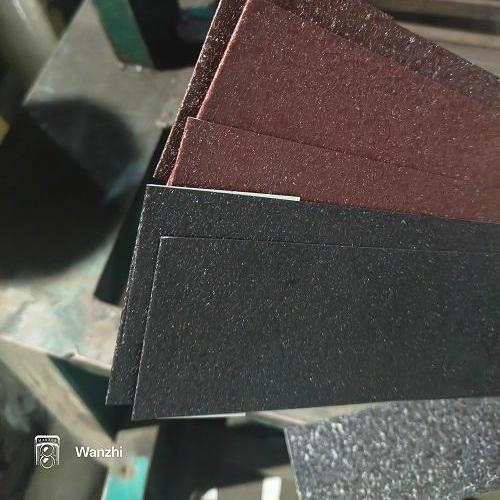
These five RAL codes are the bread-and-butter colors of African building cladding. They are the standard “mabati” roofing shades you see across Nairobi, Mombasa, Kisumu, and the upcountry towns.
| RAL | اسم | Typical use in this order’s market |
|---|---|---|
| RAL 5005 | Signal Blue | Roofing, factory sheds, fence lines |
| RAL 6005 | Moss Green | Residential roofing, perimeter walls |
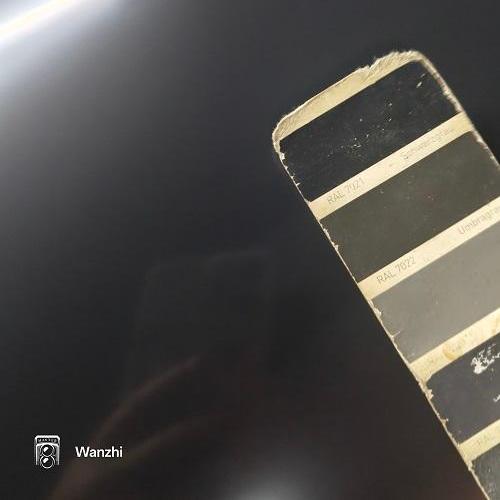
| RAL 7021 | Black Grey | Industrial roofs, modern commercial facades |
| RAL 3005 | Wine Red | Popular cladding color, high repeat demand |
| RAL 8017 | Chocolate Brown | Warehouses, rural and semi-urban buildings |
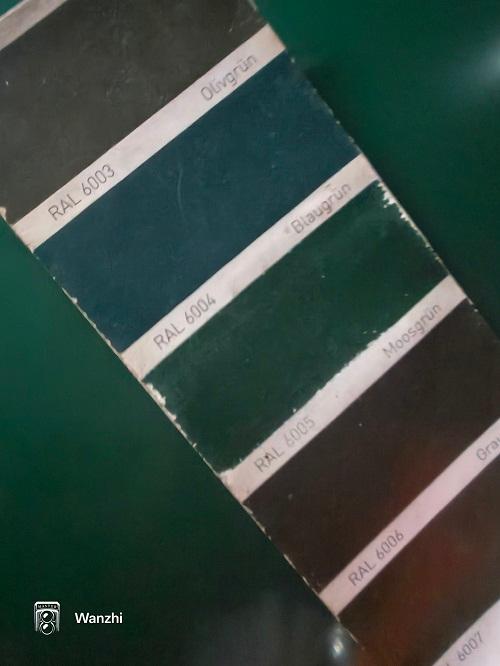
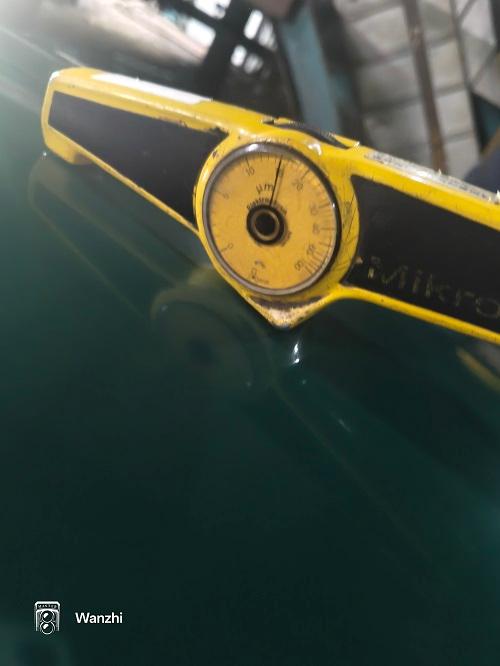
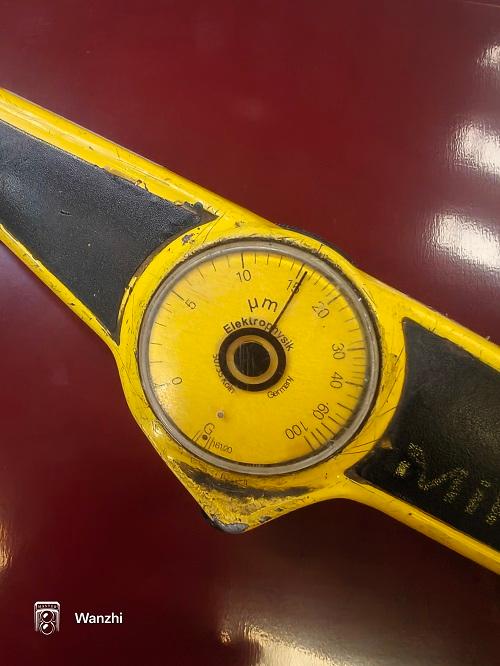
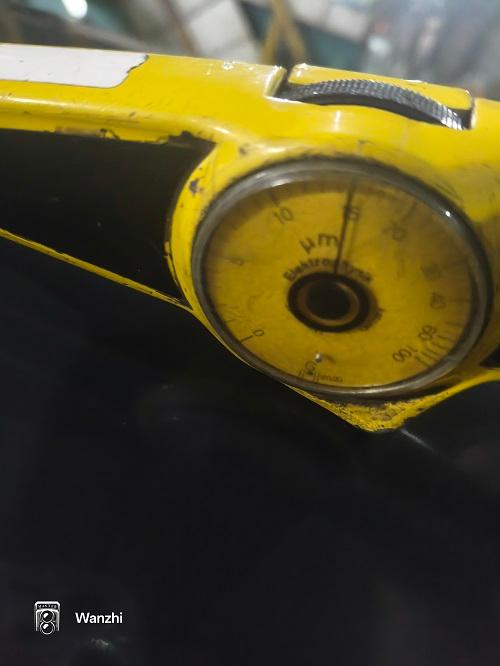
Color consistency across a multi-color, multi-batch order is where many suppliers slip. The customer is not buying one shade. They are buying five, and they expect the wine red of batch 2 to match the wine red of batch 1. Wanzhi runs spectrophotometer verification against the RAL standard and sends color comparison photos before and after production, so the distributor can confirm the match without flying someone to the mill.
IV. Why 0.235–0.30 mm Thin Gauge
The entire order sits in the 0.235 mm to 0.30 mm range. That is thin by structural-steel standards, but it is exactly right for roll-formed roofing and walling sheet, which is what most of this coil becomes once it reaches Kenya.
For context, Kenya’s building trade runs on lightweight cladding:
- 0.235 mm is the entry gauge for residential and light commercial roofing profiles. It keeps material cost down while still handling foot traffic during installation.
- 0.30 mm (batch 2’s thicker line) adds rigidity for larger roof spans and higher wind-load areas, which matters on the open highlands and along the coast.
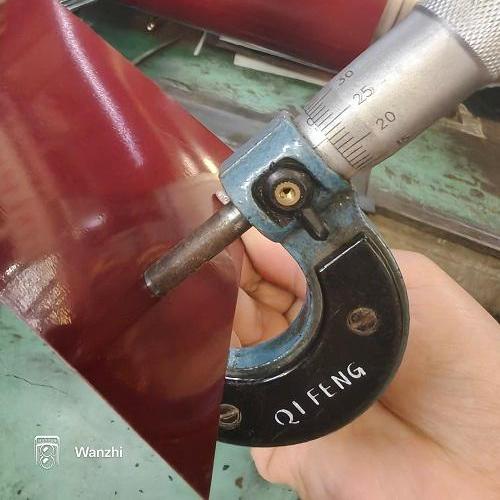
Thin gauge is also why color and coating quality carry more weight than thickness alone. With less steel to protect it, the paint system and the zinc base layer do the real corrosion work. That is the part the PVOC/COC inspection actually verifies.
V. Kenya’s PVOC/COC: Why This Inspection Mattered
Kenya does not let coated steel in on trust. The Pre-Export Verification of Conformity (PVOC) program, run by the Kenya Bureau of Standards (KEBS), requires a Certificate of Conformity (CoC) for regulated goods before they ship. No CoC, no clearance at Mombasa. The inspection is carried out in the country of export by an appointed body such as SGS or Bureau Veritas.
What the inspector checks:
- Product matches the proforma invoice and packing list (marks, labels, quantities)
- Coating and substrate meet the declared specification
- Documentary evidence of conformity to the relevant standard
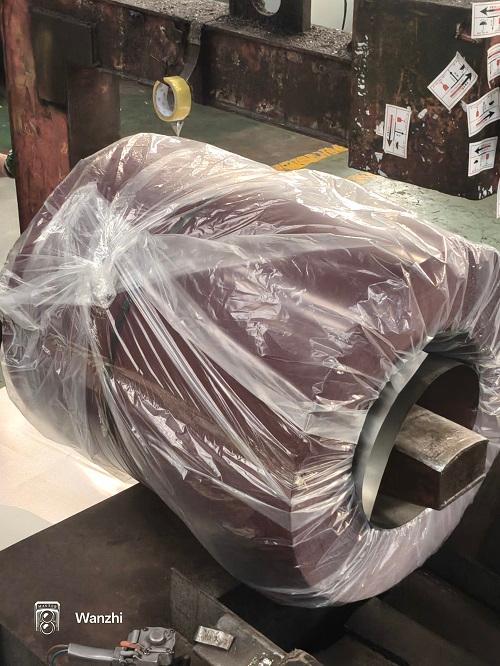
- Physical condition of the goods and export packaging
For our customer this was not a box-ticking exercise. A failed PVOC/COC means the container is held, fined, or sent back, and the distributor eats the cost. So they appointed their own third-party agency to inspect batch 1. before committing to batch 2. The pass on batch 1 is what made the September 1 order a safe bet rather than a leap of faith.
VI. From Pass to Repeat: The 15-Day Repurchase
Here is the timeline that produced two orders in 15 days:
| Date | Event |
|---|---|
| Jul 12 | Inquiry opened with Wanzhi Steel |
| Aug 17 | PO-1 placed, 226 tons PPGI coil |
| Aug–Sep | Batch 1 produced; customer-commissioned PVOC/COC inspection carried out and passed |
| Sep 1 | PO-2 placed, 226 tons PPGI coil (15 days after PO-1) |
The logic is straightforward. A first order proves a supplier can quote. A passed inspection proves they can deliver to spec. The customer had both facts in hand within weeks, so the second order was a procurement decision, not a gamble. Distributors who move stock into Kenya’s building trade cannot afford a coil that fails KEBS at the port, so they weight a clean inspection above a slightly lower price.
VII. Kenya and East Africa Market Context
The repeat order lines up with where Kenyan steel demand is heading:
- Imports are climbing fast. Iron and steel imports rose 41% year on year in Q3 2025, according to Kenya National Bureau of Statistics data reported by local business press.
- A housing push is pulling cladding demand. The state Affordable Housing Programme is targeting 250,000 units a year, and roofing sheet is among the first materials a builder buys after walls go up.
- Mombasa is the gateway. The Port of Mombasa is East Africa’s primary trade entry point, feeding Uganda, Rwanda, South Sudan, and the eastern DRC as well as Kenya itself.
- Supply is regional. Kenya’s own galvanized and color-coating capacity is anchored by players like Devki Group and Safal’s Mabati Rolling Mills, but a large share of coated coil is still imported, and Chinese exports hit a record 131 million tonnes in 2025 per the OECD Steel Outlook 2026.
For a distributor, that combination means steady downstream demand and a real need for a supplier who can hold color consistency across repeat batches and clear KEBS paperwork without drama.
VIII. Why Wanzhi Steel
This order shows the parts of the business that matter for repeat African buyers:
- One supplier, many colors. Five RAL shades across two gauges, produced on the same line with spectrophotometer color control.
- Inspection-ready documentation. Mill test certificates, coating and gauge records, and support for customer-appointed PVOC/COC agencies.
- East Africa track record. Beyond this Kenyan order, Wanzhi has shipped color coated coil into the region, including a 196-ton PPGL coil order to a Somalia customer using the same RAL family (5005, 7021, 3005, 8017, 6005).
- Broad PPGI capability. The full PPGI coil product range covers 0.12–2.0 mm thickness, 600–1250 mm width, and the full RAL color card.
The second order, placed 15 days after the first, is the part we are proudest of. It is the result a distributor actually measures a supplier by.
IX. FAQ
X. Conclusion
Two orders in 15 days, 452 tons total, five RAL colors, and a PVOC/COC pass in between. That is the kind of sequence that only happens when the first batch actually meets spec and clears KEBS without a fight.
For distributors supplying Kenya’s building trade, the question is never just “what is the price per ton.” It is “will this coil pass inspection and match the last batch.” On this order, the answer was yes twice.
Browse more Wanzhi Steel project cases across Africa, the Middle East, and Central Asia, or review the full PPGI coil product range for thickness, width, and RAL color options.
 English
  Русский
  العربية
  Español
  Français
  فارسی
فارسی  繁體中文
繁體中文  O‘zbekcha
  Tiếng Việt
  Українська
  Türkçe
  ไทย
ไทย  日本語
日本語  한국어
한국어  简体中文
简体中文