
When choosing stainless steel materials in industrial, marine, or structural engineering projects, duplex stainless steel and 316 stainless steel are the two most commonly compared materials. They all have excellent corrosion resistance, but there are significant differences in strength, cost, and performance in harsh environments.
This article will provide a detailed analysis of the differences between duplex stainless steel and 316 stainless steel to help you choose the appropriate material.
Duplex vs 316 stainless steel Definition and Characteristics
Definition and Characteristics of 316 stainless steel
316 stainless steel belongs to austenitic stainless steel and contains molybdenum (Mo) element, so its corrosion resistance in chlorine containing environments is better than that of 304 stainless steel.
Main Features
Excellent corrosion resistance performance
Good formability and weldability
Excellent resistance to pitting and crevice corrosion
Basically non-magnetic in annealed state
Wide market supply and easy processing
Definition and Characteristics of duplex stainless steel
Duplex Stainless Steel has a duplex structure consisting of approximately 50% austenite and 50% ferrite, which combines high strength and excellent corrosion resistance.
Main Features
The strength is about twice that of 316 stainless steel
Excellent resistance to stress corrosion cracking (SCC)
Excellent performance in high chloride ion environments
Low nickel content, relatively less price fluctuation
Good anti fatigue performance
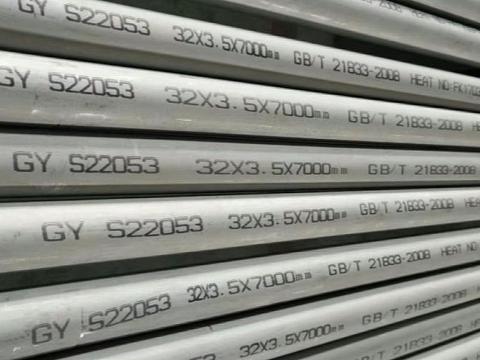
S22053 duplex stainless steel
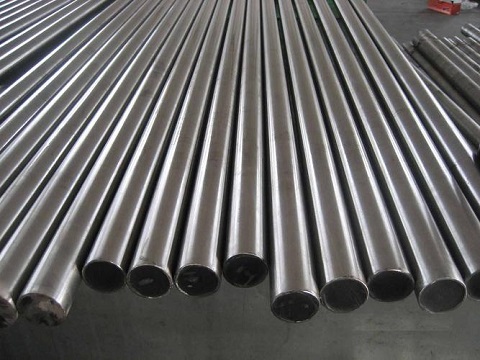
316 stainless steel pipe
Comparison between duplex vs 316 stainless steel
Chemical Composition
| Element | 316 stainless steel | Duplex stainless steel |
| Chromium (Cr) | 16-18% | 21–23% |
| Nickel (Ni) | 10–14% | 4.5–6.5% |
| Molybdenum (Mo) | 2–3% | 2.5–3.5% |
| Nitrogen (N) | – | 0.1–0.3% |
Performance comparison
| Performance | 316 Stainless Steel | Duplex Stainless Steel |
| Metallographic structure | Austenite | Austenite+Ferrite |
| Yield strength | ~200-300 MPa | ~450-550 MPa |
| Tensile strength | ~500-700 MPa | ~700-900 MPa |
| Corrosion resistance | Excellent | Better (especially resistant to chloride ions) |
| Stress Corrosion Cracking Resistance | Moderate | Extremely Strong |
| Welding performance | Very good | Good (requires control of heat input) |
| Cost | Low initial cost | High unit price but can reduce material thickness |
| Is there magnetism | None (annealed state) | Slightly magnetic |
Differences between processing and welding
| Processing factors | 316 stainless steel | Duplex stainless steel |
| Cold forming | Easier | Requires greater forming force |
| Welding | High fault tolerance | Need to control heat input |
| Machining | Medium difficulty | Slightly difficult |
316 is more suitable for complex processing and large-scale welding scenarios, while duplex steel has stricter requirements for welding processes.
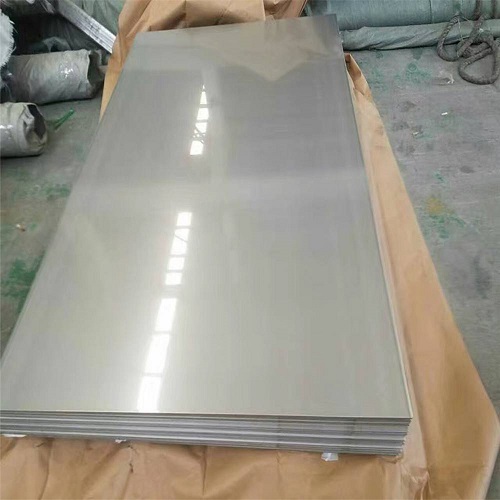
2205 duplex plate
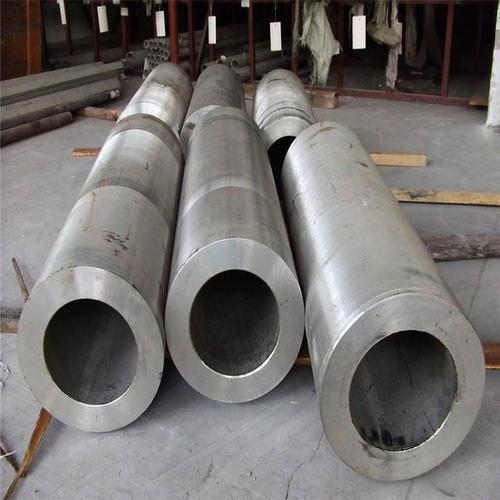
duplex seamless tube
Purchase suggestions
Suitable for choosing 316 stainless steel:
1 · limited budget
2 · Corrosion environment is relatively mild
3 · Complex molding or welding is required
4 · Conventional equipment in the food or pharmaceutical industry
Suitable for selecting duplex stainless steel:
1 · Seawater or high chlorine environment
2 · Requires high-strength and lightweight design
3 · Worried about stress corrosion cracking
4 · Pursuing long-term durability
Summary
Both of these materials are excellent, but with different focuses:
- 316 stainless steel: strong universality, corrosion resistance, easy processing.
- Duplex phase stainless steel: higher strength, stronger resistance to chlorine corrosion, and longer service life in harsh environments.
If the project involves marine engineering, chemical or high salt environments, duplex stainless steel is usually a more reliable long-term choice; In the general industrial and construction fields, 316 is a classic material with extremely high cost-effectiveness.


 English
  Русский
  العربية
  Español
  Français
  فارسی
فارسی  繁體中文
繁體中文  O‘zbekcha
  Tiếng Việt
  Українська
  Türkçe
  ไทย
ไทย  日本語
日本語  한국어
한국어  简体中文
简体中文