
The global galvanized corrugated steel sheet market hit USD 25.37 billion in 2025 and is projected to reach USD 32.98 billion by 2032, growing at a 3.82% CAGR. Whether you are a contractor sourcing roofing materials for a large-scale infrastructure project or a distributor building a regional supply chain, navigating the procurement of galvanized corrugated steel sheets can be overwhelming. Specifications vary widely across standards. Supplier quality is inconsistent. And a single mistake in zinc coating selection can turn a profitable project into a maintenance nightmare.
This procurement guide breaks down everything international B2B buyers need to know—from technical specs and international standards to supplier evaluation, quality inspection, and cost optimization. By the end, you will have a clear framework for making confident procurement decisions.
Key Takeaways
- Zinc coating weight (Z30–Z275 g/m², commonly used coating Z60-Z275 g/m²) is the single most critical spec—match it to your project environment
- Base metal thickness ranges from 0.12 mm to 2.0 mm; structural applications demand 0.6 mm or above
- Three major standards govern quality: ASTM A653 (US), EN 10346 (EU), and JIS G3302 (Japan)
- Always request a Mill Test Certificate (MTC) and consider third-party inspection from SGS or BV
- FOB China pricing for standard galvanized corrugated sheets ranges from USD 550 to USD 950 per ton depending on specs
1. What Is Galvanized Corrugated Steel Sheet?
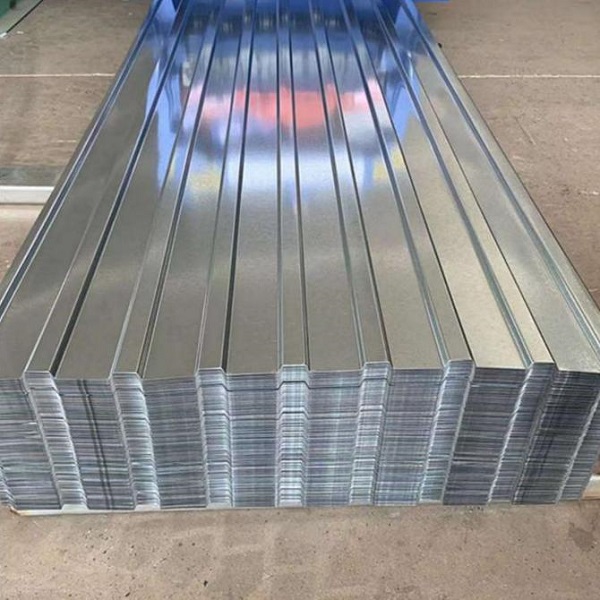
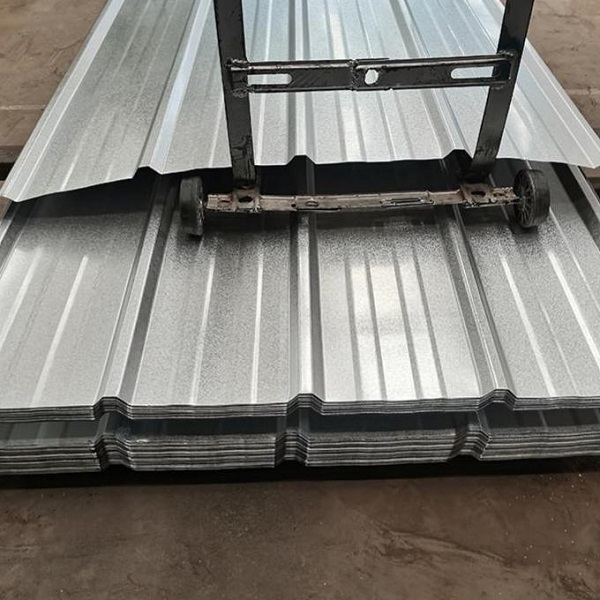
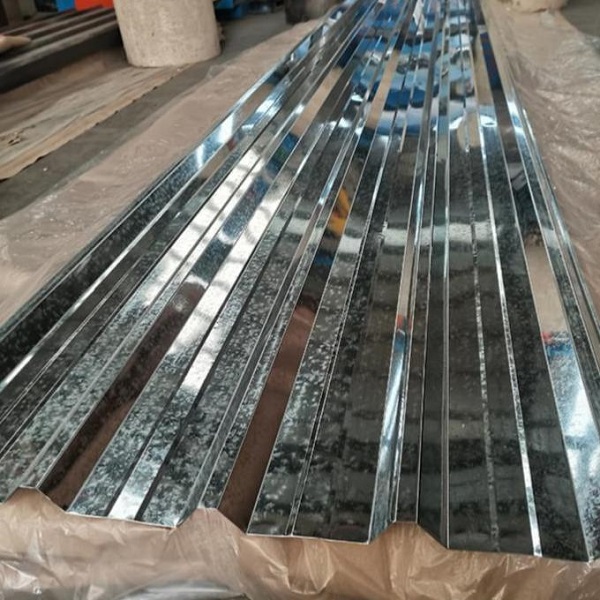
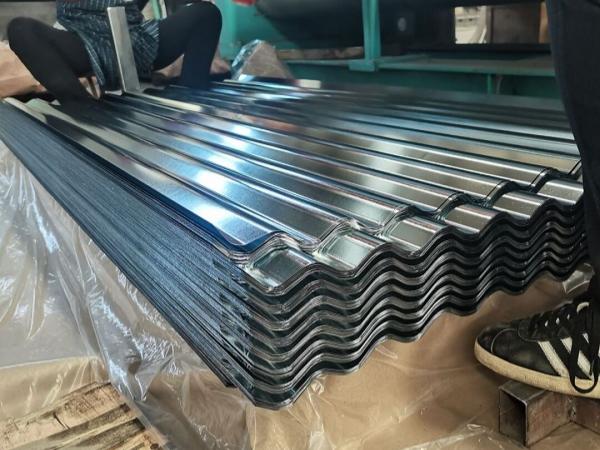
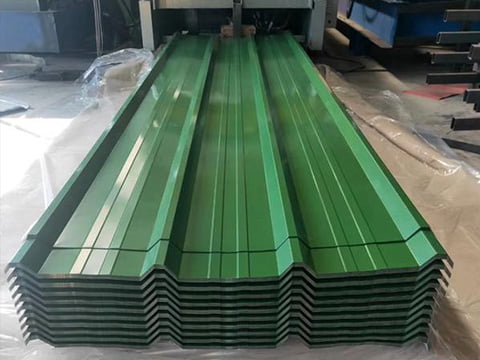
A galvanized corrugated steel sheet is a cold-rolled thin steel sheet that has been coated with a protective layer of zinc through a continuous hot-dip galvanizing process, then roll-formed into a corrugated profile. The zinc coating provides electrochemical protection—acting as a sacrificial anode that corrodes before the base steel does—while the corrugated geometry dramatically increases the sheet’s structural rigidity without adding weight.
This combination of corrosion resistance and mechanical strength makes the galvanized corrugated steel sheet one of the most widely used construction materials worldwide, particularly for roofing, wall cladding, and agricultural buildings. In fact, galvanized corrugated roofing sheet accounts for over 58% of all metal roofing installations in developing markets.
Hot-Dip Galvanizing Process Explained
The hot-dip galvanizing process follows these key steps:
- Surface Preparation: Cold-rolled steel coil is cleaned, degreased, and pickled to remove mill scale and oxides
- Fluxing: The steel passes through a flux solution (typically zinc ammonium chloride) to prevent oxidation and promote zinc adhesion
- Hot-Dip Bath: The strip is immersed in molten zinc at approximately 450°C (850°F), forming a metallurgical bond between zinc and steel—an iron-zinc alloy layer topped by a pure zinc outer layer
- Cooling and Post-Treatment: Controlled cooling followed by optional chromate passivation or oiling for additional corrosion resistance and handling
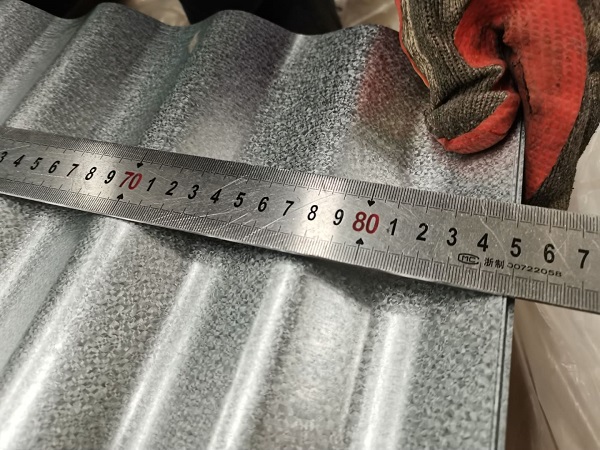
The result is a galvanized corrugated steel sheet with a tightly bonded zinc coating that can last 20 to 50 years depending on coating weight and environmental conditions. The surface exhibits a characteristic spangle finish—the crystalline pattern of zinc grains visible on the coated surface—which can range from large spangle (traditional) to minimized spangle (preferred for painting and modern architectural applications).
Corrugation Profiles and What They Mean
Corrugation profiles are defined by three key parameters:
| Parameter | Description | Common Values |
|---|---|---|
| Wave Height | Vertical distance from trough to crest | 13 mm, 18 mm, 25 mm, 35 mm |
| Wave Pitch | Horizontal distance between adjacent crests | 63 mm, 76 mm, 100 mm, 125 mm |
| Ancho efectivo | Usable coverage width after overlapping | 762 mm, 830 mm, 900 mm, 1000 mm |
Higher wave heights provide better drainage and are recommended for low-slope roofs and rainy regions; lower wave heights are sufficient for wall cladding. Standard profiles like YX18-76-875 (18 mm wave height, 76 mm pitch, 875 mm effective width, 960mm expand width) are popular for general galvanized corrugated steel sheet for roofing and cladding applications.
2. Key Specifications You Must Know Before Procurement
Before you send your first inquiry, you need to understand the four critical galvanized corrugated steel sheet specifications that define the product. An incomplete or ambiguous spec sheet is the number one reason procurement goes wrong.
Zinc Coating Weight (Z60 to Z275)
Zinc coating weight—expressed as total zinc mass per square meter on both sides combined—is the single most important specification for long-term performance of a galvanized corrugated steel sheet.
| Zinc Grade | Coating Weight (g/m²) | Typical Lifespan | Recommended Environment |
|---|---|---|---|
| Z60 | 60 | 5–10 years | Temporary structures, dry inland areas |
| Z100–Z120 | 100–120 | 10–15 years | General commercial, interior cladding |
| Z150–Z180 | 150–180 | 15–20 years | Residential roofing, moderate humidity |
| Z275 | 275 | 20–30 years | Standard roofing, warehouses, industrial |
| Z350–Z450 | 350–450 | 25–35 years | Coastal, high-humidity regions |
| Z600 | 600 | 30–50 years | Marine environments, chemical plants |
For most international procurement, Z275 (equivalent to G90 in ASTM terms) is the recommended baseline. If your project is within 5 km of a coastline, upgrade to at least Z350.
A real-world caution: A Southeast Asian distributor once ordered 500 tons of corrugated sheets for a coastal resort project. The spec sheet read “Z120 galvanized” and was signed off by the procurement team without question. Within 18 months, rust spots began appearing through the paint. The root cause was simple—Z120 is inadequate for marine environments. The replacement cost exceeded USD 180,000, not including the labor for re-roofing. The lesson: the zinc coating spec is not a line item to copy-paste from a previous order; it must be determined by the project environment.
Base Metal Thickness (0.12 mm to 2.0 mm)
Thickness directly affects structural performance, load-bearing capacity, and service life. This galvanized corrugated steel sheet thickness guide uses Base Metal Thickness (BMT)—the steel thickness excluding the zinc coating.
| Thickness Range | Solicitud | Notes |
|---|---|---|
| 0.12–0.25 mm | Temporary sheds, protective covers | Not suitable for permanent structures |
| 0.3–0.5 mm | Residential roofing, light commercial | Most common for standard roofing |
| 0.6–0.8 mm | Warehouses, factories, heavy commercial | Industrial-grade durability |
| 0.9–2.0 mm | Structural arched roofing, high wind/snow loads | Requires structural calculation |
Pro tip: Always confirm whether the quoted thickness is BMT (Base Metal Thickness) or TCT (Total Coated Thickness). Some suppliers quote TCT, making a 0.40 mm TCT sheet actually around 0.38 mm BMT—a 5% difference that matters in high-load applications.
Steel Grades: SGCC, DX51D+Z, S350GD Explained
Different steel grades serve different purposes. Here is how the major grades compare:
| Calificación | Estándar | Tipo | Typical Use |
|---|---|---|---|
| SGCC | JIS G3302 | Commercial quality | General roofing, cladding |
| DX51D+Z | EN 10346 | Commercial quality | Forming, bending applications |
| DX52D+Z | EN 10346 | Drawing quality | Deep-drawn parts |
| S250GD+Z | EN 10346 | Structural quality | Load-bearing roofing |
| S350GD+Z | EN 10346 | Structural quality | Heavy-duty structural |
| ASTM A653 CS Type B | ASTM A653 | Commercial quality | General-purpose N. American market |
For most roofing applications, SGCC or DX51D+Z is sufficient. If your project involves wide spans or heavy wind/snow loads, specify S250GD or S350GD. When comparing SGCC vs DX51D corrugated sheet options, both perform similarly for general-purpose use—the choice often comes down to which standard your project engineer or local building code requires.
Corrugation Dimensions
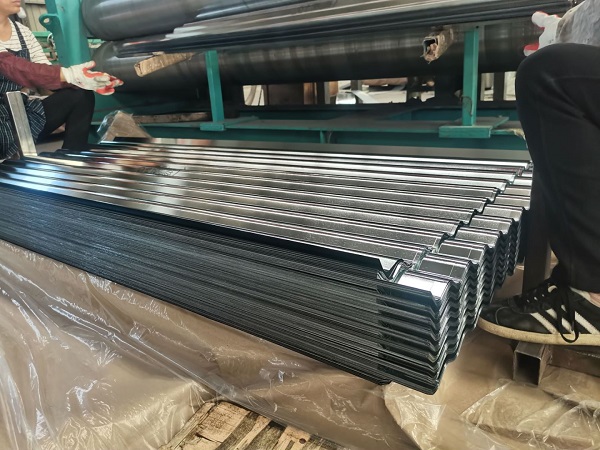
When specifying corrugation, cover all three dimensions to avoid mismatched expectations:
- Before corrugation width: 914 mm, 1000 mm, or 1220 mm (standard coil widths)
- After corrugation effective width: Typically 10–15% narrower than the flat width due to the corrugated profile
- Example: A 1000 mm flat sheet with 12 waves yields approximately 914 mm or 900 mm effective coverage
- Wave height: 18 mm is standard for general roofing; 25–35 mm for enhanced drainage
3. International Standards and Compliance
Three major international standards govern the production and quality of galvanized corrugated steel sheet. Knowing which standard your supplier conforms to is essential for quality assurance and import compliance.
ASTM A653/A653M (US Standard)
The American standard for ASTM A653 corrugated steel sheet and coil. Key requirements include coating weight designations (G30 to G235), mechanical properties by grade, and bend test criteria. G90 (equivalent to approximately Z275) is the most commonly specified grade for galvanized corrugated steel sheet in North American and Latin American markets.
EN 10346 (European Standard)
The European standard covers continuously hot-dip coated steel flat products. It uses the DX (forming) and S (structural) grade designations. EN 10346 is widely adopted by steel mills exporting to the Middle East, Africa, and Latin America.
JIS G3302 (Japanese Standard)
The Japanese standard is widely used in Asian markets. It specifies grades like SGCC (commercial), SGCD (drawing), and SGC (structural). Many Chinese mills stock SGCC-grade galvanized steel as their standard offering.
Why Mill Test Certificates (MTC) Matter
A Mill Test Certificate is a quality document issued by the steel manufacturer that records the chemical composition, mechanical properties, and test results for a specific production batch. Always request the MTC before accepting shipment. Key values to verify on the MTC:
- Chemical composition (C, Mn, P, S percentages)
- Yield strength and tensile strength
- Elongation percentage
- Zinc coating weight (actual measured, not nominal)
- Bend test pass/fail
4. How to Choose the Right Specs for Your Project
Matching Zinc Coating to Environment
Use this decision table to select the minimum recommended zinc coating based on your project’s environment:
| Environment | Distance from Coast | Humidity | Minimum Zinc | Recommended |
|---|---|---|---|---|
| Dry inland | N/A | < 50% | Z100 | Z150 |
| Urban/suburban | N/A | 50–70% | Z180 | Z275 |
| Tropical inland | N/A | > 70% | Z275 | Z350 |
| Coastal (5–20 km) | 5–20 km | 70–90% | Z350 | Z450 |
| Marine (< 5 km) | < 5 km | > 80% | Z450 | Z600 |
| Industrial/chemical | N/A | Variable | Z350 | Z450+ |
Thickness Selection by Application
| Solicitud | Minimum Thickness | Recommended | Notes |
|---|---|---|---|
| Agricultural sheds | 0.3 mm | 0.4–0.5 mm | Lower cost acceptable for non-critical |
| Residential roofing | 0.4 mm | 0.5 mm | Balance cost and durability |
| Warehouses | 0.5 mm | 0.6–0.75 mm | Consider snow/wind loads |
| Factories | 0.6 mm | 0.75–1.0 mm | Heavy-duty, long-span |
| Coastal buildings | 0.5 mm | 0.75 mm | Pair with high zinc coating |
| High-wind zones | 0.6 mm | 0.8–1.2 mm | Requires structural calculation |
Profile Selection Guide
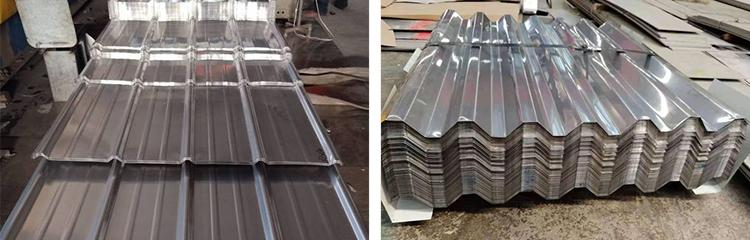
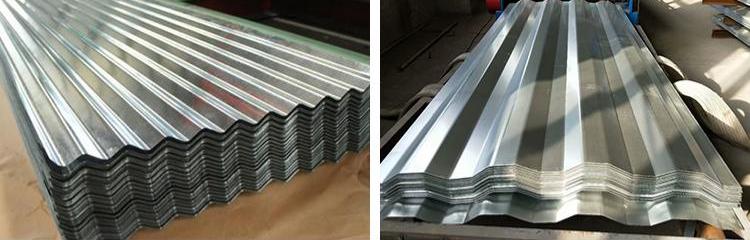
- Low wave (13–18 mm): Wall cladding, interior partitions, decorative
- Medium wave (25–35 mm): Standard roofing, agricultural buildings, general industrial
- High wave (50–76 mm): Low-slope roofs, heavy rainfall areas, architectural feature roofs
- Trapezoidal/IBR: Modern industrial look, higher strength, recommended for commercial projects
5. Supplier Evaluation Checklist
Not all galvanized corrugated sheet manufacturers China offers deliver the same quality. Before committing to an order, run through this 8-point evaluation checklist:
1. ISO Certification
Does the supplier hold ISO 9001 (quality management), ISO 14001 (environmental management), and ISO 45001 (occupational health and safety)? These are baseline requirements for any professional manufacturer.
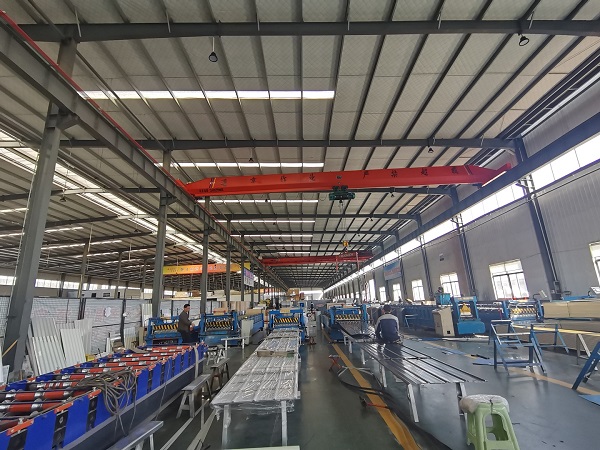
2. Production Capacity
Annual output of 50,000 tons or more typically indicates a well-established operation. Smaller capacity is acceptable for niche products but verify consistency.
3. Export Experience
How many countries has the supplier exported to? A track record across 50+ countries suggests familiarity with international trade procedures and multi-market compliance.
4. Third-Party Testing
Can the supplier provide reports from SGS, BV, or other accredited third-party labs for their products? Factory self-testing is not a substitute.
5. Sample Policy
Does the supplier offer free samples? A willingness to send A4-sized cut samples or full-sheet samples is a sign of confidence in product quality.
6. Minimum Order Quantity (MOQ)
Standard MOQ is 5 metric tons per specification. Suppliers with MOQs below this may be handling small batches; those with MOQs above 25 tons are targeting large-scale distributors.
7. Packaging Standards
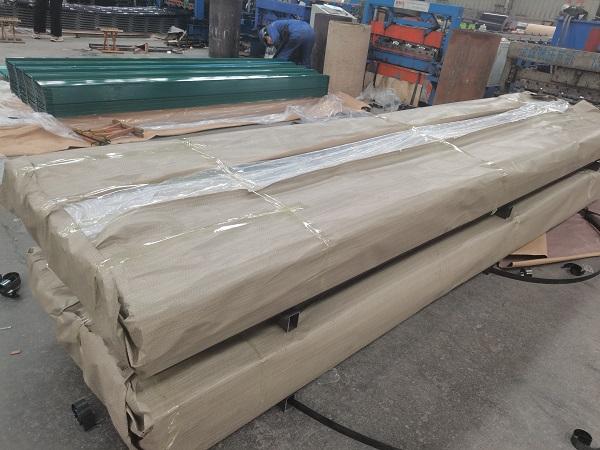
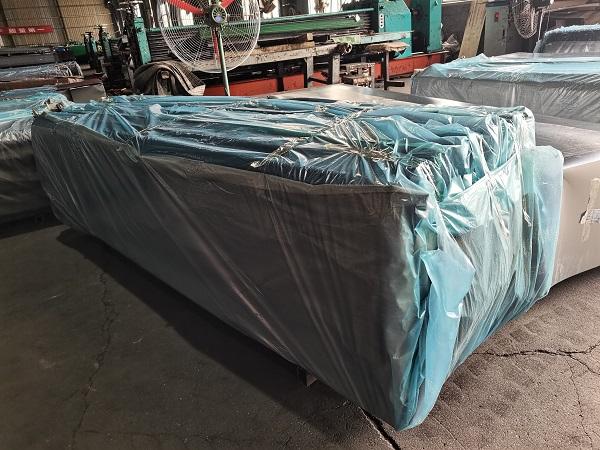
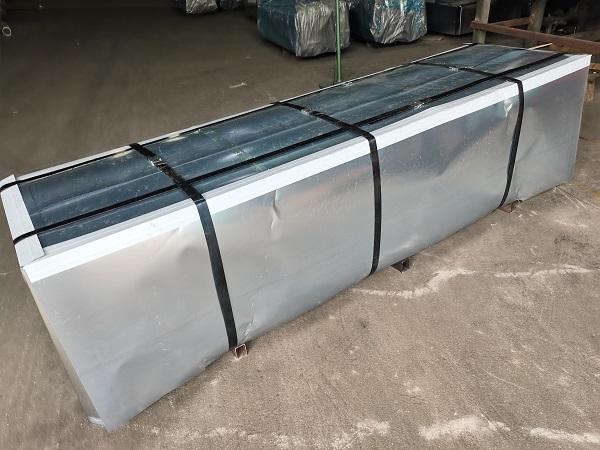
Export seaworthy packaging must include: waterproof kraft paper wrapping, waterproof cloth, edge protectors, steel sheets, steel strapping. Substandard packaging leads to transit damage claims.
8. Communication and Responsiveness
How quickly does the supplier respond to technical questions? A supplier who takes three or five days to confirm a zinc coating spec is unlikely to be responsive when problems arise.
Red Flags to Watch For
- Quoting TCT (Total Coated Thickness) without clearly stating BMT
- Price significantly below market average (high risk of substandard zinc coating)
- Refusing to accept third-party inspection before shipment
- No physical factory address or unwilling to arrange a factory visit
CTA: If you are ready to connect with a verified galvanized corrugated steel sheet manufacturer with 15+ years of export experience, ISO-certified production lines, and a track record across 120+ countries—request a free quote and sample today. Our team can help you navigate galvanized corrugated steel sheet specifications and select the right product for your project environment.
6. Quality Inspection and Acceptance
Quality inspection is not optional—it is your last line of defense before the galvanized corrugated steel sheet leaves the factory and becomes your financial responsibility.
Pre-Shipment Inspection Checklist
Before authorizing shipment, verify:
- [ ] Visual inspection: No uncoated areas, scratches, bubbles, or dents on surface
- [ ] Dimensional check: Thickness (BMT verified with micrometer), width, length, corrugation height and pitch within tolerance (±0.02 mm for thickness)
- [ ] Zinc coating weight: Measured by coating thickness gauge or weigh-strip-weigh method per ASTM A90/A90M
- [ ] Salt spray test resistance: For high-corrosion-zone projects, request salt spray test results to verify coating durability
- [ ] Bend test: 180° bend without flaking or cracking of zinc coating
- [ ] Mechanical properties: Tensile strength, yield strength, elongation per MTC
- [ ] Packaging integrity: Waterproof wrapping intact, pallets sturdy, strapping secure
Common Quality Defects
| Defect | Cause | Impact | How to Detect |
|---|---|---|---|
| Uneven zinc coating | Poor fluxing, inconsistent bath temperature | Localized rust in low-coating areas | Coating thickness gauge across sheet width |
| Bare spots | Residual oil or oxide on base steel | Immediate corrosion exposure | Visual inspection, 45° angle against light |
| Edge wave / buckling | Improper roll forming tension | Difficulty in installation, poor overlap sealing | Lay sheet flat, check for waviness |
| Incorrect wave profile | Worn forming rollers | Mismatched overlap with adjacent sheets | Compare to approved sample or drawing |
| Edge burrs | Dull slitting blades | Handling hazard, can damage packaging | Run finger along edge (with gloves) |
Third-Party Inspection
For orders above 50 metric tons or first-time supplier relationships, commission a third-party inspection from SGS, Bureau Veritas (BV), or TUV. The typical cost of USD 500–1,500 for a pre-shipment inspection is a fraction of the potential loss from accepting substandard material.
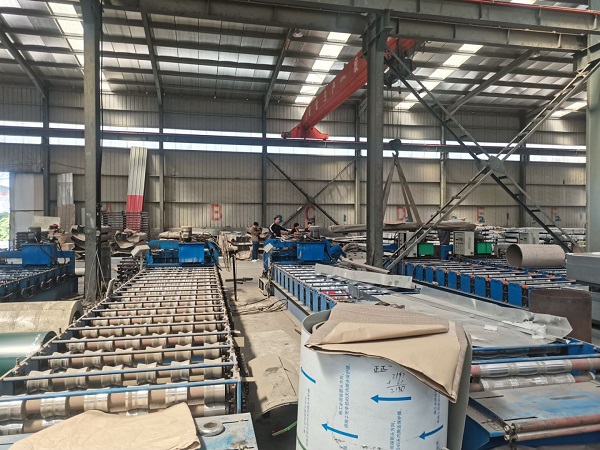
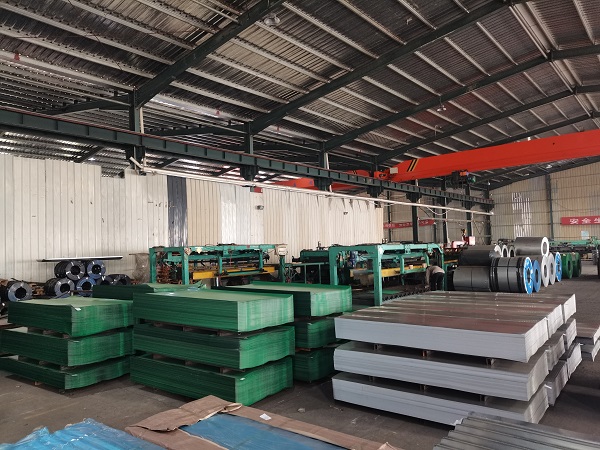
Another cautionary tale: A construction company in East Africa received a container of 100 tons of galvanized corrugated steel sheet from a new supplier. The visual inspection looked fine. Three months into installation, sections of the roof began showing rust. A third-party lab test revealed the zinc coating weight for corrugated steel sheet averaged 90 g/m² against the specified Z275. The supplier had substituted a lower-spec product. The company had no MTC and no pre-shipment inspection. The lesson is straightforward: verify before you pay.
7. Cost Optimization and Logistics
Price Factors and FOB Pricing
The FOB (Free On Board) China price for galvanized corrugated steel sheet depends on several variables. Understanding the galvanized corrugated steel sheet price per ton helps you benchmark quotes and negotiate effectively:
| Specification | Price Range (FOB China, USD/ton) |
|---|---|
| Standard GI sheet, 0.3 mm, Z120 | 550–650 |
| Roofing sheet, 0.5 mm, Z275 | 680–750 |
| Color-coated (PPGI), 0.5 mm, Z275 | 800–950 |
| High-zinc, 0.5 mm, Z350 | 720–800 |
| Structural grade, 0.75 mm, Z275 | 700–780 |
Note: Prices fluctuate based on global steel index movements, zinc commodity prices, and China domestic demand cycles. Request updated FOB pricing at the time of inquiry rather than relying on dated quotes.
Container Loading and Export Packaging
Standard container loading for corrugated sheets:
- 20GP container: Fits approximately 25–28 metric tons, sheet length up to 5.8 meters
- 40GP container: Fits approximately 25–28 metric tons (weight-limited, not volume-limited for steel), sheet length up to 12 meters
- 40HQ container: Same weight capacity as 40GP but with additional height clearance
Export packaging must include:
- Waterproof kraft paper wrapping
- Steel edge protectors at corners
- Horizontal and vertical steel strapping
- Wooden or steel pallets for forklift handling
- Shipping marks clearly labeled on each bundle
Incoterms for Steel Imports
| Incoterm | Seller Responsibility | Buyer Responsibility | Best For |
|---|---|---|---|
| EXW | Goods at factory gate | All transport, export, import | Experienced buyers with own logistics |
| FOB | Goods loaded on vessel | Ocean freight, insurance, import | Most common for steel imports |
| CIF | FOB + freight + insurance | Import clearance, inland transport | Buyers who want simpler logistics |
| DAP | Delivery to named place | Import clearance only | Full-service expectation |
CTA: Ready to discuss your project requirements? Contacto for a detailed quotation tailored to your galvanized corrugated steel sheet specifications, including zinc coating grade, thickness, corrugation profile, and delivery terms. Free sample cutting available on request.
Conclusión
Procuring galvanized corrugated steel sheet for international projects does not have to be a gamble. The difference between a successful project and a costly failure often comes down to three things: getting the zinc coating right for your environment, verifying specifications through MTCs and third-party inspection, and choosing a supplier with demonstrated export expertise.
Start with your project environment—coastal, tropical, urban, or dry inland—and work backward to determine the zinc coating, thickness, and steel grade. Then evaluate suppliers systematically using the 8-point checklist. Finally, never ship without pre-shipment inspection for orders above 100 tons. Knowing how to choose galvanized corrugated roofing sheet correctly is the difference between a roof that lasts 30 years and one that needs replacement in 5.
The galvanized corrugated steel sheet market is large and competitive, with reliable suppliers across China ready to meet international standards. With the right procurement framework, you can secure quality products at competitive prices and build a supply chain that supports your business growth.
This guide was created for international B2B buyers sourcing galvanized corrugated steel sheet. For specific project requirements or custom specifications, reach out to a qualified steel supplier with proven export experience.
 English
  Русский
  العربية
  Español
  Français
  فارسی
فارسی  繁體中文
繁體中文  O‘zbekcha
  Tiếng Việt
  Українська
  Türkçe
  ไทย
ไทย  日本語
日本語  한국어
한국어  简体中文
简体中文