
Cold rolled steel is everywhere around us. When you open the refrigerator or start the washing machine, the key material behind it that makes it strong, beautiful, and durable is cold-rolled steel. There is a clear consensus among global home appliance manufacturers that cold-rolled steel coils (CRC) are undoubtedly the behind the scenes heroes. This material perfectly combines form and function, and is an indispensable core of modern high-quality home appliances.
What is cold rolled steel?
Cold rolled steel is a type of steel produced by further processing hot-rolled steel coils at room temperature. This’ cold working ‘process involves passing steel through rollers to achieve:
- Thinner and more precise dimensional tolerances.
- A significantly smoother and more aesthetically pleasing appearance surface.
- By work hardening, higher strength and hardness can be obtained.
The final result is a high-quality and easy to process raw material, with surface quality and dimensional accuracy far superior to hot-rolled steel with oxide scale on the surface and lower precision. Therefore, it is widely used in the home appliance industry where appearance and precision are paramount.
Advantages of cold rolled steel in home appliance
1. Excellent surface quality and aesthetics
The most intuitive advantage lies in its surface. Cold rolled steel has a smooth, clean, and uniform surface, providing an ideal substrate for subsequent spraying, powder coating, or electroplating. This is crucial for appliances that need to showcase their beauty in the kitchen or living room, as it is the perfect canvas for achieving pure white, bright colors, and anti fingerprint coatings.
2. Higher strength and structural integrity
The cold rolling process improves the yield strength of steel. For household appliances, this means:
Excellent durability: The casing, shell, and panel can effectively resist dents and deformations.
Superior structural rigidity: Provides a sturdy framework for large household appliances such as refrigerators and ovens, ensuring long-term precise alignment of the door body and stable and reliable components.
Potential lightweight design: Manufacturers can sometimes use thinner cold-rolled steel plates to achieve equivalent strength, which helps achieve lightweighting.
3. Excellent dimensional accuracy and consistency
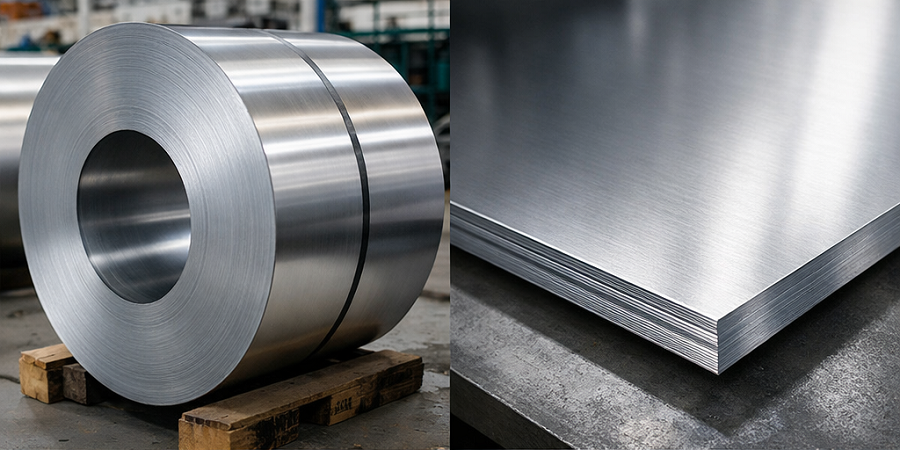
The cold rolling process can achieve extremely strict tolerance control. This precision is crucial for large-scale production, as it ensures that every panel, door body, and bracket can be perfectly matched, reducing assembly issues and minimizing seam gaps, thereby enhancing the overall texture and appearance consistency of the final product.
4. Good formability and processing convenience
Despite the increase in strength, cold-rolled steel still has excellent formability. It can be easily stamped, bent, folded, and welded to form complex shapes – from the intricate curves of washing machine barrels to precise bending of oven chambers. This versatility provides possibilities for innovative home appliance design.
5. Good corrosion resistance (after treatment)
Cold rolled steel itself is not stainless steel, but its smooth surface is an excellent substrate for protective coatings. After appropriate painting or coating treatment, it can provide excellent long-term moisture resistance, moisture resistance, and daily splashing ability, which is crucial for household appliances such as dishwashers, refrigerators, and washing machines.
Common applications in home appliance
Refrigerator and freezer: external box, inner container, door panel, shelf bracket.
Oven and stove: outer shell, inner cavity, door body, control panel.
Washing machine and dryer: inner drum, outer drum, box body, front panel.
Microwave ovens and dishwashers: main frame, outer shell, internal shelf.
Small household appliances: blender casing, chef machine body, toaster casing.

Commonly Used Cold Rolled Steel Grades
Choosing the appropriate grade is crucial to ensuring product performance.
SPCC (General Purpose Grade): General-purpose material, lower cost, suitable for simple structural parts.
SPCD (Stamping Grade): Better tensile properties, used for moderately complex forming.
SPCE (Deep Drawing Grade): Excellent ductility, suitable for complex or deep-drawn structures.
DC01 / DC03 / DC04 (European Standard): Correspond to SPCC / SPCD / SPCE respectively, widely used in the international market.
Cold rolled steel vs other steel for household appliances
Hot rolled steel: with a rough surface and oxide scale, often used for internal structural components that are not important in appearance.
Galvanized steel: The surface has zinc flowers (you can choose no flowers, but it is more expensive), which provides better corrosion resistance, but also has a higher cost. It is suitable for humid environments.
Stainless steel: Provides top-notch corrosion resistance, but at significantly higher cost. Usually used as decorative parts or for specific high temperature/high humidity environment components.
Aluminum: Lightweight and corrosion-resistant, but relatively soft. For most box applications, its durability and cost-effectiveness are usually not as good as cold-rolled steel.
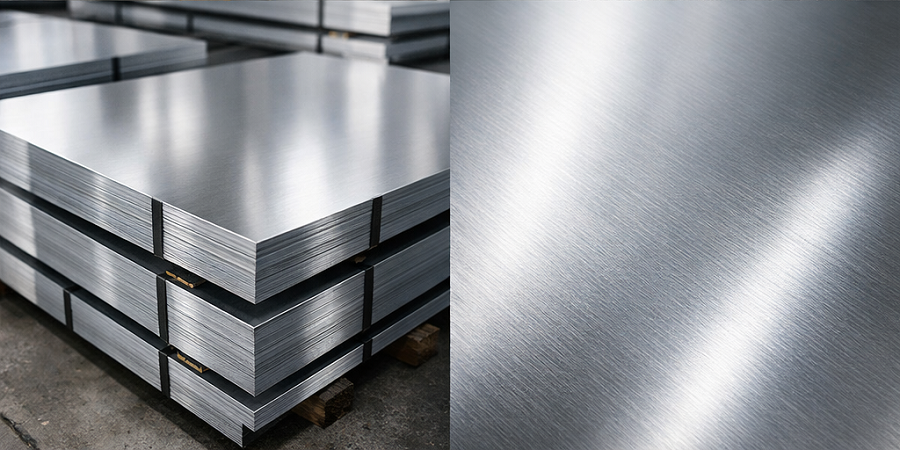
CRC Steel has high cost-effectiveness, excellent strength, and a surface that can be directly coated, making it the most practical and widely used choice.
In practical applications, many manufacturers use cold-rolled steel with spraying/plating to achieve a balance between cost and performance.
Laying the Intelligent Foundation for Durable Appliances
Choosing cold-rolled steel as a material for household appliances is a comprehensive decision based on performance, economy, and consumer demand for quality. It provides strength to withstand daily use, precision to achieve perfect assembly, and an exquisite appearance that fits modern home aesthetics.
Are you looking for reliable cold-rolled steel for your home appliance manufacturing project? Contact the professional material supplier Wan Wanzhi Steel immediately to discuss your specific requirements for grades and specifications.



 English
  Русский
  العربية
  Español
  Français
  فارسی
فارسی  繁體中文
繁體中文  O‘zbekcha
  Tiếng Việt
  Українська
  Türkçe
  ไทย
ไทย  日本語
日本語  한국어
한국어  简体中文
简体中文