

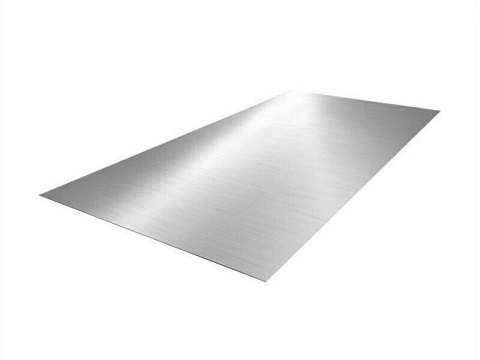
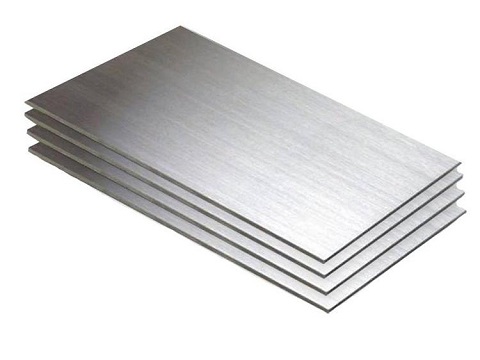
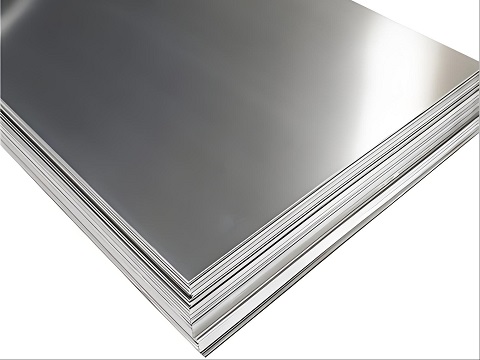
304 Stainless Steel Sheet
Width: 600-1250mm or customizable
Length: 1-12 m
Thickness: 0.3-3.0mm
Design Style: Customizable
What Is 304 Stainless Steel Sheet?
304 stainless steel sheet is a flat-rolled product under 3 mm thick, made from the 18/8 austenitic grade that carries about 18 percent chromium and 8 percent nickel. It is the most widely used stainless sheet in the world, and for good reason: it resists rust, forms easily, polishes to a clean finish and costs far less than the molybdenum grades. When a buyer says “stainless steel” without naming a grade, they usually mean 304.
The sheet sits at the thin end of flat-rolled stainless. In ASTM terms, anything 3 mm and under is sheet, cold-rolled with tight tolerances and clean sheared edges. Past 3 mm the same alloy becomes plate, hot-rolled with cut edges. The chemistry does not change at that line, but the rolling route, the tolerances and the price do, which is why we sell 304 stainless steel plate separately. If your part is thick, load-bearing or welded into a vessel, the plate page is the one you want.
We supply 304 sheet to ASTM A240, ASTM A666, JIS SUS304 and EN 1.4301, in thicknesses from 0.3 to 3.0 mm, widths from 600 to 1500 mm and lengths cut from 1 to 12 m.
304 chemical composition and the 304L option
The table below is the ASTM A240 window for 304, in percent by weight with iron as the balance. The Britannica overview of stainless steel explains the family these numbers belong to.
| Element | 304 | 304L |
|---|---|---|
| Chromium (Cr) | 18.0-20.0 | 18.0-20.0 |
| Nickel (Ni) | 8.0-10.5 | 8.0-12.0 |
| Carbon (C) | 0.08 max | 0.030 max |
| Manganese (Mn) | 2.0 max | 2.0 max |
| Silicon (Si) | 0.75 max | 0.75 max |
| Phosphorus (P) | 0.045 max | 0.045 max |
| Sulfur (S) | 0.030 max | 0.030 max |
The one number that matters for fabrication is carbon. Standard 304 allows up to 0.08 percent, while 304L caps it at 0.030. The low carbon version was made for welding: when you weld a thick section, carbon at the heat-affected zone can pull chromium out of the mix and leave the seam open to corrosion. That failure mode is called sensitization. Drop the carbon and the weld stays protected, so 304L is the safer call for tanks, benches and anything welded a lot. The price gap between the two is small.
Key Properties
Corrosion Resistance: Stainless steel sheets resist rust and stains, making them suitable for harsh environments.
Strength-to-Weight Ratio: They offer high strength while remaining lightweight, which is beneficial for structural applications.
Heat Resistance: These sheets can withstand high temperatures without losing their integrity.
Low Maintenance: Their durable surface requires minimal upkeep, reducing long-term maintenance costs.
Product Parameters
These are the stock figures from our production line, so you can turn them straight into an RFQ.
| Item | Parameter |
| Products name | 304 Stainless Steel Sheet |
| Thickness | 0.3-3.0mm |
| Width | 600mm – 1500mm or as required |
| Length | 1-12m or customer requirements |
| Qualification certification | ISO 9001:2018, SGS, BV |
| Surface | 2B , BA , 4K ,8K , HL, NO.4 |
| Grade | 300 series |
| MOQ | 15 tons |
| Payment Term | 30% +70% T/T |
| Transport Package | Standard Seaworthy Packing |
Weight is easy to estimate: 304 density is 7.93 g per cubic centimeter, so a 1 mm thick, 1 square meter sheet weighs about 7.93 kg. Multiply thickness in millimeters by 7.93 to get kilograms per square meter, which is how quotes are priced per ton. Our stainless steel surface finish guide covers what each finish adds in cost and lead time.
Surface finishes
Finish does not change the alloy, but it changes how the sheet looks, cleans and performs in service. We supply 304 in the common rolled and polished states:
2B is the standard cold-rolled, annealed and pickled finish: smooth, dull grey, no reflection. It is the workhorse for tanks and fabrication. No.1 is the hot-rolled, pickled finish, matte and rough, for structural and heavy use. No.4, the brushed finish, adds a one-direction satin grain that hides fingerprints and scratches, which is why it dominates kitchen and food equipment. BA, bright annealed, is smooth and near-mirror, picked when appearance matters. HL, hairline, is a fine long-grain brushing for premium architectural cladding. And 8K is the mirror finish, highly polished and reflective, for decorative panels and signage. Our brushed stainless steel sheet page shows what the grain looks like up close.
Corrosion resistance: how the passive film works
Chromium is what makes stainless steel stainless. When the surface meets oxygen, the chromium forms a passive oxide film just a few atoms thick, and that film blocks further attack. As long as oxygen can reach the surface, the film repairs itself, which is why 304 stays clean in air, water, food and most mild chemicals. The International Molybdenum Association documents how the alloying elements in the austenitic family drive this behavior.
What 304 does not like is chloride. Salt water, road salt, pool chemicals and some process streams break the passive film locally and start pitting. Buyers compare grades with PREN, the pitting resistance equivalent number, which weights chromium and molybdenum. 304 scores roughly 18 to 20. 316, with its 2 to 3 percent molybdenum, reaches 24 to 26, which is why marine grade stainless steel sheet means 316 in practice. For inland, fresh water and indoor work, 304 is the right and economical call.
Two practical points. Cut edges should be dressed, and any welded or ground face should be passivated after work to rebuild the chromium layer. Get those right and 304 lasts decades in the environments it is meant for.
Mechanical and physical properties
These are the ASTM A240 minimums for annealed 304 at room temperature. Your mill test certificate shows the actual results for the heat you receive.
| Property | Value |
|---|---|
| Tensile strength | 515 MPa min (304), 485 MPa min (304L) |
| Yield strength (0.2% offset) | 205 MPa min |
| Elongation | 40% min |
| Hardness | 201 HB max |
| Density | 7.93 g/cm³ |
| Melting range | 1400-1450 °C |
Two numbers are worth memorizing. Density of 7.93 means you can price any flat product in your head: thickness in mm times 7.93 gives kg per square metre, so a 2 mm 304 sheet runs about 15.9 kg/m². And 40 percent minimum elongation is why the sheet forms cleanly into pressed panels, rolled cylinders and deep draws without cracking.
304 is non magnetic in the annealed state, though cold work from cutting or forming can bring up a little attraction at the edges. That is normal for austenitic grades and is not a quality problem.
Why 304 sheet is the default choice
304 holds its position as the world’s most-used stainless sheet because the trade-offs land in the right place for most jobs.
- No molybdenum means the lowest price per ton among the corrosion-resistant stainless grades, with the widest stock availability.
- It resists rust and stains in ordinary atmospheric, food and mild chemical service without premium pricing.
- High elongation and the austenitic structure let it bend, draw and roll into panels and cylinders with low cracking risk.
- It welds well by all common methods, and 304L removes the sensitization risk when the job calls for heavy welding.
- Smooth finishes shed soil and clean fast, which is why food and pharma plants standardize on it.
- Every mill on earth produces it, so sizes and finishes are easy to source with short lead times.
Common Applications by Industry
Stainless steel sheets are versatile and find use in numerous sectors:
Food & Beverage Processing
- Kitchen equipment, countertops, and sinks
- Beer brewing, milk processing, and winemaking equipment
- Food storage tanks and processing lines

Kitchen equipment

Water tank and pipe

Vegetable washer
Chemical & Pharmaceutical
- Chemical storage tanks and pressure vessels
- Pharmaceutical production equipment
- Heat exchangers and piping systems

Chimney duct

Pressure tank

Equipment components
Architecture & Construction
- Architectural paneling, railings, and trim
- Elevator panels and curtain wall decoration
- Interior cladding and furniture accents

Elevator panel

Decorative Screen

Cover plate
Industrial Equipment
- Threaded fasteners (nuts, bolts, screws)
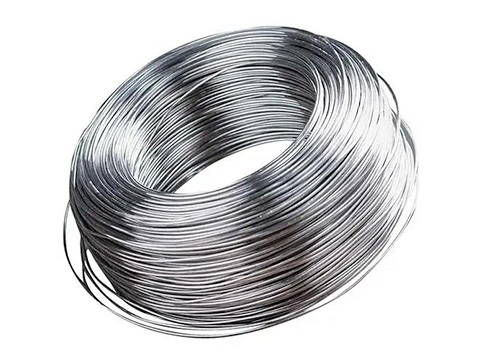
- Woven/welded screens for mining and filtration
- Springs and automotive components

Fastener

Punching screen mesh

Engine parts
For food and beverage builds, our sister site supplies the matching vessels: the stainless steel tank and stainless steel fermentation tanks pages show how the sheet is fabricated into equipment, and the 304 vs 316 brewery tank comparison walks through the grade choice for fermenters.
Product Video
304 vs 316 vs 430: how to choose
All three grades get called “stainless steel sheet” in casual conversation, but they are different alloys with different prices. The short version:
| Point | 304 | 316 | 430 |
|---|---|---|---|
| Chromium / nickel | 18 / 8-10.5 | 16-18 / 10-14 | 16-18 / none |
| Molybdenum | none | 2-3% | none |
| Crystal structure | austenitic | austenitic | ferritic |
| PREN | 18-20 | 24-26 | ~17-19 |
| Chloride resistance | moderate | excellent | poor |
| Magnetic | no (annealed) | no (annealed) | yes |
| Relative cost | baseline | higher | lowest |
Salt exposure moves the job from 304 to 316, and our 316 stainless steel sheet page covers that move in detail. Indoor, decorative or mild-duty work where budget leads can go to 430, the ferritic grade, which is magnetic and cheaper but gives up chloride resistance and deep formability. Everything else is usually 304, the balanced middle of the range. If a project sits on the boundary, price both grades; the 316 premium is usually smaller than one repaint cycle on rust-stained 304.
Quality Control
We have our own product testing center laboratory to ensure the quality of our products. Our testing items and instruments fully comply with international standards.

Our Certificates

What drives the price of 304 sheet
Quotes for 304 stainless steel sheet move with four inputs, and knowing them makes offers easier to compare.
- Alloy content on the LME: nickel and chromium are the cost drivers, and both trade on the London Metal Exchange. When nickel rises, every 304 quote follows within weeks.
- Thickness and gauge: thin gauge under 0.8 mm costs more per ton because rolling passes and yield loss increase. Standard gauges like 0.8, 1.0 and 2.0 mm price best.
- Finish: 2B is the baseline. No.4, BA, HL and 8K add polishing cost, and 8K is the most expensive because of the multiple polish passes.
- Quantity and logistics: full container loads price better than LCL, and MOQ is 15 tons for production orders. Stock sizes ship faster than special widths or finishes.
Send your size, finish, grade and standard and we quote material and processing together, so the number you see is the number you pay.
Why choose Wanzhi Steel for 304 sheet?
We are an integrated industrial and trade company that produces steel independently, which removes a layer of margin and lets us respond to orders quickly. From raw materials to finished products, we control quality throughout the process, and every sheet leaves with a mill test certificate and the certifications behind it: ISO 9001, ISO 14001 and ISO 45001, with SGS and BV inspection available on request.
Our ASTM A240 certified stainless steel sheet page explains the certification and testing process step by step, and the stainless steel hub links the full range: sheet, coil, pipe, bar and plate. If you need the round form alongside flat sheet, our ASTM A312 316L pipe and 316L pipe stock lines cover that need, and the all products index lists everything in one place.
E-mail: [email protected]
WhatsApp: +86 18736065220
Website: https://wanzhisteels.com
Factory: Binzhou City, Shandong Province, China
Company: Erqi District, Zhengzhou City, Henan Province, China
FAQ
What is the difference between 304 and 304L stainless steel sheet?
The only difference is carbon. Standard 304 allows up to 0.08 percent, while 304L caps it at 0.030. The low carbon version is made for welding: it stops sensitization at the heat-affected zone, the corrosion risk on welded 304. Choose 304L when the sheet will be welded heavily or sits in thick sections.
Is 304 stainless steel sheet magnetic?
No, not in the annealed state. 304 is austenitic, which is non magnetic. Cold work from cutting, bending or forming can bring up slight attraction at the edges, and that is normal. If a magnet sticks strongly, the sheet is probably 430, a ferritic grade.
Will 304 stainless steel sheet rust?
It resists rust in air, water, food and most mild chemicals, but it is not rust-proof. Chlorides from salt, road salt or pool water can pit it over time, and iron particles left on the surface from carbon steel tooling will show as spots. Clean it, keep carbon steel away from it, and keep it out of seawater.
Is 304 stainless steel sheet food safe?
Yes. 304 is standard in food, dairy and beverage plants because it cleans well and tolerates the mild acids and cleaning chemicals used there. No.4 brushed is the usual finish on product-contact faces, and 2B works for hidden or structural faces.
What thicknesses and widths do you stock in 304 sheet?
Thickness runs 0.3 to 3.0 mm and width from 600 to 1500 mm, with lengths cut from 1 to 12 m. MOQ is 15 tons, and stock sizes ship faster than special widths or finishes.
What surface finishes are available for 304 sheet?
We supply 2B, No.1, No.4, BA, HL and 8K. 2B is the standard cold-rolled finish for fabrication, No.4 is the brushed hygiene finish for food and pharma, BA and 8K are the bright decorative finishes, and HL is the fine hairline for premium interiors.
How much does a 304 stainless steel sheet weigh?
Multiply thickness in millimeters by 7.93 to get kilograms per square meter. A 1 mm sheet weighs about 7.93 kg/m² and a 2 mm sheet about 15.9 kg/m². We quote exact piece weights after cutting to your size.
Is 304 sheet cheaper than 316?
Yes. 304 carries no molybdenum, which is the main cost difference between the grades, so it prices lower per ton with wider availability. 316 earns its premium only where chlorides are part of the environment.
Can 304 stainless steel sheet be welded?
Yes, by TIG, MIG, stick and resistance welding. For heavy fabrication pick 304L so the weld seam does not sensitize, and passivate the weld area after grinding to restore the protective film.
What standards does your 304 sheet meet?
We produce to ASTM A240 and ASTM A666 for the American market, EN 10088-2 (1.4301) for Europe and JIS G4304/G4305 for Japan. Every order ships with an EN 10204 3.1 mill test certificate, and SGS or BV inspection is available on request.
What is the MOQ and lead time for 304 sheet?
MOQ is 15 tons. Stock sizes ship within about a week, while special thicknesses, widths or finishes run three to five weeks including rolling and certification.
How do I clean 304 stainless steel sheet?
Wash with mild soap and water, then rinse and dry. For brushed finishes, wipe with the grain, not across it. Avoid carbon steel scrubbers and bleach left on the surface, both of which leave iron or chloride behind and start spots.
Hot Tags: 304 stainless steel sheet price, 2B finish 304 sheet, 18/8 stainless steel sheet, 304 vs 316 stainless steel, manufacturers, suppliers, factory, for sale
 English
 Русский
 العربية
 Español
 Français
 فارسی
 繁體中文
 O‘zbekcha
 Tiếng Việt
 Українська
 Türkçe
 ไทย
 日本語
 한국어
 简体中文