
H-beam vs I-beam are the two most common types of structural steel, often compared together by designers, engineering contractors, and project owners. Although the two have similar appearances, there are significant differences in cross-sectional shape, mechanical properties, load-bearing capacity, and application scenarios.
Section shape: The fundamental difference between H-beam vs I-beam
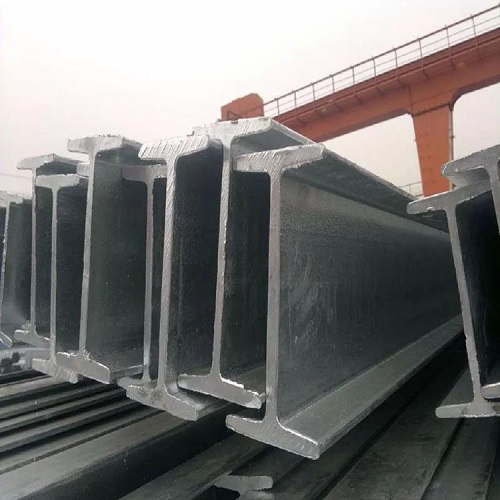
The cross-sectional shape of H-beam is H-shaped, with wide and thick flanges, parallel inner and outer surfaces, and a middle web connecting the upper and lower flanges. The overall cross-section is close to a square. Due to the close width of the flange and the height of the section, H-beams exhibit excellent stability when subjected to bi-directional loads.
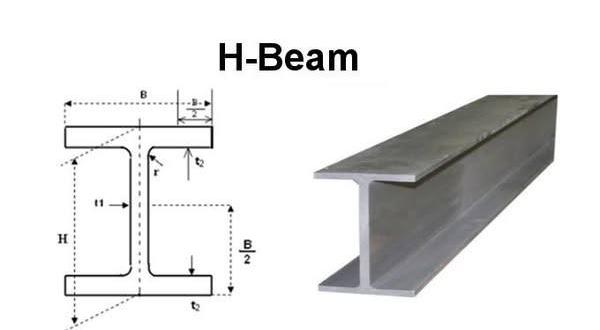
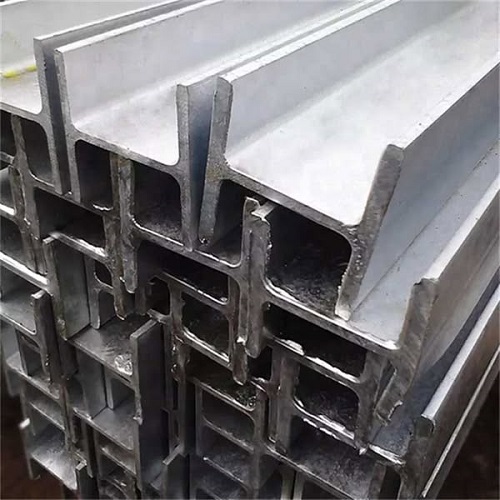
The cross-section of I-beam (I-shaped steel) is I-shaped, with narrow flanges and a sloping inner surface (usually 1:6 to 1:10), resulting in thin outer edges and thick inner edges of the flanges. The cross-sectional height of I-shaped steel is significantly greater than the flange width, exhibiting a “high narrow” shape characteristic.
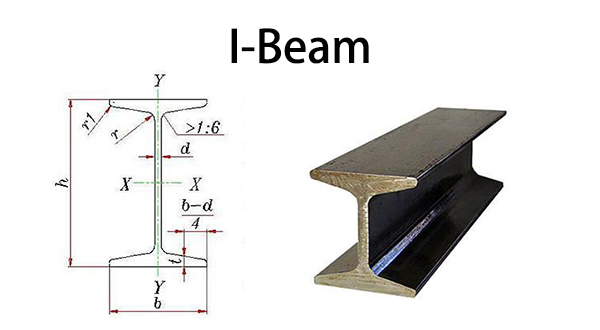
To summarize in one sentence: H-beam is a section with “wide flanges and equal thickness”, while I-beam is a section with “narrow flanges and slopes”. This fundamental difference determines the differences between the two in all subsequent performance indicators.
Comparison of mechanical properties
1. Bearing capacity
The flange of H-beam is wider, the web is thicker, and the cross-sectional area distribution is more optimized, making its bending resistance significantly better than that of I-beam.
2. Direction of force
This is the most crucial mechanical difference between the two. I-beam steel, due to its high and narrow cross-section, has a significant difference in the moment of inertia between its two main axes. It is usually only suitable for bending forces within the plane of the web plate and is not suitable for bending components that can withstand axial pressure or are perpendicular to the plane of the web plate. Its applicability is greatly limited.
3. Anti torsion performance
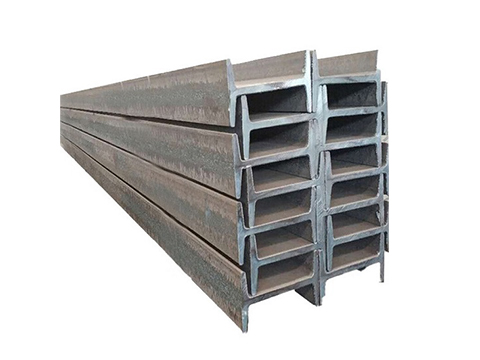
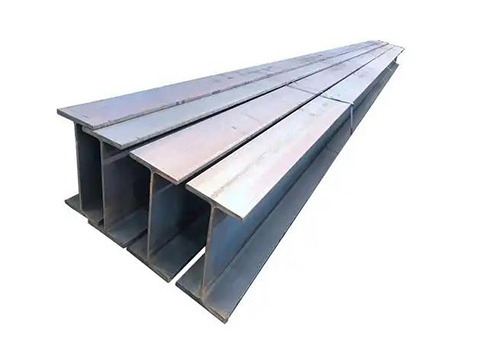
The flange of I-beam steel is narrow and has a slope, and the cross-sectional size cannot effectively resist torsional moment. H-beam steel, due to its wide flange and thick web structure, has higher torsional strength and is suitable for applications with torsional forces, such as bridges and heavy platforms.
4. Lateral stiffness and stability
The wide flange of H-beam provides excellent lateral stiffness and buckling resistance, making it less prone to instability in large-span structures. I-beam steel is prone to flange buckling when subjected to lateral pressure, and its ability to resist seismic and lateral loads is relatively weak.
Differences in production processes H-beam VS I-beam
H-beam steel and I-beam steel also have different production and processing techniques.
I-beam steel is mainly produced using hot rolling technology, where steel billets are rolled and formed by a set of horizontal rollers at high temperatures, resulting in simple and efficient production. However, the slope and size range of the flanges are limited to some extent.
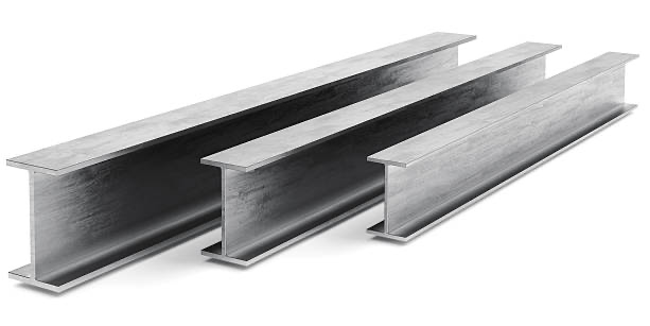
The production process of H-beam is relatively complex, with two production methods. Hot rolled H-beams are produced by rolling at high temperatures and have good plasticity and toughness, high strength, and are not easily deformed. They are suitable for structures that require high strength and stability. Welding H-beams involves the use of welding techniques (including submerged arc welding and high-frequency welding) to weld the flange plate and web plate into a shape with high dimensional accuracy and can be customized as needed. However, the production process is complex and there is a risk of welding residual stress.
The production cost of H-beam is relatively higher, but due to their stronger load-bearing capacity, they are still widely used in some large-scale projects.
Difference application between H-beam VS I-beam steel
Due to its stronger load-bearing capacity, H-beam are widely used in large-scale construction projects, such as large factories, bridges, etc; I-beam steel is more commonly used in general building structures, such as small residential and commercial buildings. In addition, H-beams are often used in special designs such as beams and columns for load-bearing walls due to their structural characteristics.
Projects suitable for H-beam
Large factories and high-rise buildings: Wide flange design provides excellent load-bearing capacity and lateral stiffness, suitable for multi story frame and core tube structures.
Bridge engineering: With superior bending, compression, and seismic performance, it has been applied to national key projects such as Dongjiakou Port in Qingdao and the Cross Sea Bridge.
Load bearing column: capable of simultaneously bearing axial force and bidirectional bending moment, suitable for structural columns in high load environments.
Large span space: can span over 300 feet without additional support, suitable for large bay structures such as logistics centers and exhibition centers.
Projects suitable for I-beam
Residential buildings: Lightweight design facilitates construction and installation, suitable for floor beams and roof beams with small and medium spans.
Small and medium-sized industrial buildings: with outstanding economic efficiency, suitable for workshops and warehouses with low load requirements.
Secondary load-bearing components: crane beams, support frames, mechanical bases, etc.
Short span structure: The most cost-effective within the span range of 33 to 100 feet.
Comparison Summary Table
| Comparison dimension | H-beam | I-beam |
| Cross-sectional shape | Wide wing edge, parallel wing edge of equal thickness | Narrow wing edge, with a sloping inner surface of the wing edge |
| Flange width | Wide | Narrow |
| Web thickness | Thick | Thin |
| Bending resistance | Strong (5% -10% higher than I-type steel) | General |
| Direction of force | Bidirectional force | Unidirectional force (within the plane of the web plate) |
| Torsional performance | Strong | Weak |
| Scope of Application | Both beams and load-bearing columns are acceptable | Only applicable to beams |
| Self-respect | Heavy | Lighter |
| Material cost | Higher | Lower (about 15% -20% lower) |
| Comprehensive economy | Better in large-span and high-rise projects | Better in small and medium span projects |
| Typical Applications | High rise buildings, bridges, and large factories | Residential, small industrial buildings, secondary components |
Summary
In summary, H-beam steel and I-beam steel have different cross-sectional shapes, uses, and processing techniques, and are suitable for different types of construction projects. Choosing appropriate steel materials is crucial for ensuring engineering quality and safety.
 English
  Русский
  العربية
  Español
  Français
  فارسی
فارسی  繁體中文
繁體中文  O‘zbekcha
  Tiếng Việt
  Українська
  Türkçe
  ไทย
ไทย  日本語
日本語  한국어
한국어  简体中文
简体中文