
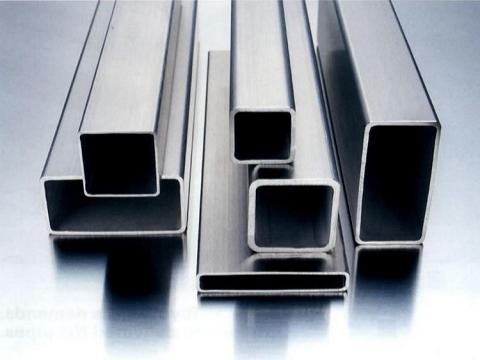
Stainless Steel Tube
Outer Diameter(OD): 3~219.1 mm
Wall thickness (WT): 0.5~12.7 mm
Manufacturing: Seamless or Welded
What Is a Stainless Steel Tube?
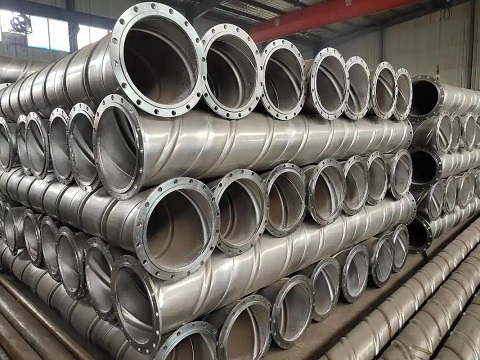
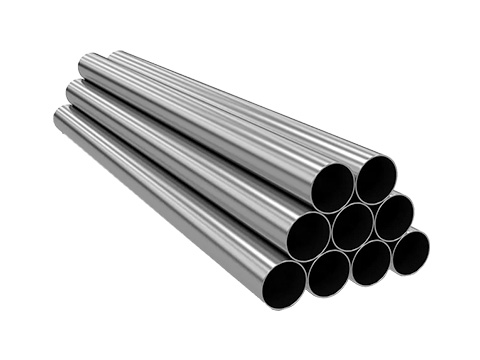
A stainless steel tube is a precision hollow section defined by outside diameter and wall thickness. That fact shapes everything downstream: which fittings you use, how you calculate pressure rating, and how you price by weight. Tubes are supplied to tight OD and wall tolerances because they join with compression fittings, orbital welds, or precision couplings where a 0.1 mm mismatch causes leaks.
Tube vs Pipe: NPS vs OD
The costliest mistake in industrial procurement is treating “stainless steel pipe vs tube” as a vocabulary choice. They are governed by different dimension systems.
- Pipe is sized by NPS (Nominal Pipe Size) and schedule (wall thickness). A 2″ NPS Sch 40 pipe has an outside diameter of 60.3 mm—not 50.8 mm. The NPS number is a name, not a measurement.
- Tube is sized by actual OD and wall in mm or inches. A 2″ OD tube is 50.8 mm outside, and its wall is quoted directly.
Why it matters: if your P&ID calls for 2″ tube but your buyer sources 2″ NPS pipe, the OD difference of roughly 9.5 mm means compression fittings will not seat. That is exactly how field leaks and rework budgets appear. In short: pipe carries by schedule-rated pressure in process lines; tube carries by precise OD in instrumentation, heat transfer, sanitary, and structural systems.
Seamless vs Welded: How Tubes Are Made
The seamless vs welded question hinges on how the hollow is formed and what your service demands.
- Seamless tube is extruded or pierced from a billet, then cold-drawn. With no weld seam, it offers uniform integrity for high-pressure, corrosive, or safety-critical service (instrumentation, heat exchangers, boilers).
- Welded tube (ERW) is formed from strip and longitudinally welded, then cold-sized and annealed. Modern ERW welds are fully tested and, for many applications, perform like seamless at lower cost. Welded routes dominate sanitary, mechanical, and decorative tube.
Specify seamless where the weld is a risk you cannot inspect; choose welded where cost, surface, and dimensional consistency win and the standard permits it.
Stainless Steel Tube Types
Once you understand OD-based sizing, the next call is manufacturing route and cross-section shape. Each type serves a different buyer.
Seamless Stainless Steel Tube
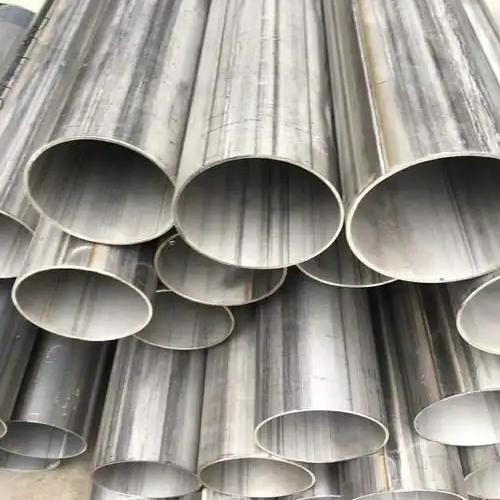
Seamless tube is the integrity-first choice. It is extruded or pierced from a billet, then cold-drawn for consistent wall and smooth bore. Typical uses include instrument lines, heat-exchanger U-tubes, and high-pressure utility lines. When the spec says “no weld,” this is your only route.
Welded (ERW) Stainless Steel Tube
Welded tube starts as coiled or sheet strip, is rolled into shape, and joined by electric resistance welding, then typically solution- or bright-annealed and eddy-current tested. For sanitary, mechanical, and structural jobs, welded tube gives better surface, tighter straightness, and lower cost than seamless.
Shapes: Round, Square, Rectangular & Decorative
Beyond the round tube, buyers routinely need:
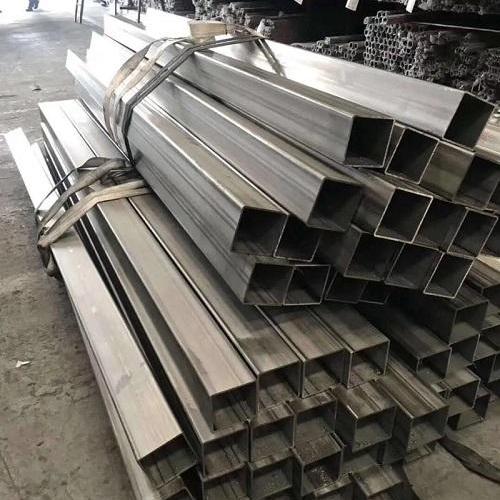
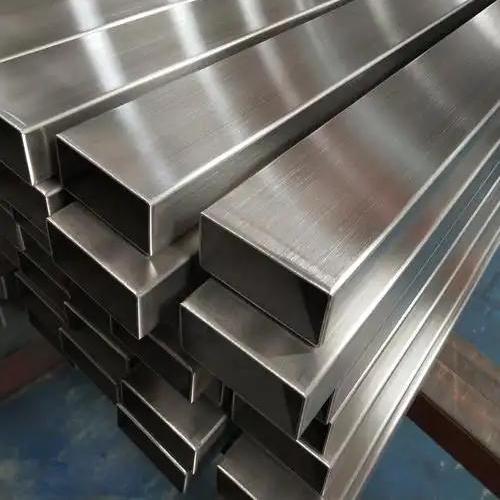
- Square and rectangular tube for frames, handrails, balustrades, and structural members (usually A554 mechanical tube).
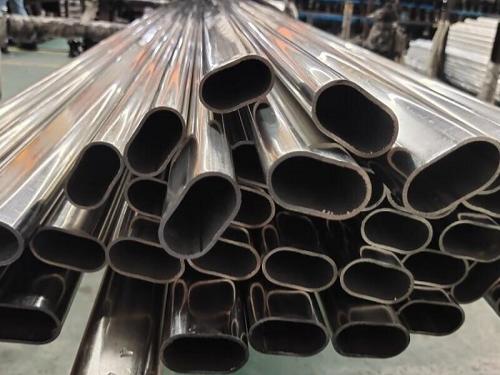
- Decorative tube with polished or brushed finishes for architecture and retail fit-out.
- Coiled and capillary tube for refrigeration and instrumentation where long, bendable runs matter.
Shape is mostly mechanical and aesthetic, but it still follows the same grade and standard logic.
Material Grades: 304 vs 316L
The grade you pick decides how long the tube survives its environment. For most buyers the real call is 304 stainless steel tube versus 316L stainless steel tube, with 304L, 316, and 321 as situational variants.
The 304 Family
304 is the workhorse 18/8 austenitic grade (18% Cr, 8% Ni, no Mo). It resists corrosion in atmosphere, fresh water, food, and many chemicals, and is the most cost-effective choice for general service. 304L is the low-carbon version (C ≤ 0.03%) for heavy welding without sensitization.
The 316L Family
316L stainless steel tube adds 2–3% molybdenum, sharply improving resistance to chlorides and pitting. Its low carbon (≤ 0.03%) also prevents intergranular corrosion after welding. 316 is the higher-carbon variant for non-welded high-temperature service; 321 is titanium-stabilized for sustained high-heat zones.
Chemical Composition & Mechanical Properties
The table below shows why 316L costs more and where it earns the premium.
| Property | 304 / 304L | 316L | Note |
|---|---|---|---|
| Carbon (C) max | 0.08 / 0.03 | 0.03 | Lower C = better weld integrity |
| Chromium (Cr) | 18.0–20.0% | 16.0–18.0% | Primary corrosion resistance |
| Nickel (Ni) | 8.0–12.0% | 10.0–14.0% | Austenite stability |
| Molybdenum (Mo) | — | 2.0–3.0% | Chloride/pitting resistance |
| Tensile strength (min) | 515 / 485 MPa | 485 MPa | Both strong enough for most service |
| Yield strength (min) | 205 / 170 MPa | 170 MPa | |
| Elongation (min) | 40% | 40% | Good formability |
| Pitting Resistance Eq. (PREN) | ≈ 20 | ≈ 26 | Higher = better in chlorides |
Which Grade for Which Environment?
- Atmosphere, interiors, fresh water, food lines, architecture: 304 or 304L—the majority of decorative, structural, and hygienic jobs.
- Marine, coastal, desalination, chemical, pharmaceutical washdown: 316L. The molybdenum is what keeps pitting away where chloride is present.
- Sustained high heat (600–850 °C) with welding: 321 or 316L. Stabilized chemistries resist scaling and sensitization.
Quick rule: if chloride exposure is real—sea air, road salt, process chlorides—specify 316L. If the environment is benign and the budget is tight, 304 is the rational default.
Product Specifications
| Item | Parameters |
| Product Name | Stainless Steel Tube |
| Standard | A269 general service A270 sanitary/food/pharma A213/A249 heat exchangers A312 process pipe, A554 mechanical/structural |
| Material | 304, 304L, 316, 316L, 321 |
| Type | Welded, Seamless |
| OD | 3 ~ 219.1 mm |
| WT | 0.5 ~ 12.7 mm |
| Length | Standard length 6m or random length, cut to order |
| End Type | Plain end, bevel end |
| HS codes | 73064000 (welded) 73044100 (seamless) |
| MOQ | 15 tons |
| Delivery Time | 10 work days |
| Payment Term | T/T, Paypal |
| Transport Package | Standard Seaworthy Packing |
The Weight Formula & a Stainless Steel Tube Weight Chart
Because most export quotes are based on weight, you should estimate before contacting a mill. The standard austenitic formula is:
Weight (kg/m) ≈ 0.02466 × WT × (OD − WT)where OD and WT are in millimeters.
| OD (mm) | Wall (mm) | Weight (kg/m) | Rounded |
|---|---|---|---|
| 12.7 | 1.0 | 0.02466 × 1.0 × 11.7 = 0.288 | 0.29 |
| 25.4 | 2.0 | 0.02466 × 2.0 × 23.4 = 1.154 | 1.15 |
| 50.8 | 3.0 | 0.02466 × 3.0 × 47.8 = 3.536 | 3.54 |
| 76.1 | 4.0 | 0.02466 × 4.0 × 72.1 = 7.111 | 7.11 |
| 114.3 | 6.0 | 0.02466 × 6.0 × 108.3 = 16.02 | 16.02 |
This stainless steel tube weight chart converts a drawing into kilograms, the unit most suppliers quote. Save this formula for your next RFQ.
Applications by Industry of Stainless Steel Tube
Here is how specs typically land by sector.
Oil & Gas / Petrochemical
High-pressure, high-temperature, and sour-service lines lean on seamless tube and A213/A249 heat-exchanger tube, with 316L where chlorides are present. Integrity, traceability, and MTC-backed testing are non-negotiable.
Food, Beverage & Pharmaceutical (Hygienic)
Sanitary lines use A270 tube with controlled Ra and conditioned weld beads. A dairy plant in the Middle East once switched a filling line from a generic welded tube to certified A270 316L with Ra ≤ 0.8 µm; CIP cycle times dropped, bacterial counts stabilized, and the line passed audit on the first pass instead of the third.
Chemical & Marine
Anywhere chloride is present—coastal plants, desalination, shipboard systems—316L stainless steel tube is the baseline. An offshore platform in the North Sea had originally installed 304 in a splash-zone handrail system; within two years pitting forced a full replacement. The re-spec to 316L, with its molybdenum-driven PREN of ~26, has now survived more than a decade of salt spray.
Energy & Heat Exchangers
Boilers, condensers, and exchangers use A213 (seamless) and A249 (welded) tube where thermal cycling and thin walls demand consistent metallurgy.
Structural, Architectural & Automotive
Visible and load-bearing members use A554 square, rectangular, and round tube in 304 or 316 with polished or brushed finishes; automotive adds EGR coolers, exhaust sections, and precision instrument lines.
Stainless Steel Tube Standards & Specifications
The ASTM standards below are the ones B2B buyers meet most often. Match the standard to the job before you discuss price.
| ASTM Standard | Product Form | Primary Application | Typical Grades |
|---|---|---|---|
| A269 | Seamless / welded austenitic tube | General service, instrumentation, utility, low/high temp | 304, 304L, 316, 316L |
| A270 | Seamless / welded sanitary tube | Food, dairy, beverage, pharma (Ra targets) | 304, 304L, 316, 316L |
| A312 | Seamless / welded pipe (NPS/Sch) | High-temp & general corrosive process piping | 304, 304L, 316, 316L |
| A213 | Seamless tube | Boilers, superheaters, heat-exchanger tubes | 304, 316, 321 |
| A249 | Welded tube | Boilers, superheaters, heat exchangers, condensers | 304, 316 |
| A554 | Welded mechanical tube | Architectural, structural, decorative (round/square/rect) | 304, 316 |
A common error is assuming A269 is “sanitary”—it is not. A269 is general-service tubing; if your line touches food or pharma, specify A270 with defined Ra and weld-bead conditioning. Likewise, A312 is pipe dimensioned by NPS and schedule, not tube OD.
Looking for process pipe in NPS dimensions? Our stainless steel pipe and seamless stainless steel pipe pages cover schedule-rated options in the same grades.
How to Choose the Right Stainless Steel Tube
Selection is a four-step process. Follow it and your RFQ comes back unambiguous.
Step 1 — Define the Service Condition
Write down fluid, pressure, temperature, and the corrosives present (especially chlorides). This single list decides grade and wall.
Step 2 — Pick the Grade
Use the 304/316L logic above. Benign environment → 304/304L. Chloride or chemical → 316L. High sustained heat with welding → 321 or 316L.
Step 3 — Select Standard, Route & Size
Map the job to a standard (A269/A270/A312/A213/A249/A554), choose seamless or welded, and state OD + wall in mm (not NPS). Confirm shape for structural jobs.
Step 4 — Specify Surface, Test & Docs
State finish (pickled, bright annealed, polished Ra), required tests (hydrostatic, eddy current, UT), and documentation (EN 10204 3.1 MTC, third-party inspection).
RFQ Checklist Template
Copy this into your inquiry so suppliers quote the same thing:
- Standard & edition (e.g., ASTM A270)
- Grade (e.g., TP316L)
- Route (seamless / welded-ERW)
- OD × wall × length (mm)
- Quantity (pcs / meters / kg)
- Surface & Ra target
- Required tests
- MTC type & inspection (SGS/BV)
- Packing & Incoterms
- Target price basis (see per-kg section)
Ready to turn this checklist into a real quote? Send us your spec and we will return a priced, standards-matched offer—Request a Quote.
Stainless Steel Tube Price Factors
What Drives the Price
- Grade: 316L costs more than 304 because of nickel and molybdenum content; 321 and 316 sit above 304.
- OD and wall: Small OD and very thin or very thick walls raise conversion cost; mid-range sizes are most economical.
- Surface finish: Pickled is cheapest; bright annealed and polished (especially low-Ra sanitary) add cost.
- Route: Seamless typically costs more than welded for the same size due to the billet and drawing process.
- Volume & lead time: Full-container or mill-run quantities earn better per-kg pricing than small mixed lots; urgent splits cost more.
- Alloy indices: Nickel and molybdenum spot prices shift the base every week, so confirm validity dates on any quote.
How to Get an Accurate Quote
Specify per-kg FOB or CIF with a validity window and attach your RFQ checklist. A vague “send me 316L tube price” returns a meaningless number; a precise spec—grade, OD × wall, route, finish, quantity, Incoterm—returns a budgetable number.
Want a transparent per-Ton figure for your exact spec? Our team prices by grade, OD, surface, and batch size—start with Request a Quote.
Why Source From a Chinese Export Trader
China’s supply chain offers breadth of grades, fast mill access, and competitive conversion cost. Trust comes from process, not proximity: a trader who provides heat-traceable MTCs, arranges SGS/BV, honors Incoterms, and documents HS codes turns a distant purchase into a controlled, auditable transaction.
Building a long-term supply relationship? Compare our 304 stainless steel and 316L stainless steel programs, then Request a Quote with your RFQ checklist attached.
Why choose wanzhi?
Wanzhi Steel Co., Ltd. Suppliers offer:
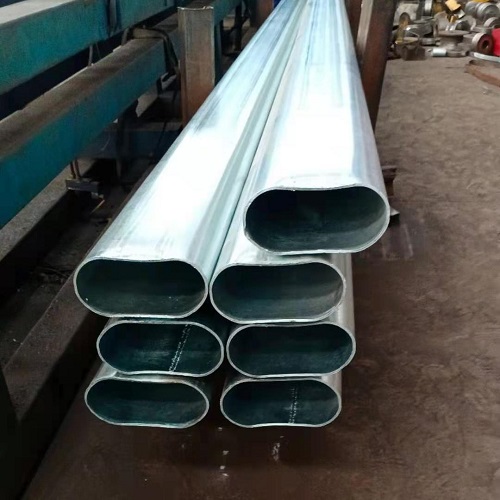
Customized solutions: customized profiles (round, rectangular, square, or oval) and sequined finishes (pickling、polishing).
Timely delivery: fast delivery, as fast as within a week.
Competitive pricing: bulk discounts available for orders over 20 tons.
Professional logistics support: ocean-safe packaging with moisture barrier and steel strapping to prevent damage.
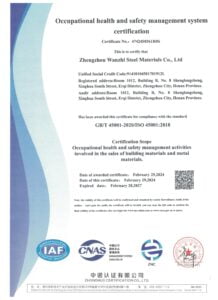
Our Certificates

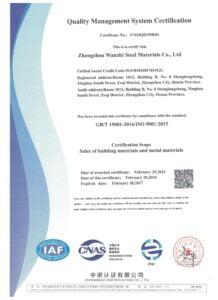
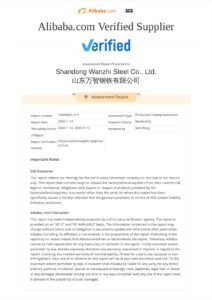


Manufacturer

7*24 Service

Discounted

Customizable

Trustworthy
Customer Affirmation

Contact us
Company: Erqi District, Zhengzhou City, Henan Province, China
Factory: Binzhou City, Shandong Province, ChinaList item
E-mail: [email protected]
WhatsApp: +86 18736065220
Website: https://wanzhisteels.com

Hot Tags: SS tube supplier, ステンレス鋼 pipe, seamless stainless steel tube, 304/316L stainless steel tube manufacturers, factory, price


 English
  Русский
  العربية
  Español
  Français
  فارسی
فارسی  繁體中文
繁體中文  O‘zbekcha
  Tiếng Việt
  Українська
  Türkçe
  ไทย
ไทย  日本語
日本語  한국어
한국어  简体中文
简体中文