
The chemical industry requires piping systems that can withstand highly corrosive media, elevated temperatures, pressure fluctuations, and continuous operation. 316L stainless steel pipe for chemical industry is widely recognized as one of the most reliable piping materials due to its superior corrosion resistance, excellent weldability, and long service life.
Compared with standard stainless steel grades, 316L stainless steel pipe contains molybdenum (Mo), which significantly improves resistance to chloride corrosion, pitting corrosion, and chemical attack. It is commonly used in chemical processing plants, pharmaceutical facilities, petrochemical projects, and industrial fluid transportation systems.
What Is 316L Stainless Steel Pipe?
316L stainless steel pipe is a low-carbon version of 316 stainless steel and belongs to the austenitic stainless steel family.
The designation “L” means Low Carbon, indicating a maximum carbon content of approximately 0.03%. The reduced carbon content improves welding performance and minimizes the risk of intergranular corrosion after welding.
Common international designations include:
- UNS S31603
- EN 1.4404
- ASTM 316L Stainless Steel
316L stainless steel pipes are available in Wanzhi Steel various forms:
- seamless stainless steel pipe
- welded stainless steel pipe
- sanitary pipe
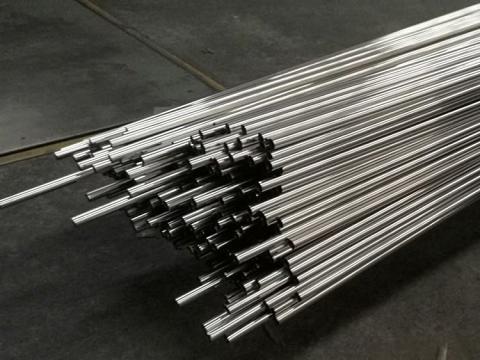
Seamless ss pipes
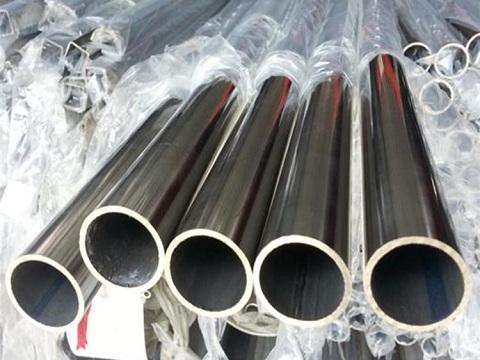
Welded ss pipes
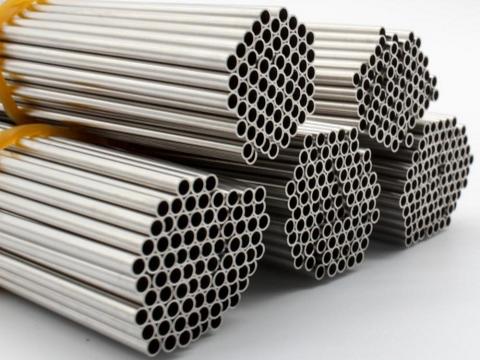
Sanitary pipe
Chemical Composition of 316L Stainless Steel
Typical chemical composition according to ASTM standards:
| Element | Content |
|---|---|
| Chromium (Cr) | 16–18% |
| Nickel (Ni) | 10–14% |
| Molybdenum (Mo) | 2–3% |
| Carbon (C) | ≤0.03% |
| Manganese (Mn) | ≤2.0% |
| Silicon (Si) | ≤1.0% |
The molybdenum addition is the key factor that differentiates 316L stainless steel pipe from 304L stainless steel pipe.
Why Choose 316L Stainless Steel Pipe for Chemical Industry?
1.Excellent Corrosion Resistance
The biggest advantage of 316L stainless steel pipe for chemical industry is its outstanding corrosion resistance.
The addition of 2–3% molybdenum (Mo) provides improved protection against:
- Chloride-containing solutions
- Acidic chemicals
- Saltwater environments
- Industrial solvents
- Chemical cleaning agents
This makes 316L suitable for harsh chemical processing conditions where standard 304 stainless steel may not provide sufficient protection.
2. Superior Resistance to Pitting and Crevice Corrosion
Chemical plants often handle fluids containing chlorides and aggressive ions, which can cause localized corrosion.
316L stainless steel has a higher Pitting Resistance Equivalent Number (PREN) than 304 stainless steel, providing better resistance against:
- Pitting corrosion
- Crevice corrosion
- Stress corrosion cracking in certain environments
This helps extend pipeline service life and reduces unexpected maintenance costs.
3. Excellent Welding Performance
Chemical processing systems usually require extensive welding during installation.
Due to its low carbon content, 316L stainless steel pipe:
- Reduces chromium carbide precipitation
- Minimizes weld-related corrosion
- Maintains corrosion resistance after fabrication
It is suitable for welding methods including:
- TIG welding
- MIG welding
- Orbital welding
4. High Temperature and Pressure Performance
316L stainless steel pipes maintain stable mechanical properties under elevated temperatures.
They are commonly used in:
- Chemical reactors
- Heat exchangers
- High-temperature fluid transportation systems
The combination of strength and corrosion resistance makes 316L suitable for demanding industrial environments.
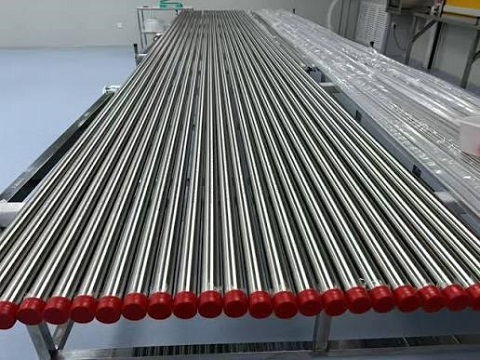
SS Sanitary pipes
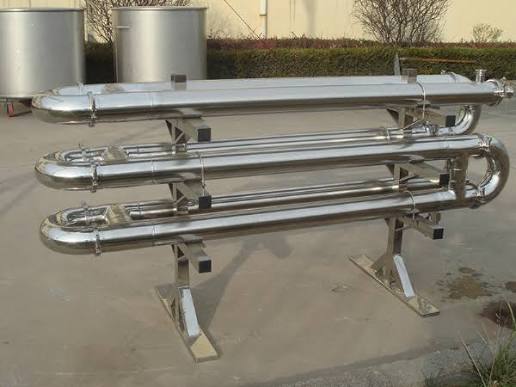
Heat exchange pipes
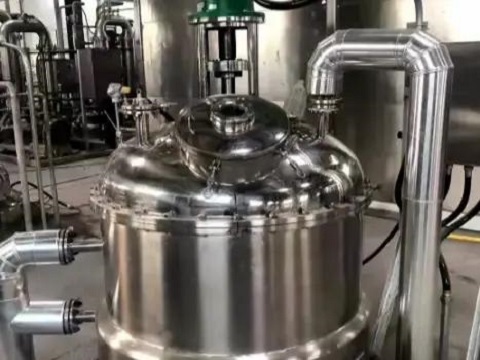
Beverage Pipeline
Common Applications of 316L Stainless Steel Pipe For Chemical Industry
Chemical Processing Plants
316L pipes are widely used for transporting: Acids, Alkalis, Organic chemicals, Solvents, Industrial fluids.
Applications include:
- Process pipelines
- Storage systems
- Reaction equipment
- Chemical transfer lines
Pharmaceutical and Biochemical Industry
- Pharmaceutical production lines
- Pure water systems
- Sterile processing equipment
- Bioreactors
Petrochemical Industry
- Refining equipment
- Chemical injection systems
- Cooling systems
- Process piping
Water Treatment Industry
- Desalination equipment
- Wastewater treatment systems
- Chemical dosing pipelines
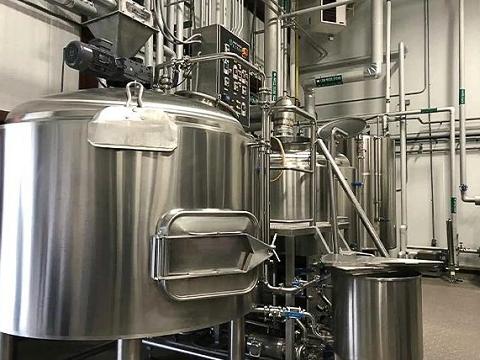
Factory Pipelines
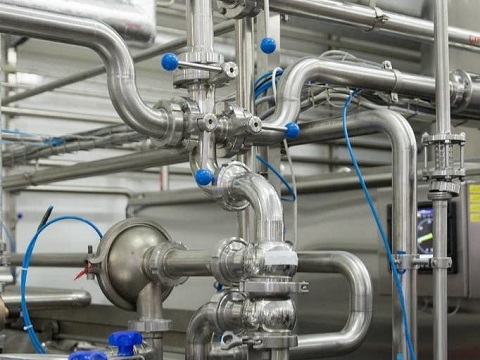
SS sanitary pipes
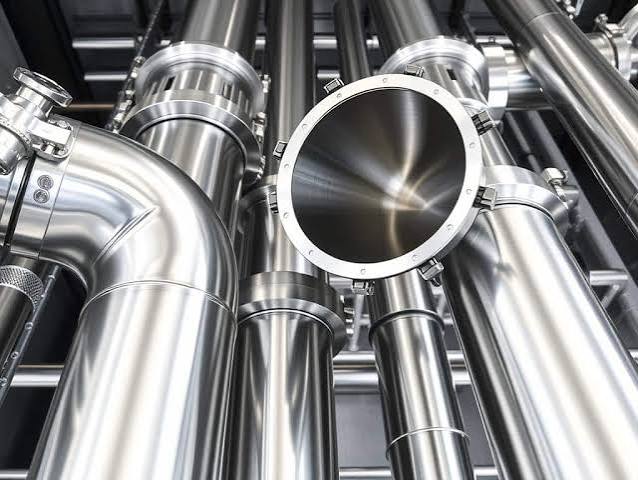
Industrial pipelines
316L Stainless Steel Pipe vs 304L Stainless Steel Pipe
| Property | 304L Stainless Steel Pipe | 316L Stainless Steel Pipe |
|---|---|---|
| Chromium | 18–20% | 16–18% |
| Nickel | 8–12% | 10–14% |
| Molybdenum | None | 2–3% |
| Chloride Resistance | Good | Excellent |
| Chemical Resistance | Moderate | Higher |
| Cost | Lower | Higher |
| Chemical Industry Application | General | Preferred |
For chemical processing environments involving chlorides, acids, or aggressive chemicals, 316L stainless steel pipe is usually the preferred choice.
How to Select 316L Stainless Steel Pipe for Chemical Applications?
When choosing 316L stainless steel pipe for chemical industry, consider:
Chemical Medium
- Chemical concentration
- Chloride content
- PH value
- Operating temperature
Different chemicals may require different stainless steel solutions.
Pressure Requirements
Select suitable:
- Pipe schedule
- Wall thickness
- Seamless or welded construction
High-pressure systems generally require thicker-wall pipes.
Welding Requirements
For complex piping systems, 316L provides better reliability after welding due to its low carbon content.
Surface Requirements
Chemical and pharmaceutical industries often require:
- Smooth internal surface
- Pickled and passivated surface
- Electropolished finish
to reduce contamination and improve cleaning efficiency.
Advantages of Using 316L Stainless Steel Pipe
Excellent corrosion resistance
Superior chloride resistance
Long service life
Excellent weldability
Suitable for aggressive chemicals
Low maintenance requirements
Hygienic and easy to clean
Stainless Steel Pipe for Chemical Industry Professional Supplier
As an experienced 316L stainless steel pipe supplier, we provide high-quality seamless and welded stainless steel pipes for chemical processing, pharmaceutical, petrochemical, and industrial applications.
Our 316L stainless steel pipes are manufactured according to international standards, with strict quality inspection to ensure reliable performance in demanding environments.
Available services include:
- Custom cutting
- Surface polishing
- Non-destructive testing
- Customized dimensions
- Export packaging
Choose 316L stainless steel pipe for chemical industry for a durable, corrosion-resistant, and cost-effective piping solution.
 English
  Русский
  العربية
  Español
  Français
  فارسی
فارسی  繁體中文
繁體中文  O‘zbekcha
  Tiếng Việt
  Українська
  Türkçe
  ไทย
ไทย  日本語
日本語  한국어
한국어  简体中文
简体中文