
FAQ
Steel procurement FAQ: questions buyers ask before ordering
Buying steel for a project means more than comparing a price per kilogram. The questions below come from two places: the questions our own customers at Wanzhi Steel ask most, and the procurement questions international buyers raise across the industry. We have grouped them so you can read the section you need and skip the rest. If your question is not here, our sales team answers within one business day.
Our product range covers stainless steel in coil, sheet, plate, pipe and bar, plus galvanized and color-coated lines. Most of the answers below apply across those products, with stainless examples used where the detail matters.
About the supplier
Q: Are you a trading company or a manufacturer?
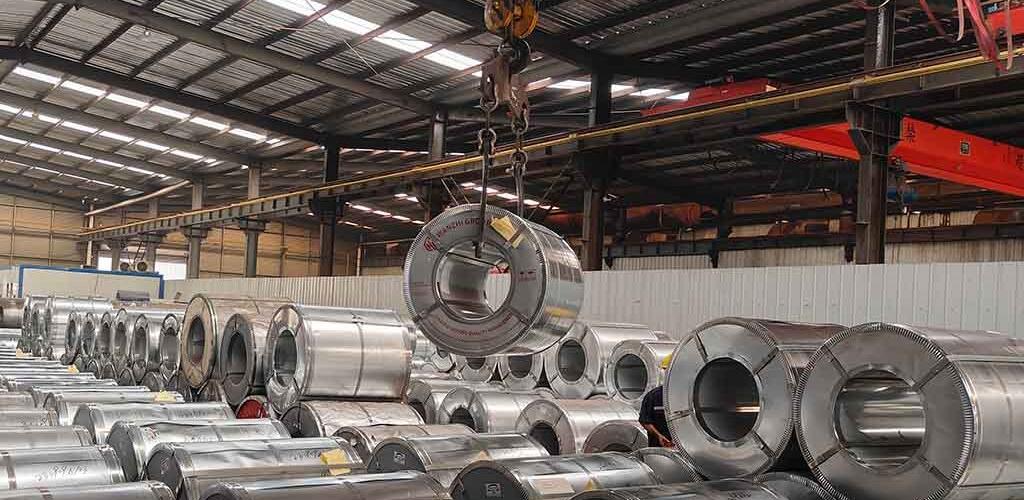
A: Wanzhi Steel is an industry and trade company with our own factory. We were founded in 2011 and have since built a mature sales and after-sales team with years of export experience. Working with a supplier that both produces and exports means one point of contact from mill to container, and fewer hands between you and the material.
Q: Can I visit your factory?
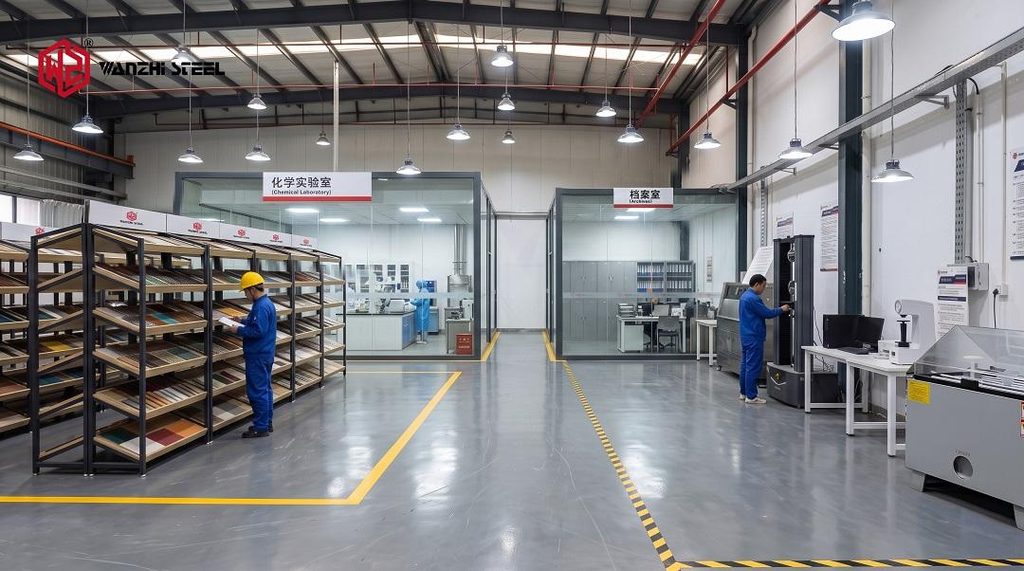
A: Yes. We welcome customers from all over the world to visit our factory. A visit lets you check the production line, the quality lab and the packing process in person. If travel is difficult, we can also arrange an online factory tour by video call.
Q: What certifications do your products have?
A: Our products are covered by ISO 9001, ISO 14001, ISO 45001, CE, SGS, TÜV, SNI and other certifications. These cover quality management, environmental management, occupational health and safety, and product conformity. For a specific market such as Indonesia (SNI) or the EU (CE), tell us during the inquiry so we can prepare the right documents.
Choosing the right material
Q: How do I choose the right stainless grade?
A: Start with the environment the steel will live in. For most indoor and general fabrication, 304 stainless steel sheet is the default. For marine, coastal or chemical service where chlorides are present, 316 stainless steel sheet adds molybdenum for better pitting resistance. For structural plate work, hot-rolled stainless plate is the common choice. When the grade is still open, send us the end use and we will name the grade rather than leave you guessing.
Q: What thickness and size should I order?
A: Thickness drives both strength and cost. Thicker material costs more per square meter and is harder to form, while thin gauge is lighter and more flexible. Standard coil and sheet sizes exist, but custom dimensions are normal. For structural parts you can relax the tolerance, while stamped parts often need it within plus or minus 0.1 mm. Tell us the application and we will suggest a workable thickness range.
Q: Which surface finish should I specify?
A: Finish affects looks, cleanability and cost, not the alloy itself. Our stainless steel surface finish guide compares 2B, No.4 and BA in detail. In short: 2B is the cheap functional default, No.4 (brushed) hides fingerprints and suits kitchens and lifts, and BA is bright and reflective for decorative trim. For food and brewery equipment, Wanzhi Machinery builds tanks with No.4 or electropolished interiors.
Q: How do I choose the right steel coil size?
A: Coil size is about more than width and thickness. You also need the inner diameter (commonly 508 mm or 610 mm), the coil weight your uncoiler can handle, and how the coil will be packed and shipped. Our sales manager will help you match the coil dimensions to your slitting and stamping equipment, so do not hesitate to share your line specs.
Quality and certificates
Q: What is an MTC and why do I need one?
A: MTC stands for Mill Test Certificate, sometimes called a material test report. It records the chemical composition (for example nickel and chromium levels), the mechanical properties (tensile strength and elongation), the heat or lot number, and the standard the material was made to, such as ASTM A240. The MTC is your proof that the delivered coil matches the grade on the purchase order. A supplier that refuses to provide an MTC, or provides one without third-party stamps, is a risk signal. The ASTM International body sets many of the standards these certificates reference.
Q: Can I request third-party inspection?
A: Yes. We accept third-party inspection by SGS, BV, TÜV, Intertek or any agency you name. Inspection can cover chemical composition, mechanical properties, thickness tolerance, surface quality and packing. For large or first-time orders, an independent inspection before loading is the single best way to avoid surprises at your port.
Q: How do you guarantee product quality?
A: We hold ISO and SGS certifications and run our own quality control laboratory. Every process is checked, and we accept third-party testing on top of our in-house checks. Material is traceable through production and test records by heat and lot number, which supports customer audits and warranty claims.
Q: What is material traceability and why does it matter?
A: Traceability links the steel you receive to its production heat and test records. The items to track are the grade designation, the applicable standard, the heat or lot number, the MTC, and any inspection report. Good traceability matters for controlled manufacturing, quality assurance and customer audits, and it is what lets us act fast if a claim ever arises.
Samples and customization
Q: Can I get samples before ordering?
A: Yes. Our samples are usually free. We can also make samples to your technical drawings or specifications so you can check the grade, finish and dimensions before committing to a full order. A small trial order is a sound way to validate a new supplier on quality, packing and documentation before you scale up.
Q: Can you customize to my drawings or specifications?
A: Yes. We can produce to your data requirements and also customize from your samples or technical drawings. Customization covers grade, dimensions, surface finish, edge condition and any special tolerance your project needs.
Q: What processing services do you offer?
A: Beyond raw coil and sheet, we handle slitting to exact width, cut-to-length, shearing, leveling, surface finishing (2B, BA, No.4, HL, mirror) and PVC film coating. Requesting these services before shipment reduces handling at your facility and keeps tolerances consistent. Our machinery division applies the same logic to fermentation and mixing tanks built to customer drawings.
Ordering, MOQ and quotation
Q: What is your minimum order quantity (MOQ)?
A: MOQ depends on the product, grade, finish and width. Standard stock items can start from about 10 ton per size, while full container loads (around 25 tonnes) earn the best unit price. Special thicknesses, ultra-wide coils or tight tolerances may carry a higher minimum. Tell us the grade, size and quantity and we will confirm availability and the exact MOQ for your spec.
Q: What details should I include in a request for quotation (RFQ)?
A clear RFQ leads to an accurate quote and fewer mismatches later. Include these points:
- Steel grade and applicable standard (for example ASTM 304 or EN 1.4301)
- Product form (coil, sheet, plate, pipe, bar)
- Dimensions and tolerances (thickness, width, length)
- Surface finish and any protective film
- Quantity and unit of measure
- Required certificates and inspections
- Processing requirements, if any
- Delivery terms (FOB, CIF, EXW) and destination port
- Target delivery date
Sending the same RFQ to every candidate lets you compare like for like instead of mixing a stock quote against a processed quote.
Q: How do I get an accurate quote?
Send the RFQ details above by email or message, and our team responds with an itemized quote that separates material, processing and logistics. Comparing the full delivered specification, not just the unit price, is what protects you from hidden costs such as freight, insurance, duties and bank fees.
Pricing and payment
Q: What payment terms do you accept?
A: Our standard terms are T/T: 30 percent in advance with the balance paid before shipment. Other payment methods can be negotiated, and for repeat orders we can discuss letters of credit (L/C) from a reputable bank. We keep terms flexible for long-term partners once a working relationship is established.
Q: Why is your steel priced higher than some suppliers?
A: We price for verified quality and reliable delivery. Lower quotes can hide downgraded material, weak packing or unclear Incoterms that cost more by the time the container reaches you. We use better transport methods to protect delivery time and we stand behind the material with certificates and inspection. The right comparison is total landed cost and risk, not the headline kilogram price.
Q: What determines the price of steel?
A: Price follows the raw material index (nickel and chromium move stainless cost), the grade and thickness, the surface finish, the quantity, and the delivery terms. A 316 coil costs more than 304 because of its molybdenum content, and a polished or filmed finish adds cost over bare 2B. Ask for the full breakdown so you can see what you are paying for.
Production, lead time and delivery
Q: How long does it take for your factory to deliver?
A: The delivery time is generally about two weeks. If we have stock, we can ship to you in advance. If it is an urgent order, we can complete the delivery within 7 days. Custom or non-stock specifications take longer because they enter the production schedule. We give you a written delivery commitment with the quotation so the date is clear on both sides.
Q: How do you ensure on-time delivery?
A: Wanzhi Steel works with fixed freight partner we have cooperated with for years. A stable logistics relationship reduces the chance of a missed sailing or a delayed inland move, and it lets us plan the production to mill slot against a known ship schedule.
Q: Which ports do you ship from and what documents do you provide?
A: We ship from major Chinese ports such as Tianjin, Qingdao and Shanghai. For each order we prepare the commercial invoice, packing list, bill of lading, certificate of origin and the mill test certificate. Some destinations need extra papers such as a certificate of conformity or a inspection certificate, so tell us the destination early and we will arrange the documents before loading.
Packaging and shipping terms
Q: How is the steel packaged for export?
A: Export packaging is built to survive sea transport, not just truck movement. A standard seaworthy pack uses wooden or steel pallets, steel strapping and edge protectors, waterproof kraft or PE wrapping, and a moisture barrier such as VCI paper or desiccant to fight condensation. For mirror or brushed finishes, a protective PVC film is essential to prevent scratches. We provide loading photos and a packing list for every shipment.
Q: What are FOB, CIF and EXW?
A: These are Incoterms that decide who pays and who carries the risk:
- EXW (Ex Works): you collect the goods at our factory; you own freight, insurance and export clearance.
- FOB (Free On Board): we deliver to the port and load the vessel; risk passes to you once on board.
- CIF (Cost, Insurance and Freight): we pay freight and insurance to your destination port, but risk still passes at the load port.
Confirm which term applies before you compare quotes, because the same kilogram price under different terms lands at very different total cost.
Q: Do you arrange shipping?
A: We can arrange shipping under FOB or CIF and coordinate with our freight partner, or you can use your own forwarder under EXW. Either way we prepare the export documents and loading photos so you can track the container from our plant to your port.
After-sales and claims
Q: Do you provide after-sales service?
A:Yes. If you have any questions after delivery, our business manager stays in contact with you through the whole process and provides ongoing service. Good after-sales is part of how we keep long-term customers.
Q: What if there is a quality problem when the container arrives?
A: Contact us with photos, videos and the coil or batch numbers as soon as you find an issue. Those details let us run a fast internal trace against the heat record and packing photos. If the fault is in our manufacturing or packing, we provide commercial compensation or replacement material. Keeping the MTC and the loading photos from shipment makes this process quick.
Q: What are the main advantages of ordering from Wanzhi?
A: Customers cite six points: our own factory, quick delivery, price advantage, a 15-year quality assurance, excellent after-sales service, and acceptance of third-party testing. Together they mean you deal with one accountable supplier from quote to claim, which is simpler than splitting responsibility across a trader and a distant mill.


FAQ
Q: How to choose the right size of steel coil?
A: Our sales manager is very professional and will help you choose the right size. Don’t worry, just contact us.
Q: Is it safe to buy steel from China?
A: Yes, when you work with a verified supplier. Check the business license, ask for original mill certificates, and use third-party inspection for large orders. Treat the first order as a validation step, then scale up once quality, packing and documents check out.
Q: Can a stainless supplier also process the material?
A: Many integrated suppliers offer cutting, slitting, leveling, bending and surface finishing. Wanzhi supplies the material and the processing, and our 316L pipe line and 316L pipe are made and inspected in house. One supplier controlling both material and processing keeps tolerances consistent.
Q: Should I buy from a mill, a distributor or a processor?
A: It depends on volume, urgency and specification. Mills suit large, defined programs. Distributors and processors offer stock, smaller quantities and faster delivery. The useful question is which parts of your supply chain a supplier can control and document, not simply whether they own a furnace.
Q: How do I compare stainless suppliers fairly?
A: Send the same RFQ to every candidate and compare the full delivered specification: grade, origin, tolerance, surface, inspection documents, processing, packaging, lead time and freight terms. Comparing unit price alone hides the differences that decide whether the material actually works for your job.
 English
 Русский
 العربية
 Español
 Français
 فارسی
 繁體中文
 O‘zbekcha
 Tiếng Việt
 Українська
 Türkçe
 ไทย
 日本語
 한국어
 简体中文