
Pick the wrong surface finish on a stainless steel order and you can end up with a sheet that looks right in the catalogue but fails on the shop floor. The three names buyers ask about most are 2B, No.4 and BA. They sound close, yet they are made differently, look different, and suit different jobs.
Wanzhi Group has rolled, finished and exported stainless steel for 15 years across more than 100 countries. This guide explains what each finish is, how it is produced, what it costs, and how to choose between them without guesswork. If you only read one section, read the comparison table near the middle.
What a surface finish is, and why it matters
A surface finish is the final state of the steel face after rolling and any extra treatment. It is not a coating. The alloy underneath stays the same, so a 304 sheet is still 304 whether it leaves the mill at 2B or gets polished to No.4 afterward.
What changes is the texture, the reflectivity, and how the sheet behaves in fabrication and service. Finish affects fingerprint visibility, how scratches read, how easy the part is to clean, and what it costs to make. On a food tank the finish is a hygiene issue. On a lift door it is mostly a looks issue. Same metal, different priorities.
The three finishes at a glance
| Finish | How it is made | Look | Common use |
|---|---|---|---|
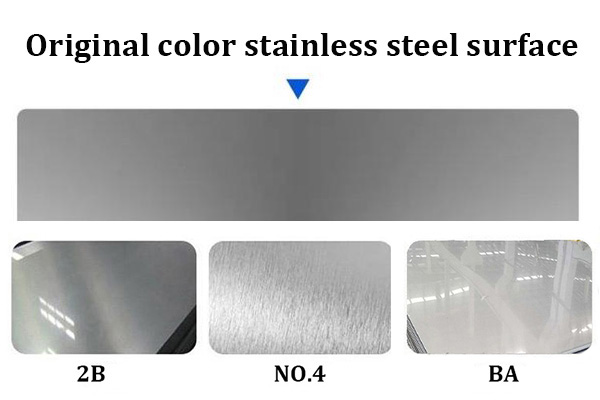
| 2B | Cold rolled, annealed, pickled, light final pass | Dull, slightly cloudy grey | Industrial tanks, general fabrication, base for further polishing |
| No.4 | 2B base run through abrasive belts | One-direction satin grain | Kitchens, elevators, architecture, food equipment |
| BA | Cold rolled then bright annealed in controlled atmosphere | Smooth, mirror-like, reflective | Decorative trim, automotive, appliances, medical |
These three cover most orders. The rest of this guide breaks each one down, then puts them side by side.
2B finish
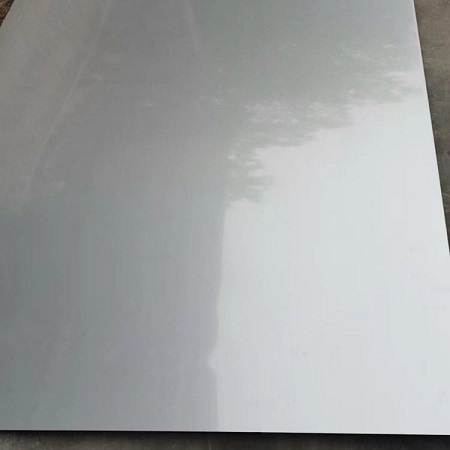
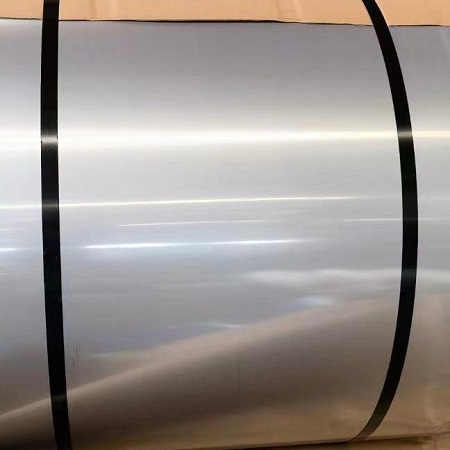
2B is the default mill finish for cold-rolled stainless sheet and coil. After cold rolling, the steel is annealed (softened by heat) and pickled (acid cleaned to remove scale), then given a light pass through polished rolls. That last pass is what gives 2B its name.
The surface is smooth but not shiny. It reads as a soft, grey, slightly cloudy face. You will not see a clear reflection in it. Roughness typically sits around Ra 0.1 to 0.5 micrometres.
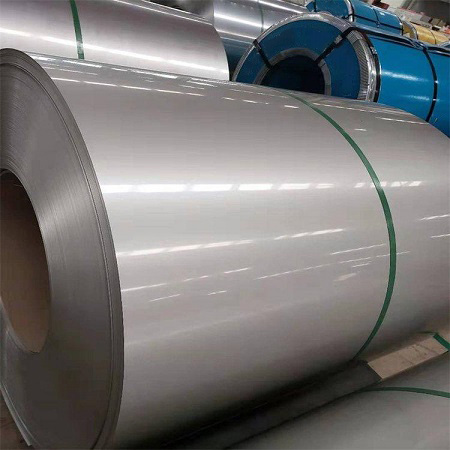
2B is the workhorse finish. Most stainless that gets welded, formed, or polished later starts as 2B, because it is the cheapest finished state and the best base for further work. We supply 2B in 304, 316L and other grades as coil and sheet, and it is the feedstock for our brushed stainless steel sheet line.
No.4 finish
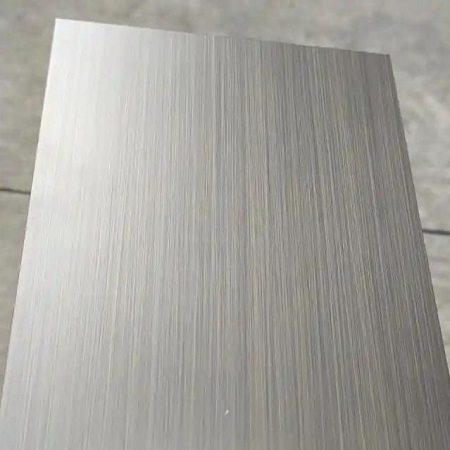
No.4, often called brushed or satin, starts from 2B and adds an abrasive-belt pass in one direction. The belt grit (usually 150 to 240) lays down short, parallel grain lines. The result is a soft sheen that scatters light instead of mirroring it.
No.4 hides fingerprints and light scratches far better than a polished or 2B face, which is why it dominates commercial kitchens, hospital equipment, elevator cabins and architectural trim. Roughness runs about Ra 0.2 to 0.8 micrometres.
A close cousin is Hairline (HL), which uses a finer, longer grain for a more formal look in luxury interiors. We cover both in our brushed stainless steel sheet product page. After brushing, the sheet is usually passivated to rebuild the chromium layer the belt may have disturbed, which matters most on 316L used in marine and chemical service.
BA finish
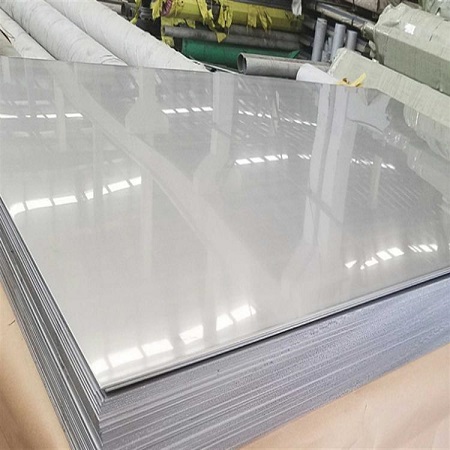
BA stands for bright annealed. Here the cold-rolled steel is annealed in a tightly controlled, oxygen-free (usually hydrogen) atmosphere so no scale forms and no pickling is needed. The hot steel self-anneals against a bright, smooth roll, and the surface comes out smooth and reflective, closer to a mirror than 2B but less perfect than an 8K polish.
BA is picked when appearance matters and a reflective, clean face is wanted without the cost of full mirror polishing. It shows up in decorative trim, automotive trim, appliances, and medical parts. It also carries a smoother, less contoured surface than 2B, which some fabricators like for deep drawing.
One caveat worth knowing: BA can show handling marks more than 2B because there is no grain to break them up, and it is not as scratch-forgiving as No.4.
2B vs No.4 vs BA: the side-by-side comparison
This is the table most buyers come for. Save it or send it to your procurement team.
| Feature | 2B | No.4 | BA |
|---|---|---|---|
| How it is made | Cold roll, anneal, pickle, light pass | 2B plus abrasive belt in one direction | Cold roll, bright anneal in controlled atmosphere |
| Appearance | Dull grey, cloudy, no reflection | Satin grain, low sheen | Smooth, bright, near-mirror |
| Roughness (Ra) | 0.1 to 0.5 µm | 0.2 to 0.8 µm | 0.05 to 0.2 µm |
| Reflectivity | Low | Low, scattered | High |
| Fingerprint visibility | Moderate | Low | High |
| Scratch hiding | Poor | Very good | Poor |
| Cleanability | Easy | Easy | Easy, but shows marks |
| Cost add over base | Baseline | +10 to 20% | +10 to 25% |
| Best for | Tanks, fabrication, base for polish | Kitchens, lifts, architecture, food gear | Decorative trim, appliances, medical |
There is no “best” finish here. There is only the one that fits the job. A brewery tank wants 2B or No.4 on the inside for cleanability. A lift door wants No.4 to hide scratches. A shopfront trim wants BA for shine.
Other finishes you will meet
Three names come up often enough to know:
- No.1 is a hot-rolled, annealed and pickled finish with a rough, dark face. It is for plate and heavy structural use, not for looks.
- No.3 is a coarser brushed finish than No.4, used in rough industrial areas.
- 8K / mirror is progressively polished to a true reflection, roughly Ra 0.05 micrometres or below. It costs the most and shows every mark.
- Hairline (HL), as noted, is the fine long-grain version of No.4 for premium interiors.
Embossed and patterned finishes also exist for anti-slip and decorative work, but they are a different category from the flat finishes above.
How the finish is produced
The path splits early. 2B and BA both start with cold-rolled strip. The difference is the annealing step:
- Cold rolling brings the steel to thickness.
- For 2B, the strip is annealed in air, pickled to strip scale, then given a light roll pass.
- For BA, the strip is annealed in a sealed, low-oxygen furnace so scale never forms, and the bright roll sets the face.
- No.4 takes a 2B strip and runs it through abrasive belts in one direction, then passivates and films it.
All our finished sheet is made to ASTM A240 and A480 and supplied with a mill test certificate. The base cold-rolled material and the finishing line sit in the same plant, which keeps the grain and flatness consistent from coil to packed sheet.
Roughness numbers, in plain terms
Roughness is measured as Ra, the average deviation of the surface from its mean line, in micrometres. Lower Ra means smoother.
| Finish | Typical Ra (µm) |
|---|---|
| 2B | 0.1 to 0.5 |
| No.4 | 0.2 to 0.8 |
| BA | 0.05 to 0.2 |
| 8K mirror | below 0.05 |
For most buyers the exact Ra is less important than the look and the cleanability. If your spec calls out a Ra value, tell us the number and we will match it and record it on the MTC.
Does finish change corrosion resistance?
Short answer: the finish does not change the alloy, so a 304 sheet resists corrosion the same way whether it is 2B, No.4 or BA. What the finish does affect is how easy it is to keep the passive layer clean and undamaged.
Two practical points. First, No.4 and BA leave a smoother, more even face than a poorly cleaned 2B, so there are fewer pockets for contamination. Second, any mechanical finish (brushing, polishing) should be followed by passivation to rebuild the chromium oxide layer. We passivate No.4 and BA after finishing, and for marine and coastal jobs we recommend 316L with proper passivation over any particular finish choice.
Pick the right finish by job
| приложение | Recommended finish | Why |
|---|---|---|
| Food and brewery tanks | 2B or No.4 interior | Smooth, cleanable, easy to CIP |
| Commercial kitchen gear | No.4 | Hides prints and scratches, easy clean |
| Elevator cabins and cladding | No.4 or Hairline | Satin look, scratch tolerant |
| Decorative trim, shopfronts | BA | Reflective, bright, low cost vs mirror |
| Industrial tanks and structs | 2B | Cheapest, functional, base for polish |
| Medical and appliance panels | BA or No.4 | Clean look, smooth or grained |
Our machinery division runs the same logic on the equipment side. Wanzhi Machinery builds stainless tanks with No.4 or electropolished interiors for hygiene, and their fermentation tank guide goes into finish selection for brewery service. Their 304 vs 316 brewery tank article is worth a read if grade choice is still open.
How to choose between 2B, No.4 and BA
If you are still deciding, work through these in order:
- Is the part seen by the public? If yes and you want shine, BA. If you want a soft, modern look, No.4.
- Will it be touched or cleaned often? High-touch surfaces favour No.4 because the grain hides wear. BA and 2B show marks more.
- Is it welded or formed heavily? 2B is the cheapest base and the easiest to finish afterward.
- Is budget tight? 2B costs the least. No.4 and BA add 10 to 25 percent.
- Is it for food, pharma or marine? Pick the grade first (316L for marine), then No.4 or 2B inside, never a rough finish.
When in doubt, send us the end use and we will name the finish, not the other way around.
Standards that define finishes
Finish definitions follow a few documents you will see on specs and certificates:
- ASTM A480 / A480M covers surface finishes for flat-rolled stainless in the US system.
- EN 10088-2 lists the European finish codes, including 2B, 2R (bright annealed, the EN name for BA) and 2J (brushed).
- JIS G4305 is the Japanese standard, common on Asian-sourced coil.
Note that “BA” in the US mill system is “2R” in the EN system. Same idea, different label. We can supply to either standard and mark it on the mill test certificate.
Cleaning and care by finish
All three clean with warm water and a mild detergent. The difference is how they show neglect:
- 2B takes cleaning well but shows water spots if left wet.
- No.4 must be wiped along the grain. Wiping across leaves marks that catch the light.
- BA looks great until it is touched; clean with a soft cloth and avoid abrasive pads that would scratch the bright face.
Keep chloride cleaners, bleach and steel wool away from any of them. They attack the passive layer and cause pitting.
Часто задаваемые вопросы
What is the difference between 2B and BA stainless steel?
2B is cold rolled, annealed and pickled with a light final pass, giving a dull grey face with no reflection. BA (bright annealed, or 2R in EN terms) is annealed in a low-oxygen atmosphere so it comes out smooth and reflective, closer to a mirror. The alloy is the same; the look and the cost differ.
Is No.4 finish the same as brushed?
Yes. No.4 is the standard brushed or satin finish, made by running a 2B sheet through 150 to 240 grit abrasive belts in one direction. Hairline is a finer, longer-grain version of the same idea.
Which finish is best for food contact?
For food and brewery equipment, use 2B or No.4 on the product-contact side. Both are smooth and cleanable, and No.4 is common on commercial gear. Avoid rough finishes. Grade choice (304L or 316L) matters more than the finish for corrosion.
Does BA scratch easily?
BA shows scratches and fingerprints more than No.4 because it has no grain to break them up, and it is brighter so marks catch the eye. It is not weaker, just more visibly marked. Handle it with care and clean with a soft cloth.
Can 2B be polished to a better finish later?
Yes. 2B is the standard base for further finishing. It can be brushed to No.4, Hairline, or polished to 8K mirror. That is one reason 2B is so common as feedstock.
Which finish costs the most?
2B is the cheapest. No.4 usually adds 10 to 20 percent, BA adds 10 to 25 percent, and full 8K mirror costs the most of all. Prices move with grade and thickness, not just finish.
Does the finish affect corrosion resistance?
Not directly. The finish does not change the alloy, so corrosion resistance comes from the grade. A smoother, well-passivated finish (No.4 or BA) just gives fewer spots for contamination to collect. Always passivate after mechanical finishing.
What does BA mean in EN standards?
In the US mill system BA means bright annealed. Under EN 10088-2 the same bright-annealed finish is called 2R. Same process, different name on the certificate.
Related reading
- Stainless Steel Products Catalog : Full range of sheets, coils and plates
- Brushed Stainless Steel Sheet : No.4, Hairline and other brushed finishes in detail
- Cold Rolled Stainless Steel Sheet : The 2B and BA base material we finish from
- 304 Stainless Steel Sheet : The grade most 2B, No.4 and BA orders use
- 316 Stainless Steel Sheet : Marine and chemical grade for harsh service
- 430 Stainless Steel Sheet : Ferritic, lower-cost option for dry use
- ASTM A240 Certified Stainless Steel Sheet : Standards, MTC and certification
- All Products : Complete Wanzhi Group catalog
- Stainless Steel Tanks : Equipment built with No.4 and BA finishes
- 304 vs 316 Brewery Tanks : Grade and finish selection for food service
Контакт
Email: info04@wanzhisteel.com
WhatsApp: +86 18736065220
Website: wanzhisteels.com
Компания: район, город Чжэнчжоу, провинция, Китай
Фабрика: Binzhou City, Shandong Province, China
 English
  Русский
  العربية
  Español
  Français
  فارسی
فارسی  繁體中文
繁體中文  O‘zbekcha
  Tiếng Việt
  Українська
  Türkçe
  ไทย
ไทย  日本語
日本語  한국어
한국어  简体中文
简体中文