
On November 15, a Bolivian distributor signed its ninth tin free steel (TFS) order with Wanzhi Steel: 120 tons of 0.22 x 1000 x 708 mm cut sheets in T4 CA temper, valued at $95,000. Raw material is in and the line is running, with production targeted for completion before November 25 and a December 5 sailing. The buyer put down only 10% instead of our usual 30%. This update covers the order, the spec, why we started on a smaller deposit, and what nine consecutive orders say about a supply relationship.
1. Order nine, signed November 15
The ninth order landed on November 15. It covers 120 tons of tin free steel, the same chrome-plated product this buyer has taken in every previous run. At $95,000, it sits in the same bracket as the order we shipped on October 20. For a trading company in Bolivia, that kind of repeat commitment is a decision about supply security, not a one-off purchase.
Order nine at a glance
- Product: tin free steel (TFS / chrome-plated steel), cut-to-length sheet
- Size: 0.22 mm thick x 1000 mm wide x 708 mm long
- Temper and process: T4, continuous annealing (CA)
- Volume: 120 tons
- Value: $95,000
- Deposit: 10% (standard is 30%)
- Signed: November 15, 2026
- Material status: purchased, in production
- Production target: before November 25, 2026
- Sailing: December 5, 2026
- Position: ninth order since April 2025
The full Chrome Plated Steel product page covers the grades and surfaces we have held across all nine runs.
2. From $53 to $95,000
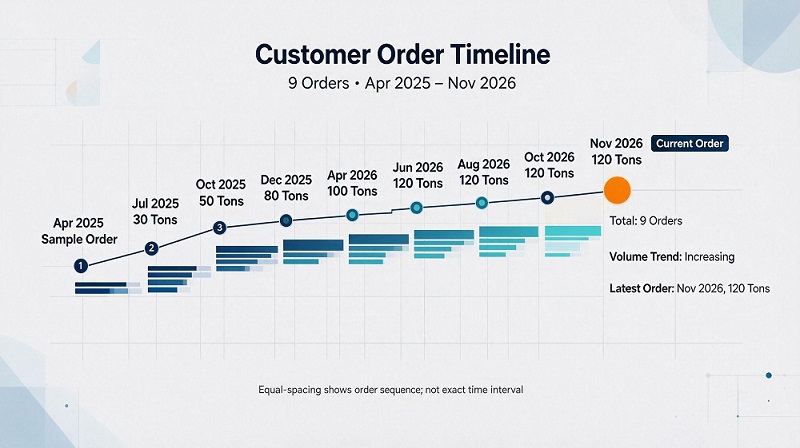
The relationship started in April 2025 with a sample worth $53. Most mills would process that and move on. We shipped it, kept the coating consistent, and waited. Order two was bigger. Each one after that grew a little more. Now a single contract is worth $95,000, and the customer commits before the previous shipment has cleared.
The growth in plain numbers
- Order 1 (Apr 2025): $53 sample
- Orders 2-8: step-ups in tonnage, reaching 120 tons by October 2026
- Order 9 (Nov 2026): 120 tons, $95,000
Distributors scale a source only after the material proves itself on their own line. That is what the curve reflects. Our earlier eighth-order write-up walks through how the relationship reached six figures in the first place.
3. Raw material in, production on the line
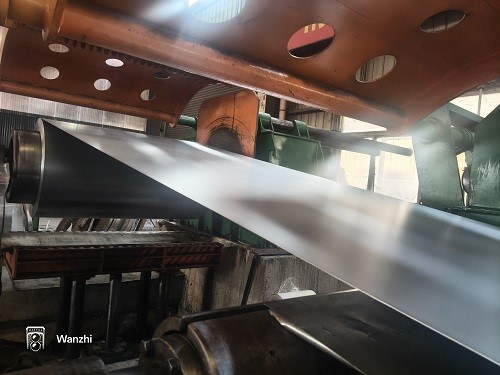
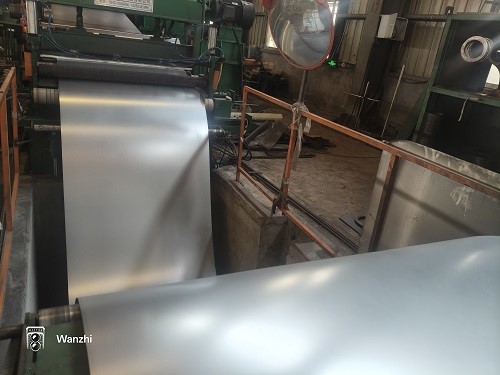
As of this update, raw material for order nine has been purchased and the coils are on the line. We are targeting completion before November 25 and have a December 5 sailing booked. That leaves a short window between the end of production and loading, so the schedule is being watched at each step, from coating through packing.
Nothing here is guesswork on our side. Material planning and production are being sequenced backward from the sailing date. A distributor in Bolivia carries stock for converters who cannot wait on a delayed container, so the date on the booking matters as much as the steel itself.
4. Why we are moving this order quickly
One point needs stating plainly, because it is easy to read the wrong way. This order is not being rushed because the customer is chasing us. The buyer did not ask for expedited handling. We are putting it through quickly because that is how we treat a customer who has come back nine times. Speed, in this case, is our own choice.
There is a practical side to that attitude as well. A trader who commits $95,000 wants proof the mill is acting on the contract. Starting production as soon as material is ready is a signal they can see. It is also a habit that keeps the two-month ordering rhythm intact.
5. The spec: 0.22 mm T4 CA cut sheets
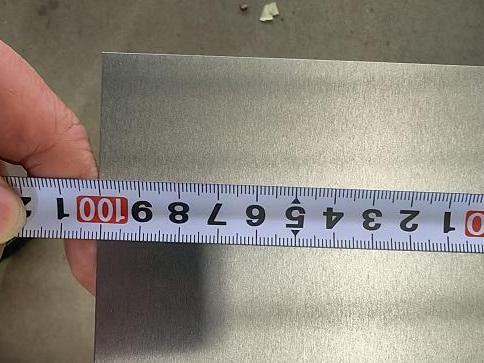
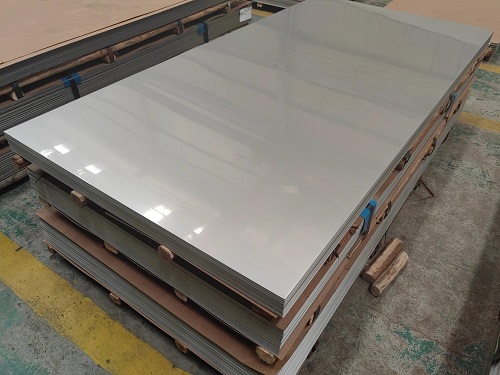
Nine orders do not all share one spec. This one is cut-to-length sheet, not coil: 0.22 mm thick, 1000 mm wide and 708 mm long, in T4 temper with continuous annealing.
Reading the grade
T4 is a temper grade. On the temper scale, T1 and T2 are soft and formable, T3 sits in the middle, and T4 and T5 are the hard, high-strength end. The CA stands for continuous annealing, the process used to reach that temper, as opposed to batch annealing. For a buyer stamping rigid parts, a harder temper holds its shape better.
Why cut sheets
Cut-to-length sheet arrives ready for the stamping press. Our chrome-plated steel page lists the standard range of 0.12 to 0.55 mm in thickness and 700 to 1050 mm in width, so this order sits inside normal production limits rather than needing a special setup.
6. The product behind nine orders
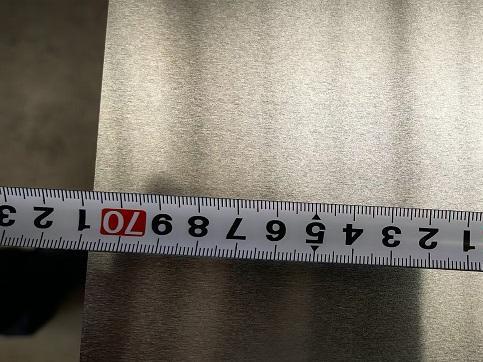
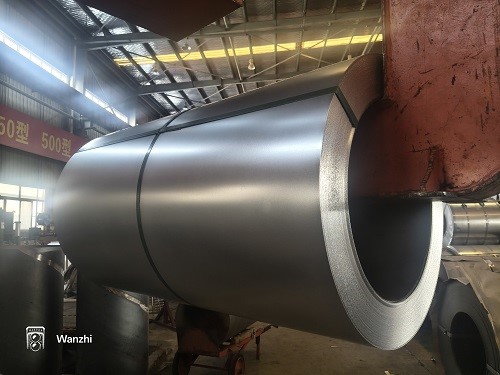
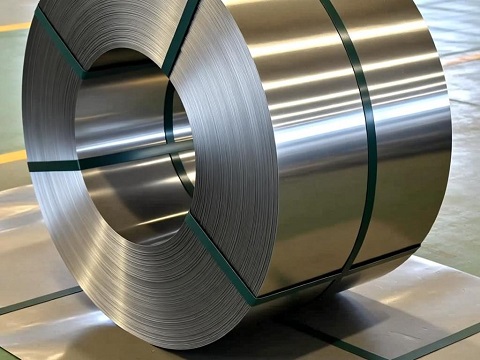
Every order from this buyer has been tin free steel. Also called chrome-plated steel or ECCS, it is cold-rolled low-carbon steel with a thin duplex coating of metallic chromium and chromium oxide. It developed as a lower-cost alternative to tinplate and is now standard material for can ends and crown caps. Our TFS product page shows the coating build-up.
Why this buyer keeps ordering it
Bolivia’s can market is import-led, with food and beverage packing taking most of the volume. TFS prints cleanly and resists sulfur in fish and meat packs. Those properties matter more to a distributor than a slightly lower price, because complaints from converters land on the distributor first. Our TFS product page covers the coating build-up and formability in more detail.
7. A 10% deposit, on trust
Most new orders start with a 30% deposit before we put anything on the line. That is our standard, and for good reason: TFS is made to order, and a deposit covers the raw material we commit. This buyer put down 10%.
Why we agreed
Nine orders in, the calculation changes. We know this distributor pays, we know their spec, and we know the rhythm of their business. A smaller deposit is not a discount or a favour. It is a practical adjustment to a relationship where the risk is already low on both sides.
That is the quiet advantage of a long-term customer. Trust is not a slogan here; it shows up in payment terms. We can talk about deposit levels because nine clean transactions sit behind the conversation.
8. The two-month rhythm of a trader
This customer is a trading company, not a can factory. They buy sheet, hold it in stock, and sell it to converters who stamp can ends and caps around Santa Cruz. Their own reputation depends on each delivery matching the one before. A single off-spec batch can undo relationships built over years.
Their buying pattern is consistent: roughly one order every two months, and often the next contract is signed with a deposit before the previous containers have shipped. That rhythm only works when lead times are predictable. It is the reason a buyer stays with one mill across nine orders instead of shopping each one.
9. Bolivia’s packaging market in context
Domestic converting capacity exists in Bolivia but stays narrow, concentrated around Santa Cruz and Cochabamba. Most tinplate and TFS arrives overland from Chilean or Brazilian ports, which adds a freight premium to landed cost. Distributors absorb that by holding safety stock and locking supply early, rather than buying spot when a converter calls.
Canned fish and preserved fruit are genuine local output, so demand for can stock is structural. Food security programs such as the World Food Programme rely on shelf-stable canned goods, which is a reminder of what this material ends up protecting. Bolivia’s wider steel market grows at a modest pace, noted in Britannica’s steel overview.
10. Explore Wanzhi’s TFS and related products
If you are evaluating a TFS source, these pages are the next step:
- Chrome Plate Coil (TFS): grades, tempers and surfaces
- Electrolytic Tinplate Sheet: when a tin coating is required
- Bolivia 8th TFS order case: the prior order in this same relationship
FAQ
Q: What is tin free steel used for?
A: Mainly can ends, crown caps, food cans, aerosol domes and chemical containers. The chromium oxide layer bonds well with lacquer and printing inks.
Q: Is TFS the same as tinplate?
A: No. Both start from cold-rolled steel, but TFS uses chromium instead of tin. It costs less and takes coatings better, though it cannot be soldered.
Q: When will order nine ship?
A: Production is targeted before November 25, 2026, with a December 5 sailing already booked.
Q: How many orders has this customer placed?
A: Nine, from a $53 sample in April 2025 through the current 120-ton, $95,000 contract.
Q: Is the order being expedited at the customer’s request?
A: No. We are moving it quickly as a matter of how we serve a long-term customer. The buyer did not ask for special handling.
Q: What are the specs of this T4 CA tin free steel order?
A: 120 tons of cut-to-length sheet, 0.22 mm thick, 1000 mm wide and 708 mm long, in T4 temper with continuous annealing (CA).
Q: Why did this buyer only pay a 10% deposit?
A: Our standard deposit is 30%. This distributor has ordered nine times with a consistent record, so we agreed to 10% on the strength of that trust.
12. Conclusion
The $53 sample in April 2025 did not forecast nine orders and a $95,000 contract by November 2026. What it did was open a relationship in which each batch had to earn the next one. That is still the standard we work to.
If you source TFS and want a mill measured by repeat orders rather than pitches, start with a sample.
Contact Wanzhi Steel:
- Email: [email protected]
- WhatsApp: +86-18736065220
- Website: www.wanzhisteels.com
 English
 Русский
 العربية
 Español
 Français
 فارسی
 繁體中文
 O‘zbekcha
 Tiếng Việt
 Українська
 Türkçe
 ไทย
 日本語
 한국어