
When buyers line up 316 vs 304 stainless steel, the question is almost always the same: do I really need the pricier 316, or will 304 do the job for less? Both are austenitic 18/8 grades, both look alike on the rack, and both weld and polish well. The one element that separates them is molybdenum. 316 carries 2 to 3 percent of it, 304 does not. That single addition is what lets 316 shrug off chloride and salt while 304 pits and rusts in the same spot. This guide puts the two grades side by side on chemistry, corrosion, cost, weldability and use, so you can specify the right one and not pay for molybdenum you do not need.
If you are weighing the grades for a tank or vessel, our 304 vs 316 brewery tank write up on the equipment side works through the choice in plain terms, and our surface finish guide covers the shared finishes.
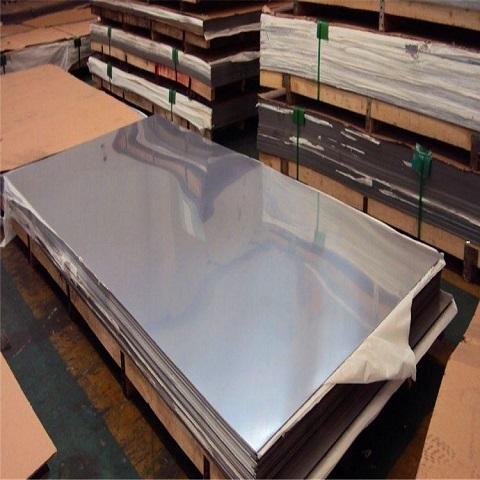
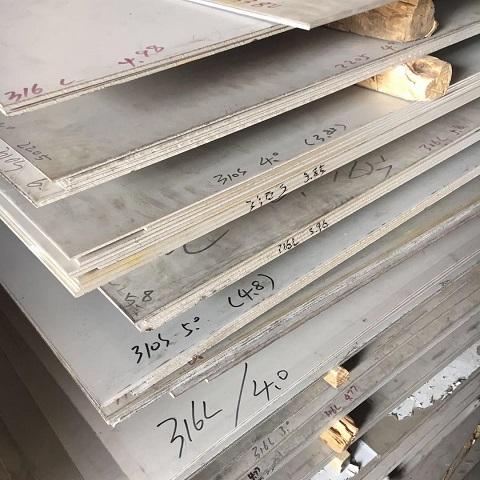
What 304 and 316 stainless steel are
304 is the workhorse grade. It is an austenitic stainless with about 18 percent chromium and 8 percent nickel, which is why people call it 18/8. The chromium builds a thin passive film that keeps ordinary rust away, and the nickel gives it toughness and a clean look. Most of the stainless you see in kitchens, handrails and food plants is 304.
316 is the same base with molybdenum added. The typical analysis runs 16 to 18 percent chromium, 10 to 14 percent nickel and 2 to 3 percent molybdenum. The molybdenum is a chloride blocker: it strengthens the passive film so the metal resists pitting and crevice attack in salt water, coastal air and many process acids. The chemistry families are set by ASTM A240 and the generic grade data is documented on Wikipedia’s stainless steel page, which is a fair place to check the basics.
Both grades are non magnetic in the annealed state. Cold work from cutting, bending or rolling can bring up a little attraction at the edges, but that does not mean the part is the wrong grade.
Chemical composition: the molybdenum gap
This is the table that settles most arguments. The numbers are weight percent from ASTM A240, with iron making up the balance.
| Element | 304 | 304L | 316 | 316L |
|---|---|---|---|---|
| Chromium | 18.0 – 20.0 | 18.0 – 20.0 | 16.0 – 18.0 | 16.0 – 18.0 |
| Nickel | 8.0 – 10.5 | 8.0 – 12.0 | 10.0 – 14.0 | 10.0 – 14.0 |
| Molybdenum | none | none | 2.0 – 3.0 | 2.0 – 3.0 |
| Carbon | 0.08 max | 0.030 max | 0.08 max | 0.030 max |
| Manganese | 2.0 max | 2.0 max | 2.0 max | 2.0 max |
| Silicon | 0.75 max | 0.75 max | 0.75 max | 0.75 max |
| Phosphorus | 0.045 max | 0.045 max | 0.045 max | 0.045 max |
| Sulfur | 0.030 max | 0.030 max | 0.030 max | 0.030 max |
The two gaps that matter are molybdenum and carbon. Molybdenum is what lifts 316 above 304 in corrosion. Carbon is what the L grades control: standard 304 and 316 allow up to 0.08 percent, while 304L and 316L cap it at 0.030. The low carbon version was made for welding, which we get into below.
Corrosion resistance: why 316 wins near salt
The measure buyers use for pitting resistance is PREN, the pitting resistance equivalent number. The common formula is PREN = percent Cr + 3.3 x percent Mo + 16 x percent N. Nitrogen stays low in these grades, so the molybdenum term does the heavy lifting.
| Grade | Approx. PREN | Chloride behavior |
|---|---|---|
| 304 / 304L | 18 – 20 | Pits in salt spray and pool water |
| 316 / 316L | 24 – 26 | Resists splash, coastal air and seawater mist |
| 2205 duplex | 33 – 35 | Stands up to heavy chloride and acid |
304 is fine in dry indoor air, fresh water and mild food contact. The moment you add salt, seawater, de-icing road spray or bleach, 304 starts to pit, and the pits spread. 316 holds up in those same spots because the molybdenum closes the weak points in the film. The gap is why 316 is the rule for marine, coastal and chemical work and the reason our marine grade stainless steel line exists.
For the harshest chloride or acid duty, duplex 2205 scores higher still. But for the great majority of salt exposed jobs, 316 is the right step up from 304 without going to a duplex price.
Cost: what you pay for the molybdenum
316 costs more than 304, and the gap tracks the nickel and molybdenum content. On the flat-rolled market, 316 typically runs about 30 to 50 percent above the same form of 304, with the spread moving as alloy prices move. You pay for the nickel first and the molybdenum second.
The way to keep cost down is to specify 316 only where the environment needs it. Indoor structure, interior trim, fresh water lines and most kitchen gear do well on 304. Coastal, marine, chemical and poolside parts are where 316 earns the premium. If a job is inland and dry, 304 is the sensible buy and 316 is money spent on resistance you will not use.
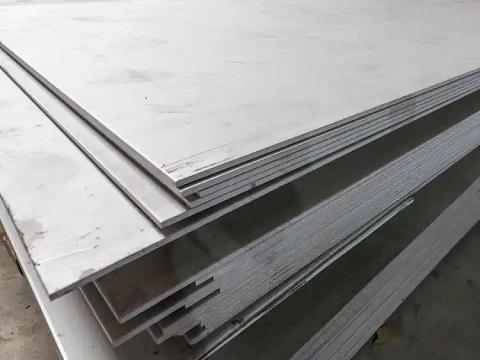
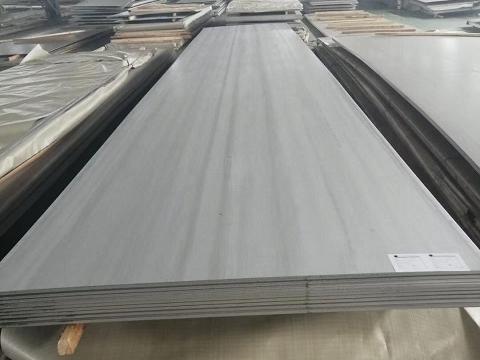
We stock both grades, so you can mix 304 and 316 in one order and keep the paperwork in one file. For the thin form, see our 304 stainless steel sheet and 316 stainless steel sheet; for the thick form, our 304 stainless steel plate and 316 stainless steel plate.
Weldability and the low carbon L grades
Both 304 and 316 weld cleanly with the common methods: TIG, MIG and stick all work. The catch is sensitization. When you weld a thick section, carbon at the heat affected zone can pull chromium out of the mix and leave the seam open to corrosion along the weld line.
That is what the L grades fix. 304L and 316L cap carbon at 0.030 percent, which keeps the chromium in the film through the heat of welding. For heavy plate, tanks, pipe and anything that gets welded a lot, 316L is the safe call. The price gap over 316 is small and the weld safety is not.
A note for fabricators: if you weld 316 of any kind near salt, use a 316L filler and keep the seam clean. A dirty weld on a marine part will pit at the contamination, not at the grade. We cut and bevel both grades and can supply the matching filler on request.
Strength and heat resistance
At room temperature the two grades have close mechanical values. Annealed 304 and 316 both reach about 515 MPa tensile and 205 MPa yield (316L a touch lower at 485 MPa), with 40 percent elongation. Neither is a high strength steel; both are chosen for corrosion and formability, not for load at the limit.
Where they split is heat. 316 holds its strength and scale resistance better than 304 at elevated temperature, which is why it sees duty in heat exchangers, exhaust and process lines that run warm. For sustained very high heat, stabilized grades like 321 or 347 take over. Strength and hardness also rise with cold work, so a rolled or drawn part will test harder than the annealed minimum.
Surface finishes both grades share
304 and 316 take the same finishes, because finish is about rolling and polishing, not about the alloy. The common ones:
- No.1: hot rolled, annealed and pickled. The default for plate and structure.
- 2B: cold rolled and passivated. The standard sheet face.
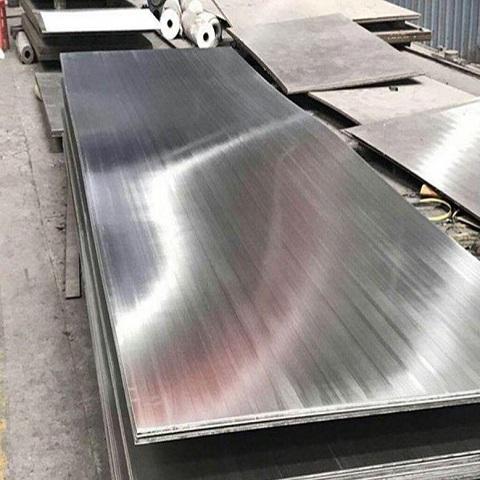
- No.4: brushed with a 150 to 240 grit belt. The hygiene finish for food and pharma.
- BA (2R): bright annealed, near mirror on the clean side. For decorative and sanitary use.
- HL: hairline, a longer finer grain for interiors.
We finish brushed stainless steel and mirror stock in the same plant, so a 304 and a 316 part from us carry the same grain and flatness. Any mechanical finish is passivated after work to rebuild the chromium layer, which matters most on the welded seams.
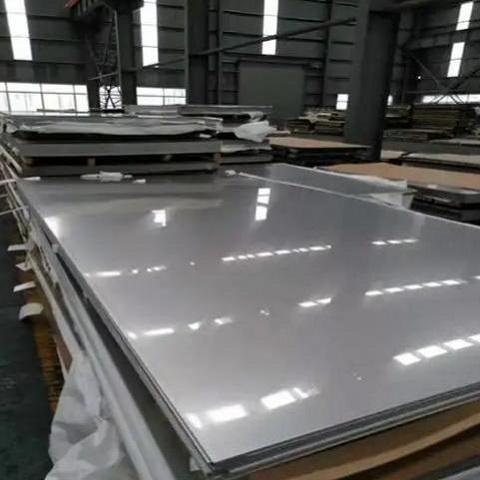
Where to use 304 vs where to use 316
The short rule: pick 304 for dry and mild, pick 316 for wet and salty. The table spells it out.
| Setting | Best grade | Why |
|---|---|---|
| Indoor structure, trim | 304 | Dry air, low corrosion |
| Kitchen and food prep | 304 | Easy to clean, food safe |
| Fresh water lines | 304 | No chloride load |
| Coastal and marine | 316 | Resists salt spray and seawater |
| Chemical and process | 316 | Holds up in acids and chlorides |
| Pool, spa, bleach areas | 316 | Chlorine attacks 304 |
| Pharmaceutical and lab | 316 (No.4/BA) | Cleanable, salt tolerant |
| Heat exchangers | 316 | Better warm strength |
If you are still unsure, look at the nearest source of chloride. No salt, no pool, no bleach within reach: 304. Any of those within splash distance: 316. When the part becomes a tank or vessel, our sister division forms both grades into stainless steel tanks and fermentation tanks with the same interior finish you specify on the plate.
How to choose the right grade
Use this three step check before you buy:
- List the corrosive agents the part will meet. Salt, seawater, bleach or acid in the list points to 316.
- Check the weld load. Thick sections or many welds point to the L grade of whatever you pick.
- Set the finish by use. Food and pharma want No.4 or BA; structure is happy with No.1 or 2B.
If the part is indoors and dry, 304 is the value choice. If it sits near the coast, in a plant with chemicals, or in any chlorinated water, spend the premium on 316 and do not look back. The ASTM A240 certified stainless steel page shows how we certify both grades, and the hot rolled stainless steel plate page covers the thick forms.
Common mistakes when choosing grades
The first mistake is buying 304 for a coastal job to save cost, then watching it pit within a season. The fix is simple: salt air is chloride, and chloride beats 304. The second mistake is the reverse, speccing 316 for a dry indoor rail where 304 would last as long for less. The third is forgetting the L grade on a heavy weld, so the seam sensitizes even though the base metal was right. The fourth is assuming finish protects the grade; a mirror polish on 304 still pits in seawater, because polish is not molybdenum.
A fifth slip is mixing fillers. Welding 316 with a 304 filler drops the molybdenum in the seam and the weld becomes the weak link. Match the filler to the grade and keep the seam clean.
How Wanzhi supplies both grades
We have supplied 304 and 316 stainless since 2011 from our Zhengzhou base, with ISO 9001, 14001 and 45001 and CE marking. Stock in both grades ships within about a week; special thickness and finish runs three to five weeks including rolling and certification. Every order leaves with an test certificate, and corrosion grades get PMI so the heat is confirmed before it leaves. The specification and certification rules we follow are drawn from ASTM International, the body that owns A240 and the grade chemistry.
Because we carry both grades, you can source a mixed 304 and 316 order from one supplier and keep the paper trail in one file. That helps at audit and on site when the inspector wants the MTC for every heat.
Frequently asked questions
Is 316 stainless steel worth the extra cost over 304?
It is, whenever the part meets salt, seawater, bleach or process acid. In those spots 304 pits and 316 does not. For dry indoor and fresh water use, 304 is the better value and 316 is money spent on resistance you will not use.
What is the main difference between 304 and 316 stainless steel?
Molybdenum. 316 carries 2 to 3 percent of it, 304 carries none. The molybdenum blocks chloride pitting and crevice corrosion, which is why 316 is the grade for marine and chemical work.
Can 304 stainless steel be used outdoors?
It depends on the air. In a dry inland climate 304 lasts for years. Near the coast or in a city with de-icing salt on the roads, the salt spray will pit 304, and 316 is the safer outdoor choice.
Is 316L better than 316 for welding?
Yes, for thick sections or many welds. The low carbon in 316L stops sensitization at the heat affected zone, which is the main corrosion risk on fabricated stainless. For light welding either works.
Does 316 rust at all?
It resists rust far better than 304, but it is not immune. Warm stagnant seawater, heavy fouling or a contaminated weld can still attack 316. For the worst chloride duty, duplex 2205 goes a step further.
Which grade is better for food and kitchen use?
304 is the standard for indoor kitchens and most food prep. In a salty or chlorinated food plant, such as a seafood line or a bleached area, 316 holds up longer. Both take a No.4 or BA hygienic finish.
Are 304 and 316 available in the same forms?
Yes. Both come as sheet, plate, pipe, coil and bar. The form follows the job, the grade follows the environment, so you can match either grade to almost any part we stock.
How can I tell 304 from 316 on site?
It’s impossible to determine this with the naked eye. Please use PMI (Positive Material Qualification Test), which can test the alloy’s chemical composition and confirm the molybdenum content. We test the alloy before shipment and record the results on the Material Testing Certificate (MTC).
Related reading
- 304 Stainless Steel Plate – the lower cost plate for indoor work
- 316 Stainless Steel Plate – the chloride resistant plate
- 304 Stainless Steel Sheet – the thin form of the workhorse grade
- 316 Stainless Steel Sheet – the thin form of the marine grade
- Marine Grade Stainless Steel Sheet – the chloride resistant line
- ASTM A240 Certified Stainless Steel Sheet – MTC and certification details
- Stainless Steel Surface Finish Guide – 2B, No.4 and BA explained
- Stainless Steel Pipe – both grades in pipe form
- Stainless Steel Tanks – finished equipment built from our plate
Contact
Tell us the environment, grade, size and finish you need, and we will quote from stock or mill. For mixed 304 and 316 orders, send one list and we will match the MTCs to one file. Reach the Wanzhi team at our Zhengzhou office or through the form on the product pages above.
Email: [email protected]
WhatsApp: +86 18736065220
Company: Erqi District, Zhengzhou City, Henan Province, China
Factory: Binzhou City, Shandong Province, China
 English
  Русский
  العربية
  Español
  Français
  فارسی
فارسی  繁體中文
繁體中文  O‘zbekcha
  Tiếng Việt
  Українська
  Türkçe
  ไทย
ไทย  日本語
日本語  한국어
한국어  简体中文
简体中文