
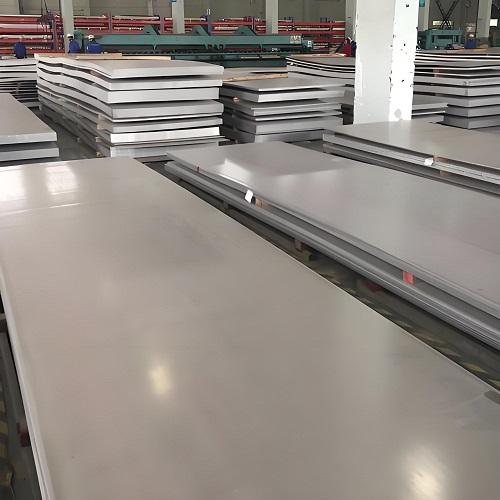
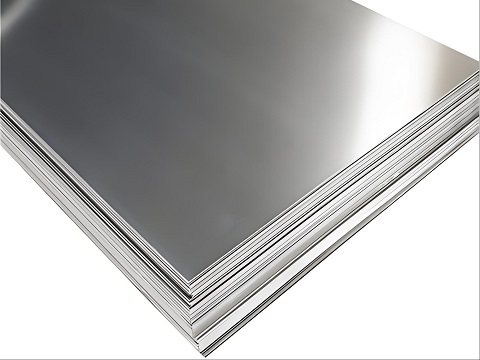
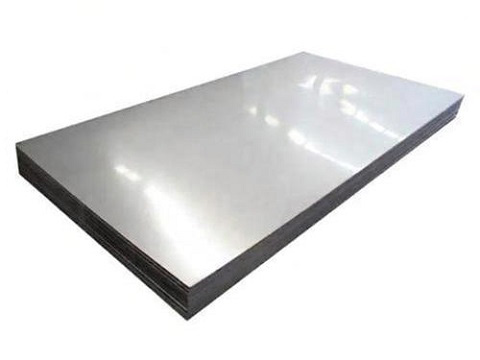
304 stainless steel plate
Width: 600-1500mm or customizable
Length: 1-12 m
Thickness: 3-120 mm
أسلوب التصميم: قابل للتخصيص
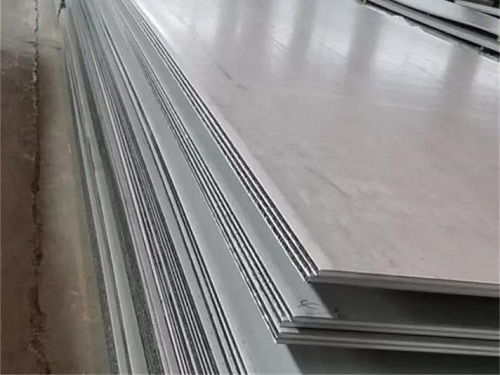
304 stainless steel plate is a flat-rolled strip of 18/8 austenitic stainless that is thicker than 3 mm and sold as plate rather than sheet. It is the grade most buyers reach for when they need corrosion resistance without paying for molybdenum, and it welds, cuts and forms well enough to suit tanks, cladding, frames and food equipment. We product 304 plate in thicknesses from 3 mm to 120 mm and widths up to 2000 mm, and we cut it to size before it leaves the mill.
This page covers what 304 plate is made of, how it performs, how we size and certify it, and where it gets used. If you are deciding between 304 and 316, our surface finish guide and the 304 vs 316 brewery tank write up on the equipment side explain the grade choice in plain terms.
What Is 304 Stainless Steel Sheet?
304 belongs to the austenitic family, the group with the highest chromium and nickel content among the common stainless grades. Its nickname is 18/8, because the typical analysis runs about 18 percent chromium and 8 percent nickel. Those two elements are what give 304 its corrosion resistance and its ability to stay tough at low temperature.
Plate is the thick end of flat-rolled stainless. In ASTM terms, sheet is 3 mm and under, and plate is over 3 mm. That single line decides how the material is rolled and what tolerances it carries, which is why we treat the 304 stainless steel sheet and the plate as two products even though the alloy is the same.
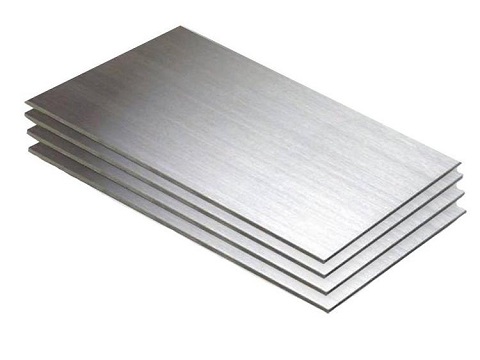
Most 304 plate is hot rolled, annealed and pickled to a No.1 finish, then ground or polished if a cleaner face is needed. It is non magnetic in the annealed state, though cold work from cutting or forming can bring up a little attraction at the edges.
304 chemical composition and the 304L option
The chemistry below is the ASTM A240 window for 304. The numbers are percentage by weight, with iron making up the balance.
| Element | 304 | 304L |
|---|---|---|
| Chromium | 18.0 – 20.0 | 18.0 – 20.0 |
| Nickel | 8.0 – 10.5 | 8.0 – 12.0 |
| Carbon | 0.08 max | 0.030 max |
| Manganese | 2.0 max | 2.0 max |
| Silicon | 0.75 max | 0.75 max |
| Phosphorus | 0.045 max | 0.045 max |
| Sulfur | 0.030 max | 0.030 max |
The one number that matters for fabrication is carbon. Standard 304 allows up to 0.08 percent, while 304L caps it at 0.030. The low carbon version was made for welding: when you weld a thick plate, carbon at the heat-affected zone can pull chromium out of the mix and leave the seam open to corrosion. That failure mode is called sensitization. Drop the carbon and the weld stays protected, so 304L is the safer call for tanks, pipes and anything that gets welded a lot.
For most of our 304 plate orders the buyer picks 304L by default once thickness goes past 6 mm or the job involves much welding. The price gap is small and the weld safety is not.
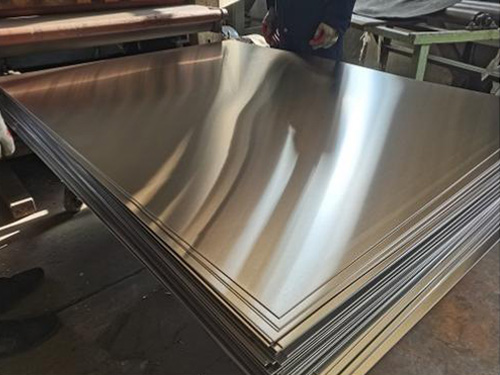
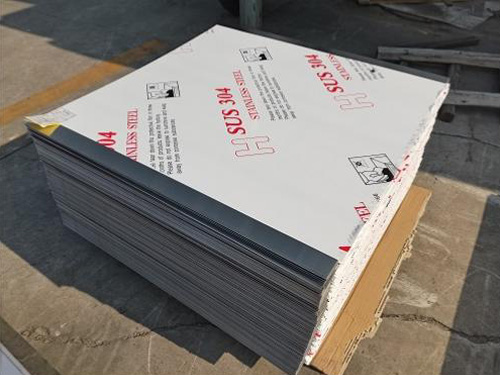
Plate size and weight reference
We list 304 plate against three fields: thickness, the common width and length, and the theoretical weight. Weight is the number buyers use to price a job, so we give it directly rather than a formula alone.
| سمك (مم) | Common size (mm) | Weight (kg/m2) | Approx. weight per plate (kg) |
|---|---|---|---|
| 3 | 1500 x 3000 | 23.79 | 107.055 |
| 4 | 1500 x 3000 | 31.72 | 142.74 |
| 5 | 1500 x 3000 | 39.65 | 178.425 |
| 6 | 1500 x 3000 | 47.58 | 214.11 |
| 8 | 1500 x 3000 | 63.44 | 285.48 |
| 10 | 1500 x 3000 | 79.3 | 356.85 |
| 12 | 2000 x 6000 | 95.16 | 1141.92 |
| 16 | 2000 x 6000 | 126.88 | 1522.56 |
| 20 | 2000 x 6000 | 158.6 | 1903.2 |
| 25 | 2000 x 6000 | 198.25 | 2379 |
| 30 | 2000 x 6000 | 237.9 | 2854.8 |
| 40 | 2000 x 6000 | 317.2 | 3806.4 |
Stainless 304 density is 7.93 g/cm3. To get kg per square metre, multiply thickness in mm by 7.93. To get the weight of one plate, use thickness (mm) x width (m) x length (m) x 7.93. For odd sizes, thickness (mm) x width (mm) x length (mm) x 0.00000793 gives the same answer. We cut to your drawing, so the weight on the quote matches the piece you receive, not the full mill plate.
Mechanical and corrosion properties
The table below is the ASTM A240 minimum for annealed 304 plate at room temperature. Values shift a little with thickness and heat, so treat them as the floor, not the exact number for your heat.
| Property | 304 / 304L value |
|---|---|
| Tensile strength | 515 MPa min (304), 485 MPa min (304L) |
| Yield strength (0.2% offset) | 205 MPa min |
| Elongation | 40 percent min |
| صلابة | 201 HB max |
| Density | 7.93 g/cm3 |
| Melting range | 1400 – 1450 C |
| Corrosion | Good in atmospheric, food, mild chemical service |
304 resists rust in air, water, food and most mild chemicals. What it does not like is chloride. Pool water, seawater spray, road salt and some process streams with chloride will pit it over time. For those jobs, 316 with its 2 to 3 percent molybdenum is the step up, and that is the same reason our marine grade stainless steel line exists. 304 is the right plate for the other 80 percent of indoor and light outdoor work.
Surface finishes for SS304 plate
Plate leaves the hot line with a No.1 finish: a rough, dark, pickled face that is fine for structure but not for looks. From there you can take it several ways.
- No.1: hot rolled, annealed and pickled. The default for tanks and frames.
- 2B: cold rolled and passivated. Smoother than No.1, used where the face shows a bit.
- No.4: brushed with a 150 to 240 grit belt. The hygiene finish for food and pharma.
- BA (2R): bright annealed, near mirror on the clean side. For decorative and sanitary use.
- HL: hairline, a longer finer grain for interiors.
We finish brushed stainless steel and mirror stock in the same plant, so a 304 plate and a 304 sheet from us carry the same grain and flatness. Any mechanical finish is passivated after work to rebuild the chromium layer, which matters most on the welded seams.
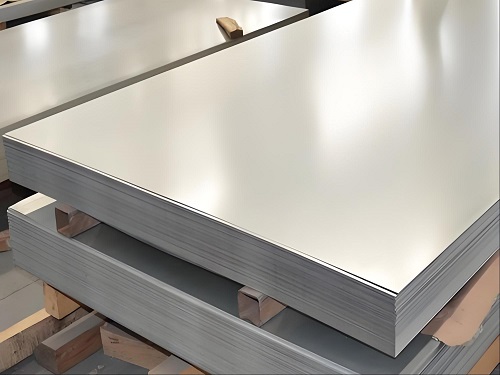
304 plate vs 304 sheet: where the line is
Buyers mix these up because the alloy is identical. The difference is thickness and how the mill makes it, and that changes price, tolerance and what you can do with it.
| Point | 304 sheet | 304 plate |
|---|---|---|
| سماكة | 0.3 – 3 mm | 3 – 120 mm |
| Rolling | Cold rolled | لفائف مدلفنة على الساخن |
| Tolerance | Tight | Wider |
| Edge | Sheared, clean | Torch or plasma cut |
| Typical use | Panels, liners, light fabrication | Tanks, structure, heavy parts |
| Cost driver | Finish and flatness | Weight and cut time |
If your part is under 3 mm and the face needs to look good, you want 304 stainless steel sheet. If it is thick, carries load, or gets welded into a vessel, plate is the form. We cut both, so you can order the thin liner and the thick end plate from one PO and keep the paper trail in one file.
Standards and certification
We make 304 plate to ASTM A240 / A240M, the specification that covers chromium and nickel alloy plate for pressure and general service. For the European market we supply to EN 10088-2, and for Japan we work to JIS G4304 (hot rolled) and G4305 (cold rolled). The finish and flatness rules sit in ASTM A480, which we follow on every coil we finish.
Every plate ships with an EN 10204 3.1 mill test certificate that lists the heat number, the chemistry and the mechanical results. For corrosion grades we add PMI (positive material identification) so the heat is confirmed before it leaves. Third-party inspection by SGS, BV or TPI is available on request. Our full ASTM A240 certified stainless steel page covers the cert and MTC process in more detail.
Where 304 plate gets used
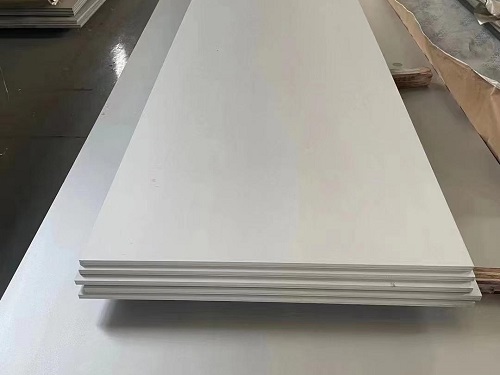
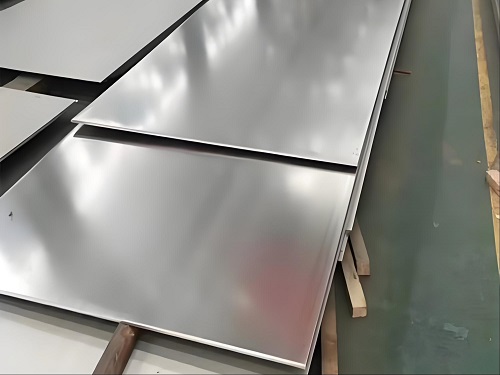
304 plate shows up wherever a flat, corrosion resistant part has to take load or contact food. The table lists the sectors we supply most.
| Sector | Why 304 plate | Common form |
|---|---|---|
| Food and beverage | Clean, weldable, food safe | No.4 tanks and benches |
| Chemical (mild) | Resists many weak acids | No.1 vessels |
| Construction | Cladding, columns, trim | 2B, HL |
| Pharmaceutical | Easy to clean and sterilize | No.4, BA |
| Architecture | Bright, durable facades | BA, HL |
| Transport | Light, rust free frames | No.1, 2B |
| Water treatment | Resists fresh water | No.1, No.4 |
| Energy (non chloride) | Heat and pressure parts | No.1 |
For marine, coastal or high chloride duty, step up to 316 or duplex. We cover that move in our 316 stainless steel sheet page and the marine grade guide.
How to order 304 plate: RFQ checklist
Send us these points and we can quote the same day:
- Grade and standard: 304 or 304L, to ASTM A240 (see our ASTM A240 certified plate)
- Thickness, width and length, or the drawing if cut to shape
- Finish: No.1, 2B, No.4, BA or HL
- Quantity and any edge or hole work
- Tolerance and any third-party inspection
- Destination port for shipping
We can supply 304 and 304L stainless steel sheets in common sizes, with thicknesses ranging from 3 mm to 120 mm. The MOQ lead time for standard sizes is approximately one week; for thicker plates or those with special surface treatments, the lead time is three to five weeks. Please contact us for specific delivery times.
Why choose Wanzhi?
We have supplied 304 stainless plate since 2011 from our Zhengzhou base, with ISO 9001, 14001 and 45001 and CE marking. Stock in 304 and 304L ships within a week; special thickness and finishes run three to five weeks including rolling and machining. Every order leaves with an MTC and PMI on corrosion grades, and we pack for long sea freight so the faces arrive clean. When you need the related forms, our الفولاذ المقاوم للصدأ hub links to sheet, coil, pipe, bar and the rest of the range.

التعليمات
اتصال
Send your size, grade and finish to our sales team and we will quote the same day.
شركةمنطقة، مدينة تشنغتشو، مقاطعة، الصين
مصنعمدينة بينتشو، مقاطعة شاندونغ، الصين عنصر القائمة
E-mail: [email protected]
WhatsApp: +86 18736065220
Website: https://wanzhisteels.com

العلامات الساخنة: 304 ss plate, 304L stainless steel plate, ASTM A240 304 plate, 304 stainless steel plate weight, 304 plate vs 304 sheet, 304 stainless steel plate price


 English
  Русский
  العربية
  Español
  Français
  فارسی
فارسی  繁體中文
繁體中文  O‘zbekcha
  Tiếng Việt
  Українська
  Türkçe
  ไทย
ไทย  日本語
日本語  한국어
한국어  简体中文
简体中文