
When buyers compare ASTM A312 vs ASTM A269 stainless steel pipe, the first question is usually which one the job actually needs. The short answer: A312 covers stainless steel pipe for higher pressure and temperature service, while A269 covers stainless steel tubing for general service where tight tolerances and a clean surface matter more than rated pressure. Both specs describe austenitic stainless in grades like 304 and 316L, so the material looks the same on the rack. The difference is in how the product is sized, tested, and what it is built to survive. This guide walks through the two standards line by line so you can specify the right one and avoid a costly mix up at the warehouse.
What ASTM A312 and A269 cover
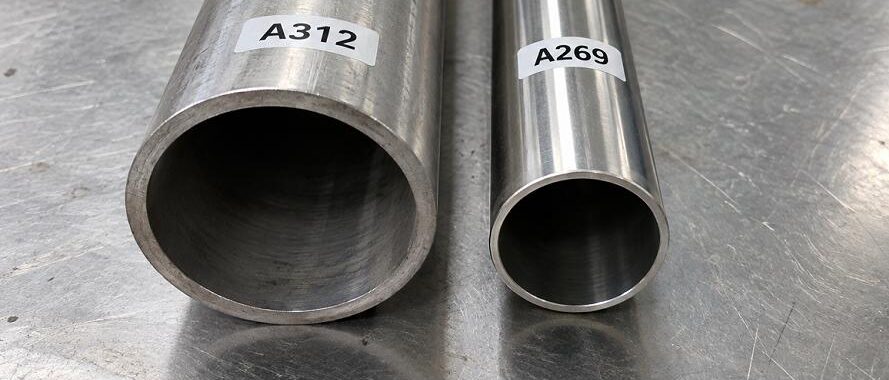
Both standards come from ASTM International and both apply to austenitic stainless steel. That is where the overlap ends. A312 is titled “Specification for Seamless and Welded Austenitic Stainless Steel Pipe”, and it is written around nominal pipe size (NPS) with schedule walls. A269 is titled “Specification for Seamless and Welded Austenitic Stainless Steel Tubing for General Service”, and it is written around outside diameter (OD) with closer tolerances.
In plain shop language, A312 product is pipe: it carries fluid or gas in a process line and its size is a nominal number, not a measured one. A269 product is tube: it fits an exchanger bundle, an instrument loop, or a sanitary run where the outside diameter has to match a fitting exactly. If you size by NPS, you are in A312 territory. If you size by exact OD, you are in A269 territory.
ASTM A312 in plain terms
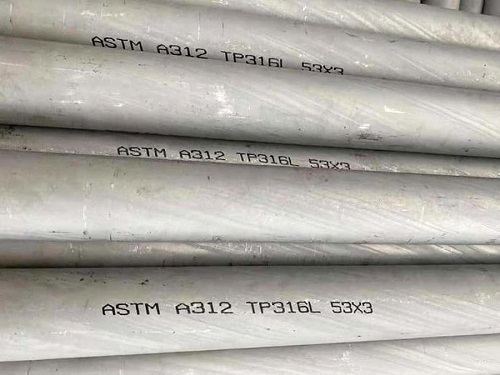
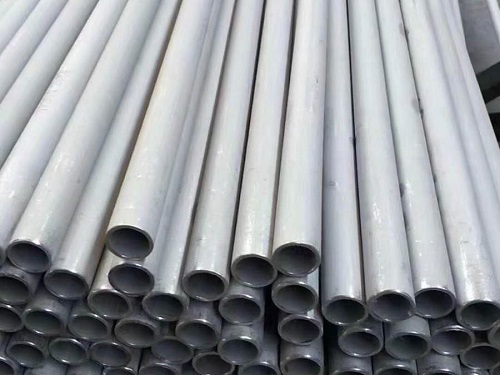
A312 pipe is made seamless or welded, in NPS 1/8 through 30, with wall schedules from 5S up to XXS. It is the workhorse for process piping that sees pressure and heat. The spec lists the common austenitic grades: 304, 304L, 316, 316L, 317L, 321, 347, 310S, and several duplex grades. Most of what we ship in this spec leaves with a mill test certificate and gets positive material identification (PMI) on the corrosion grades.
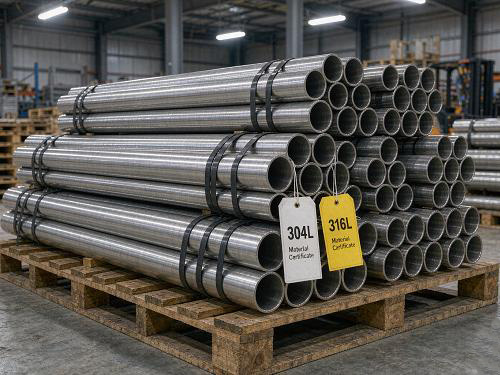
The grades most buyers ask for are 304L and 316L, because the L (low carbon) version resists sensitization in the heat affected zone after welding. For a salt or marine setting, 316L is the safer pick. For a mild indoor line, 304L usually does the job at a lower cost.
ASTM A269 in plain terms
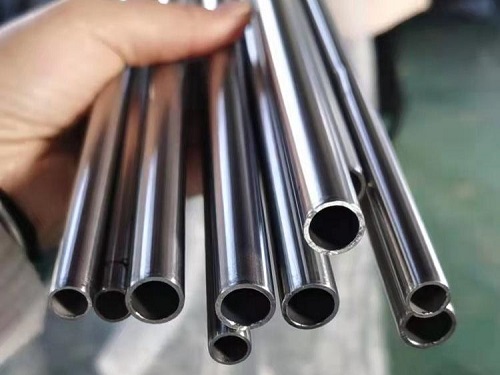
A269 tubing is also made seamless or welded, but its size is given as an outside diameter from 1/8 inch up to 12 inch, with a wall thickness and a much tighter OD tolerance than pipe. The intent is general service, which in practice means heat exchangers, condensers, instrument lines, and sanitary runs in food and beverage plants. The surface on A269 is usually pickled or bright annealed so it stays clean inside.
Because the tolerance is tight, A269 is the spec people reach for when the tube has to slide into a tube sheet or thread into an instrument fitting. A pipe sized to NPS will not seat the same way, and that mismatch causes leaks that are hard to trace.
Side by side: the main differences
This is the table most engineers bookmark. Read it before you write the purchase order.
| Aspect | ASTM A312 | ASTM A269 |
| Product form | أنبوب | Tubing |
| Size basis | Nominal pipe size (NPS) | Outside diameter (OD) |
| Wall basis | Schedule (5S to XXS) | Decimal wall thickness |
| Main use | Process lines, pressure, heat | Exchangers, instruments, sanitary |
| Pressure intent | Higher rated service | General service, lower pressure |
| OD tolerance | Looser | Tight |
| Typical surface | As rolled, normalized, or pickled | Pickled, bright annealed, clean |
| Common grades | 304, 316L, 317L, 321, 347, duplex | 304, 304L, 316, 316L, 321, 347 |
| Testing | Hydrostatic, ET or UT at option | Hydrostatic, ET or UT at option |
The one line that trips people up is the size basis. A312 uses NPS, so a “2 inch” pipe measures about 2.375 inch outside. A269 uses real OD, so “2 inch” means 2.000 inch outside. Same number, different part. Get that wrong and the flange will not fit.
Chemical and mechanical requirements
Both specs name the same family of austenitic grades, so the chemistry ranges for 304L or 316L line up. Carbon stays low on the L grades, chromium sits near 18 percent on 304 types and nickel near 8 to 12 percent, and 316 adds 2 to 3 percent molybdenum for pitting resistance. Mechanical values such as tensile and yield are also close, because the base alloy is the same.
The real difference is dimensional. A269 holds the outside diameter to a tighter window, and it also controls the wall more closely. A312 controls the inside diameter indirectly through NPS and schedule. When your design depends on the outside dimension, that control is the reason to choose A269.
Pressure and temperature service
A312 is written for lines that carry pressure and heat. A 316L SCH 40S A312 pipe holds a known working pressure at a given temperature, and you can read that from a standard pressure table. That is why plant piping, boiler feed, and utility lines almost always call for A312.
A269 is meant for general service and is not rated the same way. You can still run it under pressure, but the working number comes from the wall and grade you choose, not from a schedule table built into the spec. For a heat exchanger or instrument line, the tight tolerance matters more than a stamped pressure class.
Surface finish and inspection
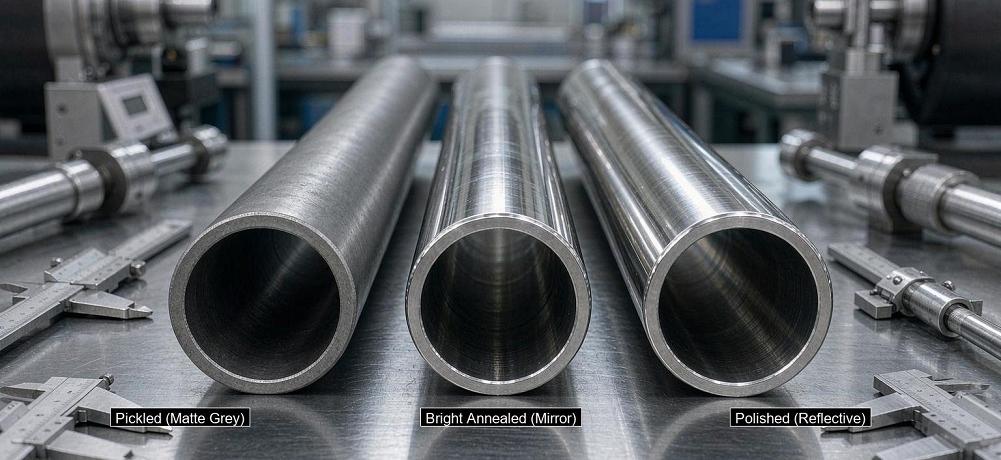
A269 tubing usually ships pickled or bright annealed, with a clean inside surface that meets sanitary or exchanger needs. The bright anneal leaves a smooth, low roughness finish that is easier to clean and less likely to trap product. A312 pipe can ship with a wider range of finishes, from as welded to pickled to mirror, because the service may not need a clean bore.
On inspection, both specs allow hydrostatic testing and either eddy current or ultrasonic testing at the buyer’s option. For corrosion grades we add PMI so the heat is confirmed before it leaves. For sour or chloride service, ask about NACE and low ferrite checks up front.
Grades you can get in both
You do not have to trade away your grade when you switch specs. The common grades appear in both:
- 304 and 304L for general corrosive service
- 316 and 316L where chloride or salt is present
- 321 and 347 for stabilized high heat service
- 310S for sustained high temperature
- duplex grades for strength and chloride resistance
When to pick A312
Choose A312 when the part is pipe in a process system. That means NPS sizing, a pressure class from schedule, flanged or butt welded joints, and service that sees heat or rated pressure. Typical jobs are plant utility lines, pump suction and discharge, heat tracing, and structural stainless runs where the bore does not need a tight OD.
If your drawing calls out NPS, schedule, and a flange class, A312 is the spec. Do not substitute A269 just because the alloy is the same, because the dimensions will not match the flange.
When to pick A269
Choose A269 when the part is tube that must fit something exactly. That means heat exchanger bundles, condenser tubes, instrument impulse lines, and sanitary tube in breweries or dairies. The tight OD and clean bore are the point. Typical jobs are U tube bundles, sample lines, and clean in place returns where the surface has to stay hygienic.
If your drawing calls out an exact outside diameter and a decimal wall, A269 is the spec. A312 pipe of the same nominal size will not seat in the tube sheet.
How Wanzhi supplies both
We production A312 pipe and A269 tubing in 304L and 316L, with other grades on request. Every order leaves with an EN 10204 3.1 mill test certificate, and corrosion grades get PMI before shipment. We cut to length, bevel ends, and pack for long sea freight so the surfaces arrive clean.
Because we carry both specs, you can source a mixed order from one supplier and keep the paper trail in one file. That helps on audit and on site when the inspector wants the MTC for every heat. For the pipe side, see our stainless steel pipe range and the ASTM A312 316L stainless steel pipe we keep in stock.
Common mistakes when specifying
The first mistake is sizing by the wrong system. A buyer sizes by NPS, then buys A269, and the tube is a fraction off at the flange. The second is assuming A269 is only welded. It is made seamless too, and seamless A269 is common in exchanger and instrument work. The third is mixing grade intent: 304 is fine indoors, but near salt or bleach, 316L earns its price.
A fourth mistake is skipping the MTC. Both specs allow testing at the buyer’s option, so if you do not ask for hydrostatic or ET, you may not get it stamped. Say what you need on the order and we will proof it.
Standards overlap and certifications
A312 and A269 share the same austenitic grade chemistry, so a heat can meet both where the dimensions allow. The certificate you want is EN 10204 3.1, which names the actual values for that heat. For food and beverage tube, the surface and clean bore matter as much as the chemistry, which is why A269 sanitary runs get a bright anneal.
For projects with chloride or sour exposure, ask about low ferrite and NACE aligned checks. We can add these to the order and note them on the MTC. If you are weighing 304 against 316 for a sanitary tube run, our surface finish guide and the 304 vs 316 brewery tank write up on the equipment side cover the grade choice in plain terms.
التعليمات
Related products
- Stainless steel pipe – our full pipe range across A312 grades
- ASTM A312 316L stainless steel pipe – seamless and welded, in stock
- 316L stainless steel seamless pipe – for pressure and corrosion service
- 304 stainless steel sheet – the 304 grade in flat form
- 316 stainless steel sheet – the 316 grade in flat form
- Stainless steel surface finish guide – 2B, No.4 and BA explained
- الفولاذ المقاوم للصدأ – the material hub
- All products – browse the full catalog
اتصال
Tell us the spec, grade, size, and finish you need, and we will quote from stock or mill. For A312 and A269 mixed orders, send one list and we will match the MTCs to one file. Reach the Wanzhi team at our Zhengzhou office or through the form on the product pages above.
 English
  Русский
  العربية
  Español
  Français
  فارسی
فارسی  繁體中文
繁體中文  O‘zbekcha
  Tiếng Việt
  Українська
  Türkçe
  ไทย
ไทย  日本語
日本語  한국어
한국어  简体中文
简体中文