
Many people believe that acero galvanizado will never rust because it has a protective zinc coating. However, in certain environments, acero galvanizado can indeed rust. Understanding the reasons behind this can help you choose materials and maintain the steel more effectively. Below, we’ll explain in simple terms why acero galvanizado can rust and how to address it.
I. The Rust Prevention Principle of Galvanized Steel
Before explaining why rust forms, let’s briefly understand why galvanized steel is rust-resistant.
Zinc is more reactive than iron. When the coating is intact, zinc preferentially reacts with oxygen and water to form a dense zinc oxide or basic zinc carbonate film, preventing the internal steel from contacting corrosive media.
If the coating is partially damaged, zinc acts as a “sacrificial anode” to continue protecting the exposed steel substrate (electrochemical protection).
Therefore, ordinary scratches or minor abrasions usually do not immediately lead to rust. However, when certain conditions break this protective mechanism, rust (iron oxide) will appear.
II. 4 reasons why galvanized steel rust
1. Zinc Coating Completely Depleted (Natural End of Life)
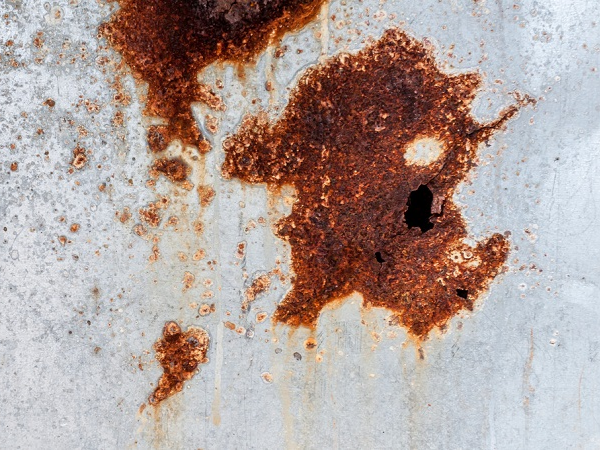
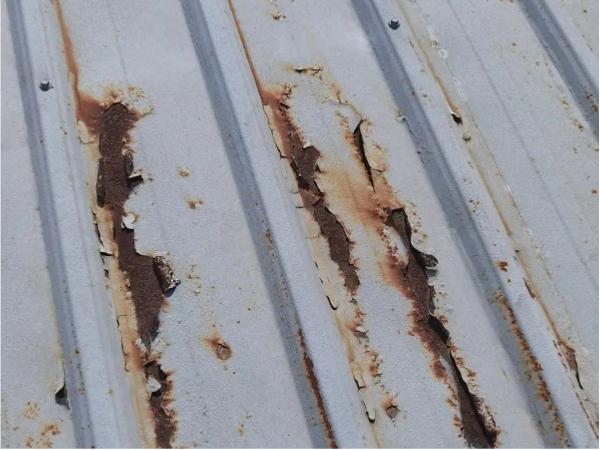
Zinc is a consumable protective layer. Under prolonged exposure to damp, acid rain, salt spray, or industrial pollution, zinc slowly corrodes, eventually losing its protective ability. When the remaining zinc layer thickness falls below a critical value (typically a few micrometers), the underlying steel is directly exposed to the air and quickly rusts.
Typical Scenario: Galvanized steel railings or roofs that have been used for 20-30 years or more, where the zinc layer has gradually eroded.
Solution: Inspect the remaining coating thickness and, if necessary, regalvanize or apply a zinc-rich coating.
2. Localized Damage to the Galvanized Layer and Harsh Environment
Although zinc has sacrificial protection capabilities, if the damaged area is too large, or if the electrolyte in the environment is strong (e.g., seawater, de-icing salt), the zinc consumption rate will accelerate dramatically, failing to completely cover all exposed steel surfaces. In this case, “red rust” will form at the damaged area.
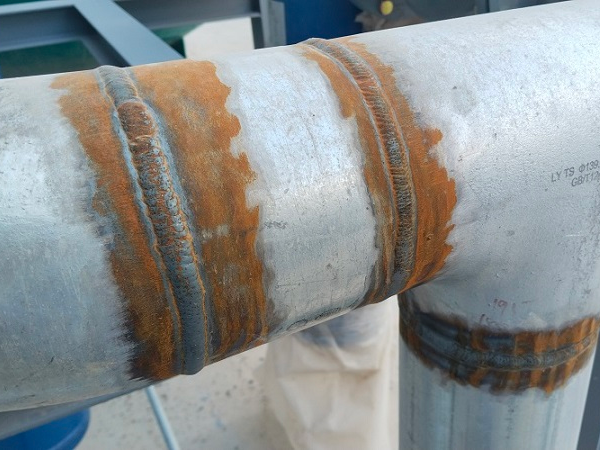
Typical scenarios: Impact from heavy objects, drilled holes without rust prevention treatment, zinc layer at welds burned off and not repaired.
Solution: Treat the damaged area promptly with cold galvanizing spray or zinc-rich repair primer.
3. White Rust (Corrosion Caused by Improper Storage) Developing into Red Rust
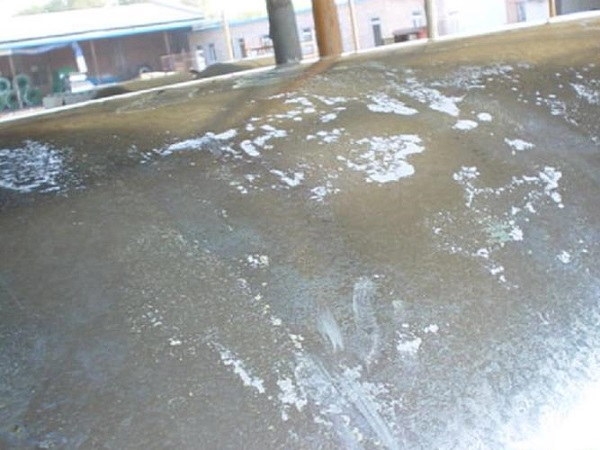
White rust is a common storage defect in galvanized steel. When galvanized steel coils or finished products are tightly stacked, with condensation or rainwater on the surface and lack of ventilation, the zinc layer undergoes rapid electrochemical corrosion, forming a loose, white zinc hydroxide (white rust). Although white rust is not initially red rust, it severely depletes the zinc layer; once the zinc layer is penetrated, red rust begins to form underneath.
Typical scenarios: Newly purchased galvanized steel sheets are stored unopened after rain, or the inside of pipes is damp and poorly ventilated.
Solutions: Keep the area dry and well-ventilated, avoiding direct contact with the ground or rainwater; mild white rust can be removed with a stiff brush and a chromium-free passivating agent applied.
4. Corrosion in Special Environments (pH Too Low or Too High)
Zinc is relatively stable in environments with a pH of 6–12.5, but it corrodes rapidly in strongly acidic (pH < 6) or strongly alkaline (pH > 12.5) environments.
Examples include: direct contact with acidic wood (such as some types of oak), alkaline water seeping from undried concrete, acidic exhaust gases from factories, and acidic liquids from the decomposition of livestock manure. In such environments, the zinc coating can be damaged within months or even weeks, leading to rusting of the steel.
Solutions: Replace with an environmentally friendly coating (such as zinc-aluminum-magnesium) or add an organic coating for protection.
III. Common Misconceptions and Answers
| Myths | Facts |
| Galvanized steel never rusts | Galvanizing only significantly delays rusting; its lifespan depends on the coating thickness and environment |
| White rust indicates poor product quality | White rust is usually caused by moisture or poor ventilation during storage or transportation, not a material defect |
| Galvanized steel cannot be repaired once it rusts | Light red rust can be sanded and then coated with a zinc-rich primer; severe rust can be re-hot-dip galvanized or replaced |
| All galvanizing processes have the same rust-preventing effect | Hot-dip galvanizing (typically 30~200µm) provides 5-10 times longer corrosion resistance than electro-galvanizing (5~30µm) |
IV. How to avoid galvanized steel rust and extend the service life?
1. Choose Coating Weight Based on Environment
For coastal or highly polluted industrial areas, Z275 (275g/m²) or higher coatings are recommended; Z80 is sufficient for ordinary indoor environments.
2. Proper Storage and Installation
Galvanized steel coils or sheets should be elevated and covered with rainproof cloth to ensure air circulation.
After cutting and drilling, repair the cuts with cold-dip galvanized paint.
Avoid prolonged contact with acidic or strong alkaline substances.
3. Regular Inspection and Maintenance
Inspect outdoor galvanized components every 2-3 years. Clean any white rust promptly, and repair any red rust by grinding. For components with existing pitted red rust, clean with a wire brush and then apply an epoxy zinc-rich primer.
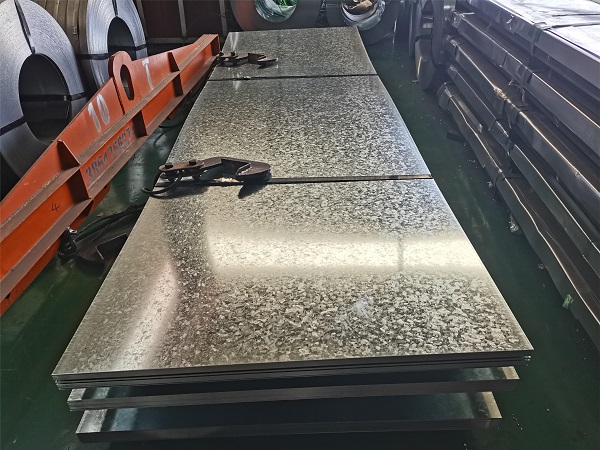
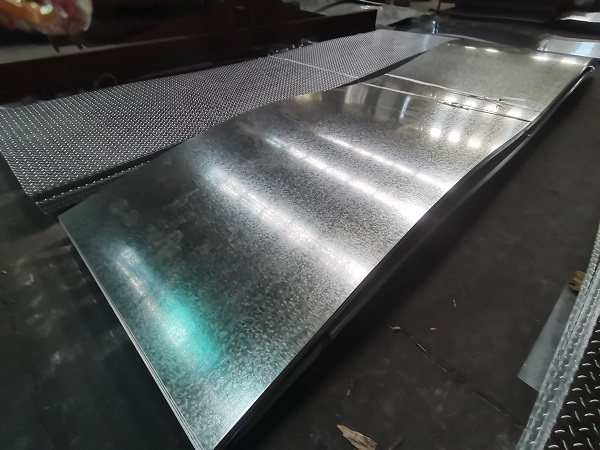
4. Consider Next-Generation Coatings
In extremely corrosive environments, consider products such as zinc-aluminum-magnesium (ZAM) or aluminized zinc (Galvalume). These offer 2 ~ 4 times higher corrosion resistance than ordinary galvanizing and have stronger self-healing capabilities at the cut edges.
In summary
Galvanized steel rusts primarily due to the natural depletion of the zinc coating, unrepaired localized damage, improper storage leading to white rust, or prolonged exposure to extreme acidic or alkaline environments. It is not a magical material that “never rusts,” but rather a controllable, cost-effective, and long-term corrosion protection solution. With the right specifications, proper installation, and regular maintenance, galvanized steel can achieve a rust-free service life of 20-50 years.
Tip: If you find extensive red rust on your galvanized product, it indicates that the zinc coating has failed. The simplest solution is to remove the rust and reapply an anti-corrosion coating, or to replace the component entirely.
 English
  Русский
  العربية
  Español
  Français
  فارسی
فارسی  繁體中文
繁體中文  O‘zbekcha
  Tiếng Việt
  Українська
  Türkçe
  ไทย
ไทย  日本語
日本語  한국어
한국어  简体中文
简体中文