
When buyers line up 304 vs 430 stainless steel, the first surprise is the magnet. Hold one to 430 and it sticks hard. Hold it to 304 and it barely reacts. That single test points to a deeper split: 304 is an austenitic, nickel bearing grade built for food, weather and welding, while 430 is a ferritic, almost nickel free grade built for indoor trim and low cost. Both resist rust in ordinary air, but they part ways on magnetism, price and how they behave under a welding torch. This guide puts them side by side on chemistry, corrosion, cost, weldability and use, so you can pick the right one and avoid paying for 304 where 430 would do the job.
For the chloride heavy side of the same question, our 316 vs 304 stainless steel comparison covers the step up to molybdenum bearing grades, and our surface finish guide covers the shared finishes.
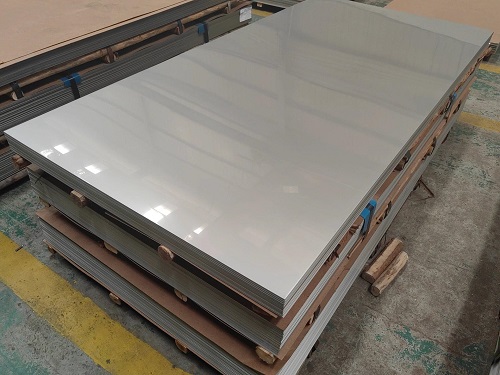
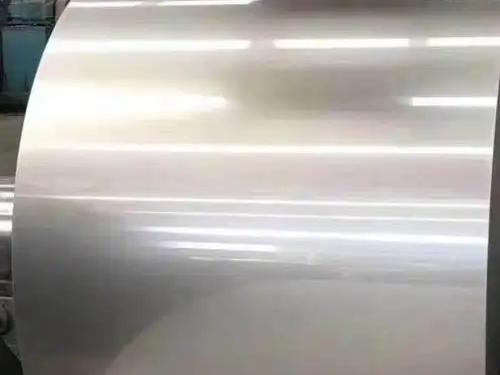
What 304 and 430 stainless steel are
304 is the grade most people mean by stainless steel. It is austenitic, with about 18 percent chromium and 8 to 10.5 percent nickel, which is why it is called 18/8. The chromium builds a thin passive film that keeps ordinary rust away, and the nickel gives it toughness, a clean look and easy forming. You find it in sinks, countertops, handrails, food tanks and most kitchen gear.
430 is the workhorse ferritic grade. It runs about 16 to 18 percent chromium and carries almost no nickel, with carbon up to about 0.12 percent. No nickel means lower cost and a body centered cubic structure that is magnetic. It trades some corrosion resistance for price and a hard, magnetic character that suits indoor and decorative jobs. Both grades sit inside the ASTM A240 flat rolled family, and the generic grade data is documented on Wikipedia’s stainless steel page if you want to check the basics.
chemical composition: nickel is the divider
This is the table that settles most arguments. The numbers are weight percent from ASTM A240, with iron making up the balance.
| Element | 304 | 304L | 430 |
| Chromium | 18.0 – 20.0 | 18.0 – 20.0 | 16.0 – 18.0 |
| Nickel | 8.0 – 10.5 | 8.0 – 12.0 | 0.75 max |
| Carbon | 0.08 max | 0.030 max | 0.12 max |
| Manganese | 2.0 max | 2.0 max | 1.0 max |
| Silicon | 0.75 max | 0.75 max | 0.75 max |
| Phosphorus | 0.045 max | 0.045 max | 0.040 max |
| Sulfur | 0.030 max | 0.030 max | 0.030 max |
The line that matters is nickel: 304 has it, 430 does not. That one gap drives the magnetism, most of the cost and a good part of the corrosion story. The carbon row is why 304L exists for welding, while 430 controls carbon a different way through stabilization.
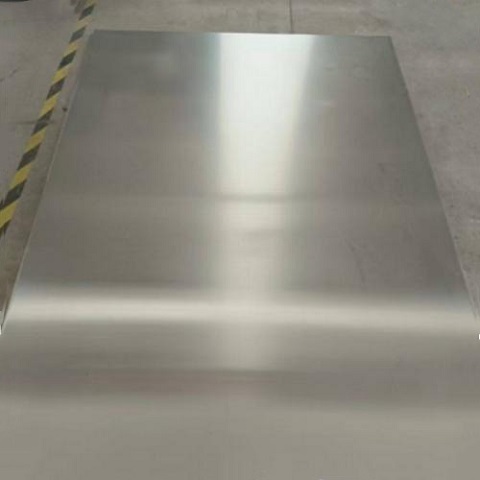
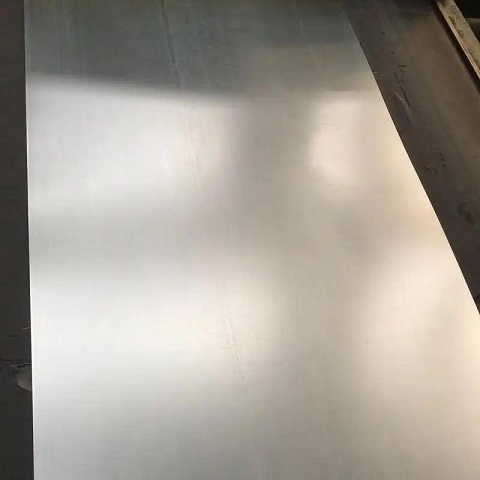
Magnetism: the quick test that tells them apart
430 is ferritic, and ferritic stainless is ferromagnetic. A magnet clings to it firmly, which is why 430 shows up in magnetic brackets, appliance latches and parts that need to hold a magnet.
304 is austenitic. In the annealed state it is essentially non magnetic; a magnet will not stick, or will only show the faintest pull at a thin edge. The catch is cold work. Cutting, bending, drawing or heavy rolling can leave a little magnetism at the worked edges, so a magnet test is a good field clue but not proof of grade. For proof, use PMI, a positive material identification check that reads the chemistry.
This difference is the fastest way to sort the two on a job site: strong magnet pull points to 430, no pull points to 304.
Corrosion resistance: why 304 beats 430 outdoors
Pitting resistance is measured by PREN, the pitting resistance equivalent number. For these grades PREN is roughly chromium plus 3.3 times molybdenum plus 16 times nitrogen. 430 has no molybdenum and a touch less chromium, so its PREN lands around 17. 304 sits near 19.
| Оценка | Approx. PREN | Behavior in service |
| 304 | 18 – 20 | Holds up in fresh water, mild food acid, indoor and many outdoor spots |
| 430 | 16 – 17 | Fine in dry indoor air, stains and rusts in moisture, salt and weather |
In plain terms, 304 shrugs off kitchen acids, fresh water and most weather. 430 is happy in dry indoor air but it will stain and then rust once it meets humidity, salt spray or regular wetting. That is why 430 is an indoor and decorative grade, while 304 is the choice for food, outdoor and anything washed often. For coastal or salt heavy duty, our marine grade 316 sheet goes further still.
Cost: why 430 is the cheaper grade
430 costs far less than 304, often 30 to 50 percent lower for the same form, because it carries almost no nickel. Nickel is the expensive element in stainless, and its price on the LME sets much of 304’s cost. 430 follows chrome and stainless scrap instead, so when nickel spikes, 304 climbs while 430 barely moves and the gap between them widens.
The saving is real, but only where 430 fits the job. Use it indoors, dry and un welded, and it is the smart buy. Spec it where water, salt or welding enter the picture and the low price disappears in rust and rework. Our 2026 price guide shows the current per kg ranges for both.
Weldability: where 430 gets difficult
304 welds cleanly with TIG, MIG and stick. The main risk is sensitization on thick sections, which is why 304L exists: its low carbon keeps chromium in the mix at the weld and protects the seam. For most fabricated 304, welding is routine.
430 is harder to weld. As a ferritic grade it grows coarse grains in the heat affected zone, loses toughness there and can crack, especially on thicker sections. It also risks sensitization and sigma phase if overheated. You can weld 430, but plan for it: use 430Ti (titanium stabilized) or a 309 or 310 austenitic filler, preheat to around 150 to 200°C, keep heat input low and post heat if the spec calls for it. For structural or pressure welds, 304 is the safer, cheaper to produce choice.
If your part must be welded and hold, 304 is the grade. If it is a formed, un welded trim piece, 430 is fine.
Strength and heat resistance
304 is stronger at room temperature and keeps its strength and toughness down to cryogenic temperatures, which is why it serves cryogenic and food tank work. It is also the better pick for repeated heating and cooling in clean service.
430 is a little harder and wears well in dry bearing type uses, but it loses strength above about 600°C and is not for cryogenic or high heat cycling. For heat where corrosion also matters, 304 or a higher grade is the call.
Surface finishes they share
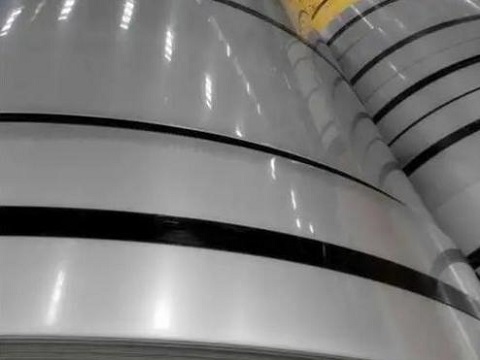
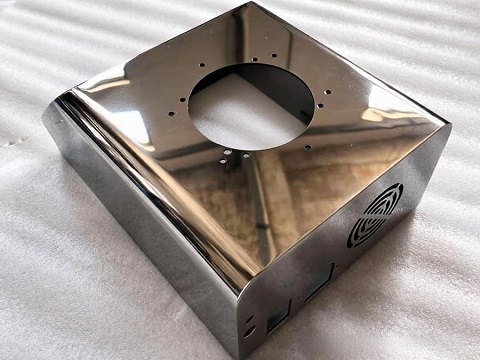
Both grades take the same mill finishes, so look and cleanability do not force the choice. 2B is the standard mill finish, No.4 is the brushed look used in kitchens and decor, BA is the bright mirror finish for visible panels, and HL is the long hairline line. Pick the finish for the job, not the grade. Our brushed sheet и cold rolled sheet pages cover the common forms, and the surface finish guide walks through 2B, No.4 and BA side by side.
Where each grade fits
| Use | 304 | 430 |
| Kitchen counters, sinks, food contact | standard | dry use only |
| Outdoor, coastal, weather exposed | yes | no |
| Chemical, process, washdown | yes | no |
| Indoor decorative trim, cladding | yes | best value |
| Automotive trim, appliance bodies | yes | common |
| Magnetic brackets, shields, latches | weak or none | yes |
| Welded tanks, frames, structures | yes | limited |
| Cost driven indoor panels | ok | best value |
The split shows up clearly in real parts. 304 carries the food and process side: tanks, counters, sinks and washdown frames. 430 carries the indoor and decorative side: appliance bodies, trim and panels that never meet water or weld.
304 vs 430 at a glance
| Property | 304 | 430 |
| Structure | austenitic | ferritic |
| Magnetic | no (annealed) | yes |
| Nickel | 8 – 10.5% | about 0 |
| Chromium | 18 – 20% | 16 – 18% |
| PREN | 18 – 20 | about 17 |
| Relative cost | higher | 30 – 50% lower |
| Welding | easy | needs care |
| Best for | food, outdoor, weld | indoor, decorative, magnetic |
How to choose between 304 and 430
Use this three step check.
- Will it meet water, salt, food acid or weather? If yes, choose 304. For coast or heavy chloride, move to 316.
- Must it be welded or hard formed? If yes, 304 welds as routine; 430 needs a planned weld procedure.
- Is it indoor, decorative, cost led and able to hold a magnet? Then 430 is the value pick.
When the job is dry, indoor and un welded, 430 saves real money. When it is wet, welded or food facing, 304 earns every cent.
How Wanzhi supplies 304 and 430
We stock 304 as sheet и plate, and 430 as sheet, all to ASTM A240 with EN 10204 3.1 mill test certificates. We cut to size, supply the shared 2B, No.4, BA and HL finishes, and mix 304 and 430 in one order so your paperwork stays in one file. For the chloride heavy jobs our 316 plate и marine grade sheet cover the step up. If you are building a tank or vessel, our 304 vs 316 brewery tank write up on the equipment side works through the grade choice, and for 18/8 naming our 18-10 stainless steel page explains the kitchen term.
Часто задаваемые вопросы
Related products
- 304 stainless steel sheet
- 304 stainless steel plate
- 316 stainless steel plate
- 316 vs 304 stainless steel
- Marine grade stainless steel sheet
- Brushed stainless steel sheet
- Cold rolled stainless steel sheet
- Stainless steel price guide 2026
- Surface finish guide
Request a quote
Tell us the grade, form, thickness and finish, and we will cut to size and ship with the MTC. For a mixed 304 and 430 order, send one inquiry and we keep it in one file.
Email: [email protected]
WhatsApp: +86 18736065220
Компания: район, город Чжэнчжоу, провинция, Китай
Фабрика: Binzhou City, Shandong Province, China
 English
  Русский
  العربية
  Español
  Français
  فارسی
فارسی  繁體中文
繁體中文  O‘zbekcha
  Tiếng Việt
  Українська
  Türkçe
  ไทย
ไทย  日本語
日本語  한국어
한국어  简体中文
简体中文