
Tie wire is the soft annealed wire a crew uses to hold rebar in position until the concrete cures. It is a consumable, bought by the coil or by the preformed piece, and it is the one item on a reinforcement package that decides how fast a cage goes together. Steel itself is the backbone of modern construction, as the Britannica overview of steel lays out, and tie wire is what holds that steel in place on site.
This page is a selection guide. It covers what the wire is made of, how the gauge systems map to millimetres, which coating suits which environment, and how to size an order. If your project uses stainless reinforcement or mesh, our stainless steel wire page covers the alloy side of the same product family.
What tie wire is made of
Two material families cover nearly every job site.
Low carbon steel is the volume material: Q195, Q235 and SAE 1006 or 1008 rod, drawn down and annealed soft. It twists without springing back, cuts clean with pliers, and costs a fraction of stainless. Nearly all rebar tying runs on it.
Stainless steel in grades 304 and 316, drawn to tie wire sizes, costs several times more, so it earns its place only where the tie has to last: permanent exposed assemblies, marine and coastal structures, food and chemical plants, and architectural work where a rust stain on the facade is a defect. Grade 316 is the call for salt air; 304 covers general washdown duty.
The same mill relationships that supply our 304 and 430 sheet produce the rod, so the chemistry on the certificate is the chemistry on your rebar cage.
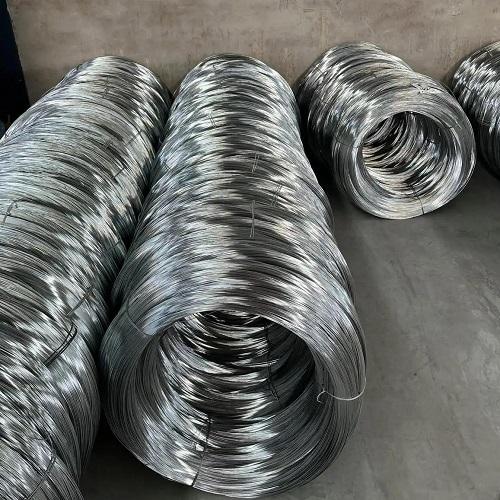
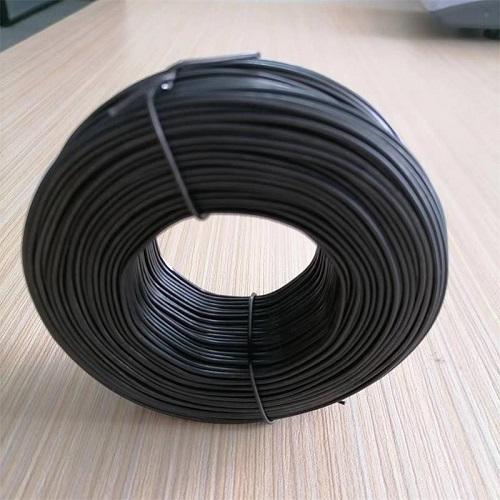
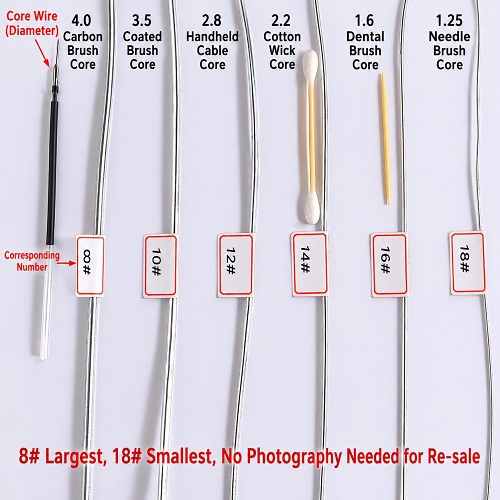
Gauge chart: BWG, SWG and millimetres
Tie wire is sold by gauge, and the two systems in circulation do not agree. BWG (Birmingham wire gauge) and SWG (Standard wire gauge) both run from thick to thin as the number climbs, but the same number means a different diameter in each system. Metric designation, in millimetres, is the only unambiguous one, so it is the column to quote on a purchase order.
| Gauge | BWG (mm) | SWG (mm) | Metric (mm) | Typical use |
|---|---|---|---|---|
| 8# | 4.19 | 4.05 | 4.0 | Heavy bundling, structural tying |
| 10# | 3.40 | 3.25 | 3.5 | General construction, heavy tying |
| 12# | 2.77 | 2.64 | 2.8 | Fencing, mesh, heavy binding |
| 14# | 2.11 | 2.03 | 2.0 | Mesh weaving, general tying |
| 16# | 1.65 | 1.63 | 1.6 | Heavy rebar tying, scaffolding |
| 18# | 1.25 | 1.22 | 1.2 | Standard rebar tying, general binding |
| 19# | 1.07 | 1.02 | 1.0 | Light rebar, crafts, packaging |
| 20# | 0.89 | 0.91 | 0.9 | Light tying, packaging, fine work |
| 21# | 0.81 | 0.81 | 0.8 | Light rebar tying, the site favourite |
| 22# | 0.71 | 0.71 | 0.7 | Crafts, fine tying, electronics |
Three gauges carry most of the volume. 21# at 0.8 mm is the site favourite for tying light to medium rebar by hand. 18# at 1.2 mm is the standard call for general reinforcement. 16# at 1.6 mm is the choice when the tie has to hold under load, such as heavy cages, pre-stressed work and scaffold couplings.
The rule of thumb crews use: match the wire gauge to the bar diameter. Bars up to 10 mm take 21#, bars from 10 to 20 mm take 18#, and anything above 20 mm or under pre-stressing load takes 16#. Oversized wire is wasted money and sore hands; undersized wire snaps mid twist.
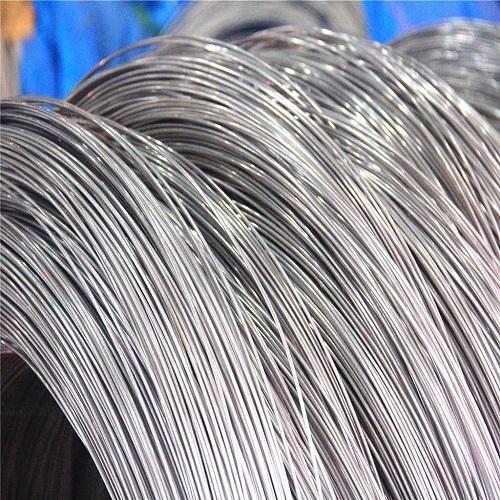
Coatings: black, galvanized and PVC
The coating decides whether the tie survives its environment, and it is the single biggest price lever after gauge.
Black annealed wire is the bare drawn product, matte black from the annealing furnace. It is the softest and cheapest, twists the easiest, and is the default for indoor work, formwork tying and anything encased in concrete where corrosion is not a factor. It rusts fast outdoors, so keep it away from weather-exposed joints.
Electro-galvanized wire carries a thin zinc layer, roughly 10 to 20 g/m2. The bright silvery finish is good enough for short-term outdoor storage and general site use where the tie is temporary, which makes it the economical middle option.
Hot-dip galvanized is the real outdoor wire. The zinc coat runs 40 to 60 g/m2 standard and up to 220 to 400 g/m2 heavy, covering fencing, guardrail, vineyard posts and coastal sites where the tie has to sit in weather for years. Zinc is sacrificial, so it keeps protecting the steel core even after the surface scuffs.
PVC coated wire puts a coloured plastic jacket, usually green, over galvanized wire. It hides the tie in foliage, protects plants from abrasion and adds a second corrosion barrier, which is why trellising and landscaping crews buy it.
Stainless wire needs no coating at all. Bare 304 or 316 is the permanent answer for marine, chemical and architectural duty.
For reference, the coating standards that govern these layers are published by ASTM, and the zinc layer specifically follows ASTM A641 with EN 10244-2 as the European equivalent. GB/T 343 is the Chinese standard most domestic coils ship against.
Supply forms: coil, straight cut and preformed
Bulk coil is the default form. Coils run from 0.5 kg retail packs up to 500 kg for machine feeding, and the crew cuts and twists by hand or with a spinner tool.
Straight cut wire comes cut to length for baling, packaging lines and jobs where coil feed does not work.
Preformed U-ties and double loop ties are bent into shape at the factory and supplied in bundles of 1,000 to 5,000 pieces. The crew hooks one around the intersection, gives it a twist with a twister tool, and moves on. On large cages that is the difference between a day per pour and half a day, and it cuts the hand injuries that come with twisting. Gauges run 16 to 20 BWG with loop diameters around 8 to 12 mm to fit standard twisters.
Coil wire is the economical choice for small crews and mixed work. Preformed ties pay for themselves in labour on repetitive cages. Tell us your pour schedule and we will quote both options side by side.
Where tie wire gets used
| Sector | Typical job | Common spec |
|---|---|---|
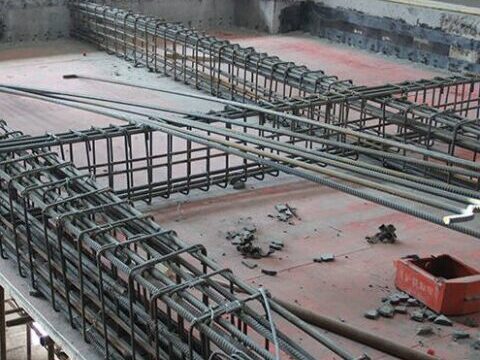
| Reinforced concrete | Tying rebar intersections in foundations, columns, beams, slabs | Black annealed or electro-galvanized, 16 to 21# |
| Precast concrete | Securing cages and mesh before casting and during curing | Black annealed, 18 to 21# |
| Scaffolding and formwork | Tying couplers, securing formwork panels and netting | Electro or hot-dip galvanized, 14 to 18# |
| Fencing and agriculture | Trellis, vineyard posts, perimeter fence repair | Hot-dip galvanized or PVC coated, 12 to 16# |
| Packaging and recycling | Baling cardboard, plastic, scrap and textiles | Electro-galvanized or black, 14 to 18# |
| Marine and coastal | Permanent exposed ties in salt air | Stainless 316, 16 to 18# |
The common thread is a joint that has to hold under load and vibration, then disappear inside the concrete. A tie that fails during a pour lets the cage shift, and the fix after the concrete sets is a repair, not an adjustment.
How to choose: four questions
Start with what you are tying. Match the gauge to the bar: light mesh and 6 to 10 mm bars take 21#, general reinforcement from 10 to 20 mm takes 18#, and heavy bars, pre-stressed cages and scaffold couplings take 16# or heavier.
Then ask where the tie lives. Encased in concrete, black annealed is enough. Exposed to weather for months, electro-galvanized. Exposed for years, hot-dip galvanized. Salt, chemical or permanent architectural exposure, stainless 316.
Then look at who ties and how fast. Hand tying a small cage, bulk coil in 21# or 18# is the economical call. A crew on a repetitive pour, preformed U or double loop ties cut labour and hand injuries.
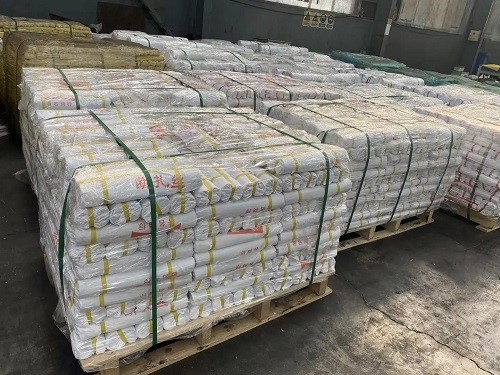
Last, size the order. Coil weights run 0.5 kg to 500 kg. A small crew job takes 5 to 10 kg packs; a contract pour takes full coils or pallet quantities. Mixed gauge orders are normal, so send the full list rather than the largest size.
What moves the price
Four inputs drive a tie wire quote, and knowing them makes comparing quotes fair.
Gauge drives cost per tonne: finer gauges need more drawing passes and lose more yield, so 21# prices above 16# on the same coating.
Coating is the next lever. Black annealed is the baseline; electro-galvanized adds the zinc line cost; hot-dip adds more, and heavy zinc coatings at 220 g/m2 and above add more again. PVC coating prices between hot-dip and stainless.
Material moves the number the most. Low carbon rod is the commodity baseline. Stainless 304 runs several times higher, and 316 above that, tracking the nickel and molybdenum markets the same way our 316 sheet pricing does.
Form and packaging close it out. Bulk coil is cheapest per kilo. Straight cut adds cutting labour; preformed U and loop ties add bending, counting and bundling, then pay it back on site.
Send your gauge, coating, form and quantity and we quote material and processing together. The full catalogue sits on the all products page.
Why buy tie wire from Wanzhi
We are an integrated industrial and trade company that draws and coats its own wire, which removes a layer of margin and keeps gauge and coating consistent batch to batch. Production runs under ISO 9001, ISO 14001 and ISO 45001, with SGS and BV inspection available on request.
Every batch ships with a mill test certificate showing diameter, tensile strength, elongation and zinc coating weight, so the wire that arrives matches the wire you specified. Where a tie has to survive weather or washdown, the same traceability that stands behind our galvalume and PPGI coil lines stands behind the galvanizing on your wire.
For stainless ties in marine or food service, the molybdenum grade guidance from the International Molybdenum Association explains why 316 outperforms 304 in salt and chemical exposure.
Send your gauge, coating, quantity and destination through the contact page and we will quote the same day.
FAQ
What is tie wire made of?
Low carbon steel (Q195, Q235 or SAE 1006/1008) for general site use, or stainless steel grades 304 and 316 where the tie has to resist corrosion permanently.
What gauge tie wire is best for rebar?
21# (0.8 mm) for light bars up to 10 mm, 18# (1.2 mm) as the standard for 10 to 20 mm bars, and 16# (1.6 mm) for heavy bars, prestressed cages and scaffold work.
What is the difference between BWG and SWG?
Both are gauge systems where a higher number means thinner wire, but the same number gives a different diameter in each system. BWG 21# is 0.81 mm; SWG 21# is 0.81 mm at that point but the systems diverge at other sizes. Quote metric millimetres to avoid ambiguity.
Is black annealed or galvanized tie wire better?
Black annealed is softer, cheaper and twists easiest; use it for ties encased in concrete or indoor work. Galvanized resists rust, so use it for anything exposed to weather. Electro-galvanized suits short-term exposure, hot-dip galvanized suits years outdoors.
Can tie wire be used outdoors?
Yes, with the right coating. Electro-galvanized handles temporary exposure, hot-dip galvanized handles long-term weather, and stainless 316 is the answer for salt air and permanent exposed ties.
What standards apply to tie wire?
ASTM A641 governs zinc-coated (galvanized) steel wire, ASTM A853 covers black annealed wire, and EN 10244-2 is the European equivalent. GB/T 343 is the Chinese standard most domestic coils ship against.
How is tie wire supplied?
In bulk coils from 0.5 kg up to 500 kg, as straight cut lengths, or as preformed U-ties and double loop ties bundled 1,000 to 5,000 pieces for use with a twister tool.
What are preformed tie wires?
Wire pre-bent into a U or double loop shape. The crew hooks it over the rebar intersection and twists once with a twister tool, which is faster than cutting and twisting bulk wire and reduces hand injuries.
How much does tie wire cost per kg?
It depends on gauge, coating and material. Low carbon black annealed is the baseline, electro and hot-dip galvanizing add zinc cost, and stainless 304 or 316 run several times higher. Send your spec for a same-day quote.
What is the minimum order quantity for tie wire?
Common gauges and coatings start from one coil or one pallet. Stainless and heavy zinc coatings may run to production batches. Ask for a quote and we will confirm lead time.
Can I get a sample before ordering?
Yes. Samples of each gauge, coating and form are available so you can check the twist, coating thickness and finish against your site conditions before you commit to a full order.
Is stainless steel tie wire magnetic?
Austenitic 304 and 316 are essentially non-magnetic in the annealed condition, though cold drawing can make them slightly magnetic. Low carbon galvanized wire is magnetic in all conditions.
 English
 Русский
 العربية
 Español
 Français
 فارسی
 繁體中文
 O‘zbekcha
 Tiếng Việt
 Українська
 Türkçe
 ไทย
 日本語
 한국어