
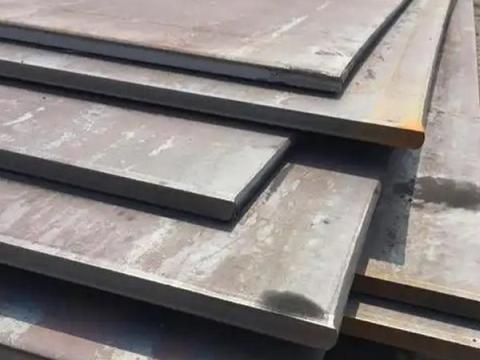
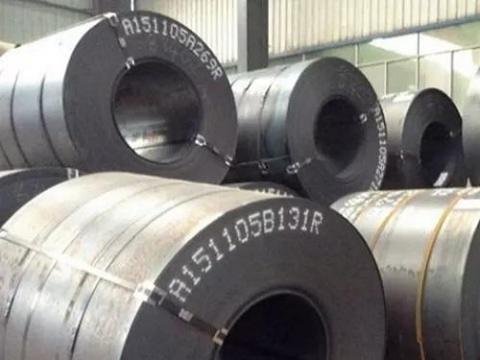
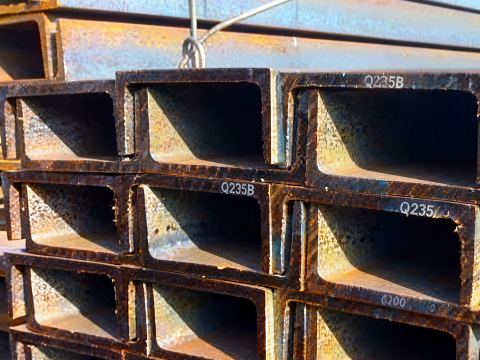
Q235A and Q235B are both called Q235. Q235 is a very common ordinary carbon structural steel with a stable yield strength of around 235MPa. It is one of the most widely used steels and plays an important role in many industrial and civilian fields. So what is the difference between Q235A and Q235B? This article will analyze and introduce from the aspects of composition, performance, and application.
Q235A and Q235B Quick Reference Table
Q235A has moderate strength, good plasticity and toughness, good welding performance, and is easy to process and shape.
Q235B Compared with Q235A, it is more stable in quality. The sulfur and phosphorus content is more strictly controlled, and it performs well in terms of toughness and impact resistance.
| Parameter | Q235A | Q235B | Differential impact |
| Carbon content | 0.14%~0.22% | 0.12%~0.20% | B-grade has better weldability |
| Phosphorus content | ≤0.045% | ≤0.045% | – |
| Sulfur content | ≤0.050% | ≤0.045% | B-grade has lower thermal brittleness |
| Impact test | not required | Impact at 20 ℃ ≥ 27J | B-class has stronger resistance to dynamic loads |
| Application scenarios | Static load structure (guardrail/bracket) | Dynamic welded components (bridges/factories) | B-level applicable safety critical structures |
According to the standard: GB/T 700-2006 (old and new numbering comparison: Q235A ≈ SS400, Q235B ≈ SM400A)
Key differences between Q235A and Q235B
1. Ingredient control: The content of sulfur and phosphorus determines life and death
Q235B has lower sulfur content (≤ 0.045%): reduces the risk of cracking during hot processing
Case: A construction machinery factory switched to manufacturing hydraulic supports using Q235B, thermal cracking failure rate reduced by 60%.
2. Impact toughness: dynamic load watershed
The Q235B Mandatory 20 ℃ Impact Test: Ensuring the Crack Resistance of Welded Structures in Vibration Environments
Fracture comparison:
Q235A: No impact requirement, prone to brittle fracture at low temperatures (with an impact energy of only 15J at -10 ℃)
Q235B: The impact energy at -20 ℃ is still ≥ 20J (preferred for steel beams in areas with low temperatures)
3. Welding performance: B-class has high cost but is worth the price
| Indicator | Q235A | Q235B |
| Cold crack sensitivity | High (requires preheating) | Low (without preheating) |
| Weld qualification rate | 92% | 98% |
4. Price
Price difference: Q235B is 8-12% higher than the market price
Common Misconceptions Cracking
Misconception 1: “A and B have the same appearance, buy cheaper! ”
Truth: B-level has “hidden skills” (impact resilience) to ensure safety in critical moments.
Misconception 2: “If it cracks during welding, it must be due to poor worker skills
Truth: Welding important structures with A-level welding is like sticking load-bearing walls with glue – material backpot!
How to choose?
After understanding their differences, the following principles can be followed in actual selection:
Priority should be given to selecting Q235B for most scenarios with potential dynamic loads (such as vibration, impact) or important welded structures. Its better toughness and stricter impurity control can significantly improve the safety and reliability of the structure. Although the cost is slightly higher, it is a necessary investment for key structures.
Application of Q235A: Q235A is usually only suitable for non critical components that only bear static loads (such as constant pressure) and have no special requirements for material toughness, such as some ordinary building supports or unimportant mechanical parts
Summary
Simply put, Q235A and Q235B have similar static strength, but Q235B has gained stronger “impact resistance” through stricter chemical composition control and mandatory impact toughness testing, making it suitable for more critical and demanding engineering environments.
I hope this comparative article can help you choose materials more clearly. If you have more specific application environment information, I can provide you with more detailed selection suggestions. Welcome to free consultation.
 English
  Русский
  العربية
  Español
  Français
  فارسی
فارسی  繁體中文
繁體中文  O‘zbekcha
  Tiếng Việt
  Українська
  Türkçe
  ไทย
ไทย  日本語
日本語  한국어
한국어  简体中文
简体中文