
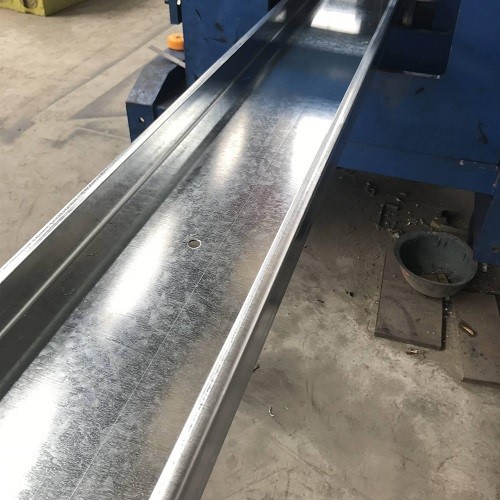
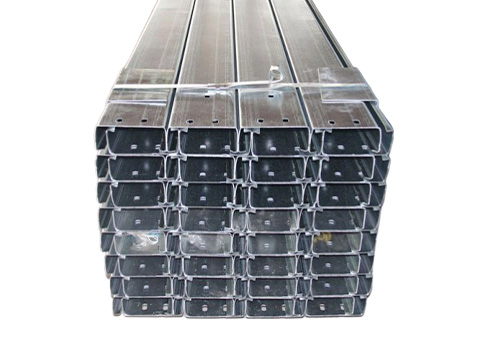
Galvanized C Shaped Steel
Width: 80 – 300mm or customizable
Thickness: 1.5 – 3.0mm
Coating: 30g/m² – 275g/m²
Galvanized C shaped steel carries roof and wall sheeting on light steel frames, and buyers find it under several names. C purlin, C section, lipped channel and Cee section all describe the same cold formed profile with two flanges and a small return lip on each. Wanzhi Steel supplies the material and forming work behind these sections. Most of the back and forth before an order comes down to the section callout. Once that line is right, the rest of the quotation follows. Numbers here are public industry ranges rather than stock figures; the drawing and the mill certificate settle the order.
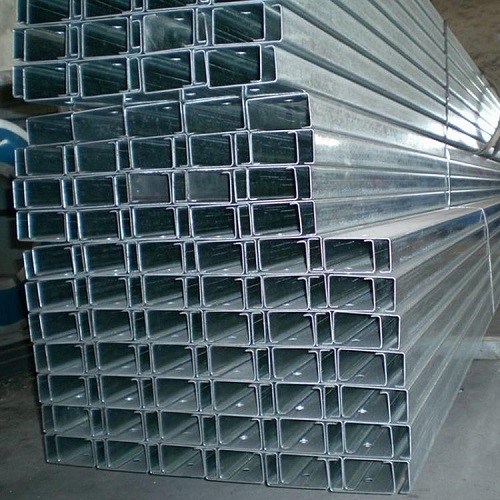
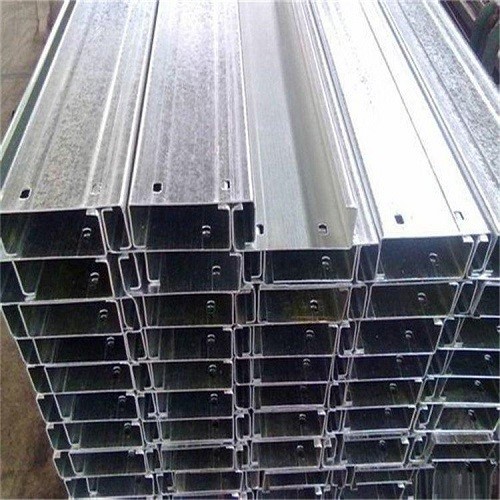
What galvanized C shaped steel is?
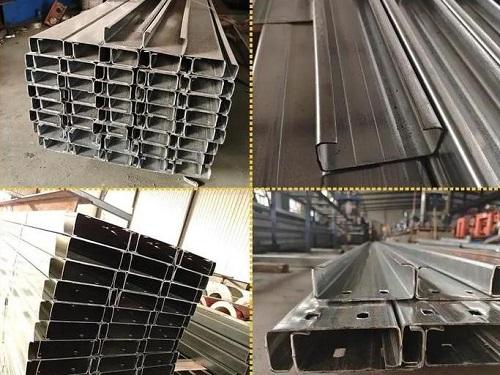
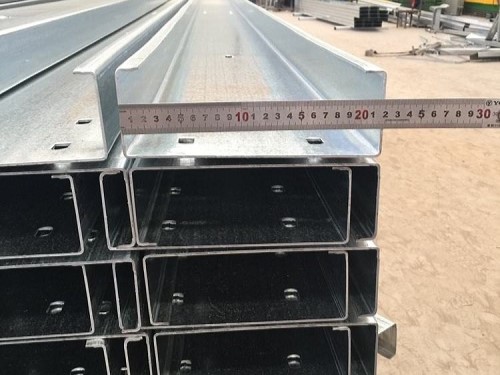
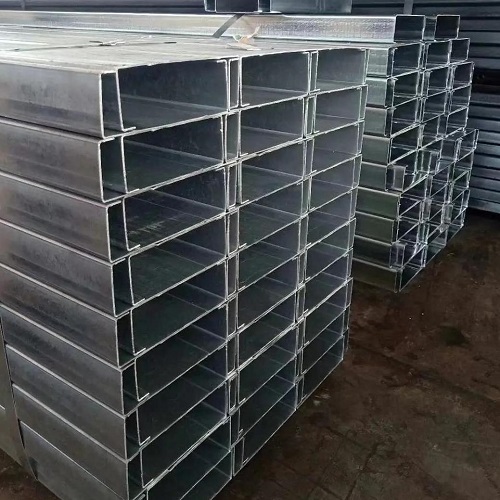
Galvanized C shaped steel is a cold formed section rolled from zinc coated strip at room temperature. The web gives the depth, the two flanges carry the sheeting, and the small inturned lips stiffen the free edges against local buckling. Hot rolled channel steel is thicker and heavier, with tapered flanges and no lips; cold formed C sections use thin strip efficiently and arrive cut to length and punched where the drawing asks.
how the profile is formed
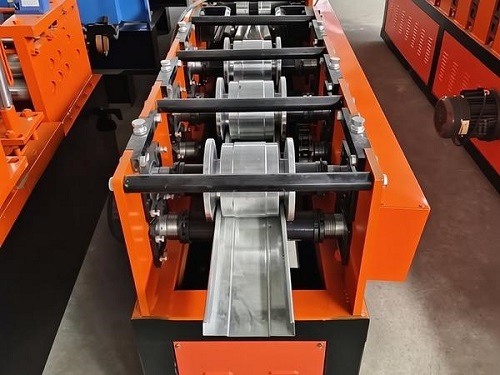
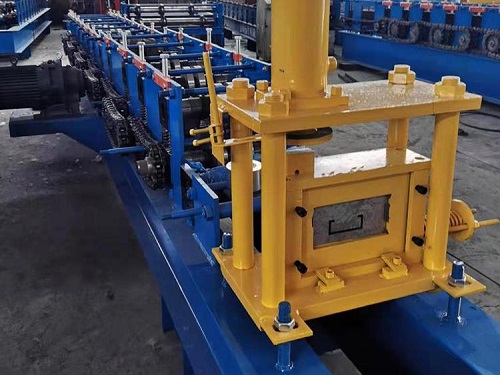
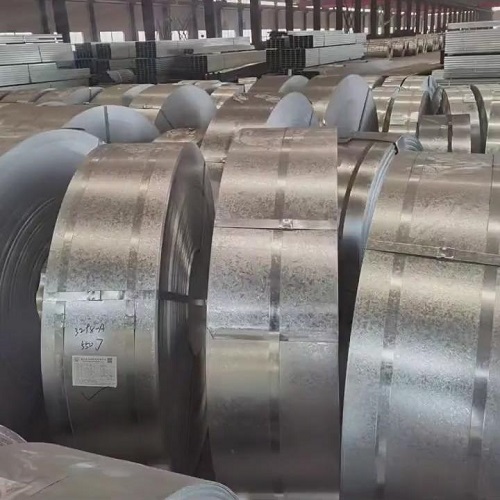
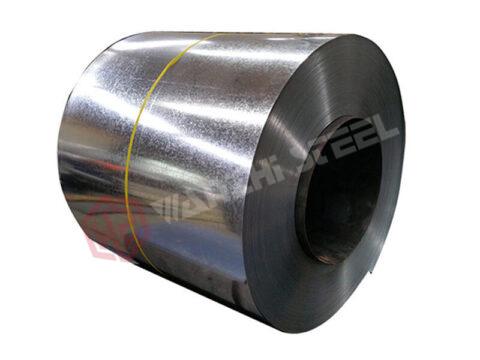
Production starts with slit galvanized coil. Roll stands bend the strip progressively into the C shape, a flying saw trims it to length, and a punching unit adds cleat or service holes before the bundle is strapped. Nothing is heated, so the zinc coating applied at the mill stays intact through forming. Our galvanized strip steel page lists the strip widths and coating masses used for this kind of work, including bending and punching as processing services.
reading a section callout
Section callouts follow the order web depth, flange width, lip length and thickness, for example C200 x 60 x 20 x 2.0 in millimetres. Buyers mix this up more often than any other part of an enquiry, partly because some suppliers drop the lip from the string. Ask for a section drawing with the callout, since two sections sharing the same depth and thickness can carry different loads once the lip angle and corner radii change.
ndustry size and coating ranges
Supplier pages we checked while writing this quote different weights for the same nominal section. Treat the figures below as what the market commonly quotes rather than a stock list. Project drawings, the applicable standard and the mill certificate decide the delivered section.
| Dimension | Range buyers commonly quote |
| Web depth | 80 to 300 mm |
| Flange width | 40 to 100 mm |
| Lip length | 10 to 25 mm |
| Толщина | 1.5 to 3.0 mm |
| Длина | 6 m or 12 m, cut to order |
| Цинковое покрытие | Z180 to Z275 g/m2, or G60 to G90 |
Deep sections above 250 mm suit longer spans, while the 80 to 140 mm range covers wall girts and door framing where a lapped Z section cannot be formed. Coating class follows exposure rather than price alone, and the zinc coated steel page explains how the coating is applied.
dimensions buyers quote
Most enquiries name a depth, a flange and a thickness, then leave the lip to the fabricator. That is worth correcting in the first reply, because lip length changes the torsional stiffness of the whole section. Pre-punched holes also reduce the net section locally, so the hole pattern belongs in the same line as the callout.
coating classes in enquiries
Z180 and Z225g/m2 appear in dry inland work, while Z275 or G90 is the usual request for coastal, humid or industrial sites. G60 is the lighter ASTM naming, G90 the heavier one. Our Z275 galvanized sheet и ASTM A653 G90 pages explain how those classes are measured; neither number replaces a coating test on the delivered bundle.
How C and Z sections differ
| Point | C section | Z section |
| Span | Single span, simply supported | Lapped over supports, continuous |
| Where it fits | Eaves, openings, wall girts, short roofs | Long multi-bay roofs |
| Fixing | Sits flat on cleats, butt joint at frames | Overlapped and bolted at the splice |
| Small sizes | Available from about 80 mm web | Geometry limits the shallow end |
C sections cannot nest into one another, so each length spans between two frames. Z sections lap over the support and behave as a continuous member, which is why long warehouse roofs tend to be specified in Z. Both profiles turn up on the same building more often than buyers expect. The engineer reading the span and load makes that call. Our steel profiles overview places these sections alongside hot rolled beams.
where each profile fits
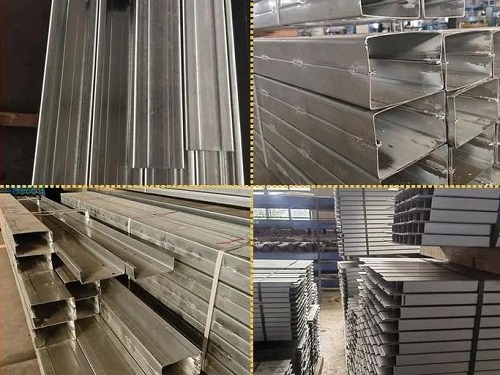
Wall girts, mezzanine joists, door and window framing and eaves usually end up in C. Continuous roof runs go to Z. Buyers sometimes ask for one profile across the whole frame to simplify purchasing; that works on small sheds, but it can add steel on a long roof.
Grades and standards buyers name
Sections are only as strong as the strip they are formed from, so the grade line in the enquiry matters more than the profile name. European jobs commonly call for S350GD or S450GD under EN 10346, US jobs for ASTM A653 structural grades, and Australian jobs for G450 to G550 under AS 1397. Chinese drawings often name Q235B or Q355B. Design checks sit under EN 1993-1-3, AISI S100 or the local cold formed code.
matching the grade to the design
Our S350GD coil page states a minimum yield strength of 350 MPa and lists widths of 600 to 1500 mm with Z30 to Z275 coatings. It also says the grade is roll formed into C, Z and U sections for purlins and photovoltaic frames. Higher grades allow a thinner section on the same span, but only when the design permits the reduced thickness.
standards worth naming in the RFQ
Put the material standard, the coating standard and the design code on the enquiry as separate lines. Inspectors then know which document governs coating mass, which governs yield strength, and which governs the section check. Our Q235B vs Q355B guide и Q235B channel pages cover the grade side of that conversation.
zinc coating and service life
Zinc protects the strip in two ways. It forms a physical barrier that keeps moisture off the steel, and it corrodes preferentially wherever the coating is scratched or cut. Britannica’s galvanizing entry describes both mechanisms, and the American Galvanizers Association publishes technical guidance on coating life and wet storage stain.
why zinc keeps working
Coating mass, not coating appearance, drives the service life of an outdoor purlin. Spangle pattern tells you almost nothing about durability. Dry indoor framing can run on a lighter class, while coastal air, de-icing salt and humid process buildings justify the heavier end of the range. The SGCC sheet page shows a second common naming system for the same coated strip.
cut edges, holes and storage
Cut ends and punched holes expose bare steel at the exact spots where water collects. Touch-up paint or a zinc rich repair compound closes those spots after fabrication. Bundles also need ventilation during shipping and storage, since trapped water leaves a white wet storage stain that looks like coating failure but is usually surface oxidation.
Where the sections are used
Roof purlins and wall girts take most of the tonnage in portal frame workshops, warehouses and logistics halls. The same profile shows up in mezzanine joists, canopy frames, greenhouse structures and solar mounting rails. Buyers in the cladding trade often order it alongside оцинкованная катушка or SGCC sheet and coil so the whole envelope comes from one mill.
roof and wall framing
Purlin spacing follows the cladding and the load, not the section depth alone. Sag rods or bridging keep long slender lines upright under sheeting. Engineers check bending, shear, local buckling and the cleat connection before anyone signs off a section table. The H beam vs I beam comparison covers the primary frame behind these secondary members.
solar, racking and light structures
Photovoltaic frames use short C lengths as rails and cross members, often with a pre-punched hole pattern repeated across hundreds of identical pieces. Rack makers and warehouse shelving suppliers ask for the same repeatability, which is where cut length tolerance and punching accuracy start to matter more than price per tonne.
How to specify and check an order
Comparable quotations need the section callout, the grade, the coating class, the lengths and quantities, the hole pattern, the end cuts and the destination port. Leave one of those out and suppliers will fill the gap with assumptions, which makes the bids impossible to compare. The weight calculator helps turn a purlin schedule into an approximate tonnage before you send it.
what to put in the enquiry
Send the section drawing with the lip dimension and corner radius marked. State whether cleats, bolts and sag rods are in scope. Name the inspection documents you expect, since a mill test certificate and a third party coating report are different things with different lead times. Our galvanized coil case study shows the batch paperwork a distributor asked for on a large order.
what to check on delivery
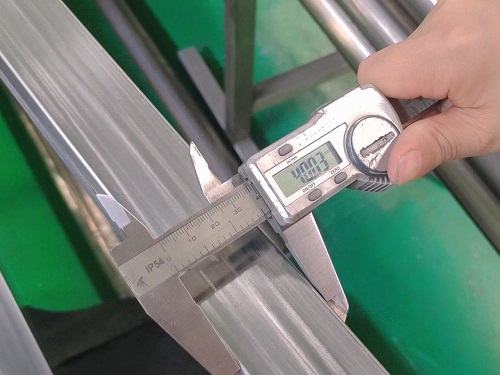
Measure web depth, flange, lip and thickness against the drawing, then check coating mass with a magnetic gauge. Look for bare spots, peeling, sharp burrs and straightness across the bundle. Match the heat numbers on the bundles to the mill certificate before the material goes into the frame. The galvanized and stainless mixing guide is worth reading when fasteners come from another metal.
How Wanzhi supplies C sections
Wanzhi Steel works from the material side of this product. We produce оцинкованная катушка и galvanized strip in-house, and the strip line lists bending, cutting, welding and punching as processing services. Forming C sections from that strip keeps the zinc coating, the grade and the paperwork in one supply chain, which is the part buyers usually struggle to trace when coil and roll forming come from two vendors.
material and forming in one place
Our galvanized strip steel page lists 0.12 to 2 mm thickness, 50 to 600 mm width and 30 to 275 g/m2 coating, while the S350GD coil page lists 0.5 to 4.0 mm and 600 to 1500 mm. Those are input ranges for the sections described above, not a C section stock list. Section callouts, punching and packing are confirmed against your drawing in the quotation.
sending an enquiry
Send the section callout, span and load, coating class, lengths and hole pattern through our contact page, and we will come back with a quotation and the mill certificate scope. Stock, minimum order quantity and lead time depend on the section and the coil lot, so they are confirmed at quotation rather than published here. Our all products page shows the rest of the galvanized and profile range.
Часто задаваемые вопросы
What is galvanized C shaped steel used for?
Roof purlins, wall girts, mezzanine joists, canopy frames, greenhouse structures and solar mounting rails. It carries the cladding load back to the main frames.
Is a C purlin the same as a C channel?
Buyers use both names for the cold formed lipped section, though C channel sometimes means a strut channel or a hot rolled channel. Ask for a section drawing before comparing quotes.
What sizes are commonly available?
Web depths from 80 to 300 mm, flanges from 40 to 100 mm, lips from 10 to 25 mm and thicknesses from 1.5 to 3.0 mm are the ranges most public supplier tables quote. Your drawing governs.
Which zinc coating should I specify?
Z180 or Z225 suits dry inland work. Z275 or G90 is the usual choice for coastal, humid or industrial exposure. Coating mass is measured on both surfaces together.
Ordering questions buyers ask
When should I choose a Z purlin instead?
Long continuous multi-bay roofs suit Z sections because they lap over supports. C sections suit single spans, wall girts, eaves and openings, and the shallow sizes below about 140 mm web.
How is the weight per metre worked out?
Weight follows the cross-sectional area of the formed section multiplied by the density of steel. Published tables disagree on nominal geometry, so confirm the net weight on the mill certificate.
Can sections be punched and cut to length?
Yes. Roll forming lines add cleat or service holes and cut to the requested length before packing, provided the hole pattern is on the drawing. Punched holes reduce the net section locally.
What should a mill certificate show?
It should carry the grade, heat number, chemical analysis, mechanical properties, coating mass and dimensional results for the delivered lot. Compare the bundle labels with the certificate on arrival.
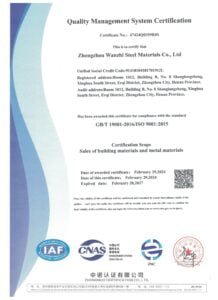
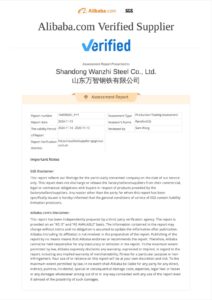
Our Certificates



Get a Free Quote
Ready to source high-quality galvanized corrugated sheets for your project? Wanzhi Group provides:
- Competitive factory-direct pricing
- Custom specifications tailored to your project
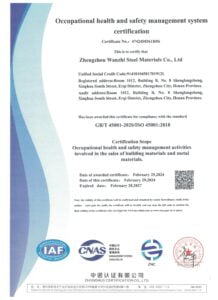
- ISO9001/CE/SGS certified quality
- Fast global shipping to 120+ countries
Contact us today:
- Email: [email protected]
- WhatsApp: +86 18736065220
- Website: wanzhisteels.com
Our experienced sales team will respond within 24 hours with a detailed quotation, including product specifications, pricing, and delivery timeline.
Горячие теги: galvanized C purlin, C section dimensions, C purlin vs Z purlin, Z275 C purlin, galvanized C channel supplier, C purlin RFQ checklist


 English
 Русский
 العربية
 Español
 Français
 فارسی
 繁體中文
 O‘zbekcha
 Tiếng Việt
 Українська
 Türkçe
 ไทย
 日本語
 한국어