
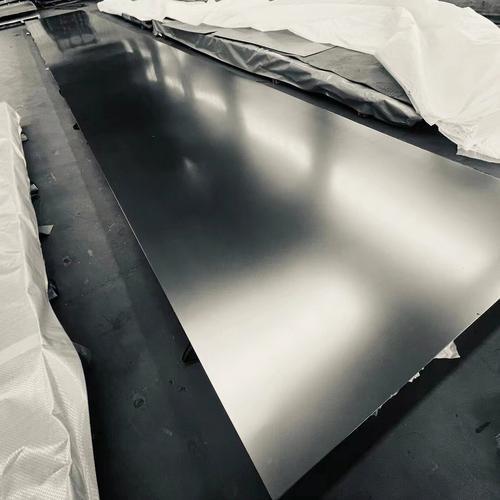
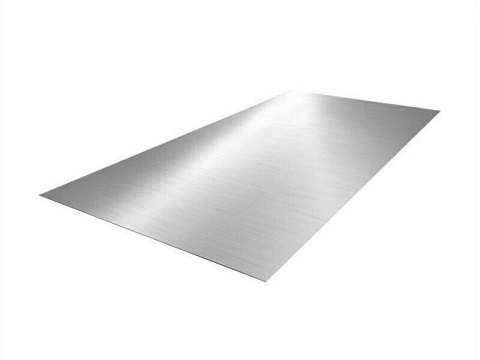
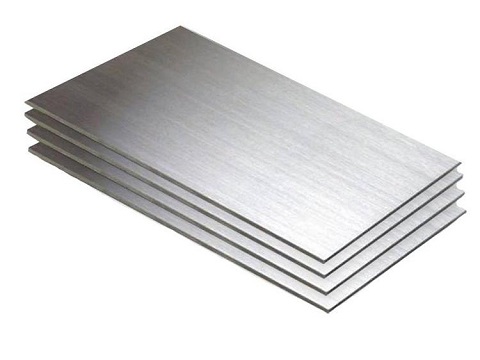
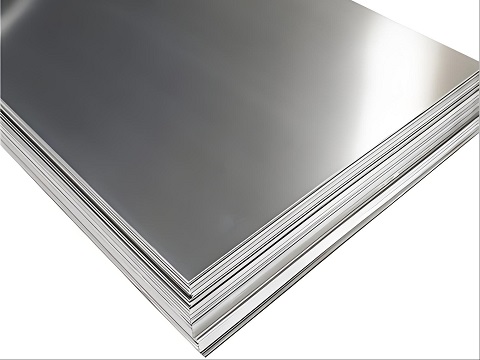
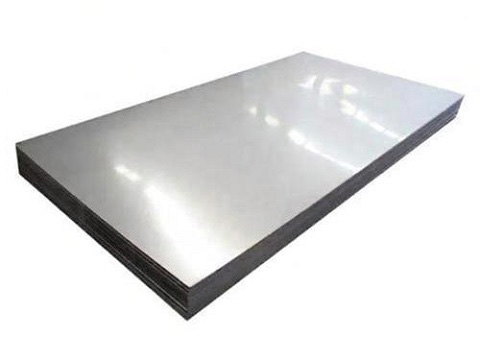
Marine grade stainless steel sheet
Ancho: 600-1250 mm o personalizable
Thickness: 0.13-6.0mm
Estilo de diseño: Personalizable
This page covers what makes 316 the marine grade, what chemistry and strength to expect, what sizes sheet comes in, and how to order it. The numbers come straight from our stock list, so you can turn them into an RFQ as you read.
Key takeaways
- Marine grade means 316 stainless steel: UNS S31600 / 1.4401, with 2 to 3% molybdenum for chloride resistance.
- PREN (pitting resistance) runs about 24 to 26 for 316, against 18 to 20 for 304. That gap is the whole point.
- Our sheet runs 0.1 to 6.0 mm thick, 600 to 1200 mm wide, cut to 1 to 12 m, in No.1, 2B, BA, HL and No.4 finishes.
- 316L (carbon ≤ 0.03%) is the pick for anything welded. Above about 6 mm, buyers default to it.
What is a marine grade stainless steel sheet?
“Marine grade” is a trade nickname, not a standard name. When buyers use it, they mean 316 stainless steel in sheet form: cold-rolled flat product, 3 mm thick or under, with a surface ready for cladding, fabrication or further polishing. On a purchase order you should always write the standard instead: ASTM A240, type 316 (or EN 10088-2, 1.4401).
The chemistry is the familiar austenitic family recipe plus molybdenum. Chromium builds the passive layer, nickel keeps the structure austenitic and formable, and molybdenum blocks the chloride attack that causes pitting. That last element is what separates this grade from 304 and gives the “marine” label its meaning.
Why chlorides decide the grade
Salt delivers chloride ions, and chloride ions break down the chromium oxide film that makes stainless “stainless”. Once the film breaks locally, pitting starts. Molybdenum makes the passive film far harder for chloride to penetrate, so a marine grade stainless steel sheet survives salt spray, brackish water and coastal air that would stain 304 within a season or two.
A note on names
You will see 316 called A4, 1.4401, S31600 or 06Cr17Ni12Mo2 depending on the standard system. All of them describe the same alloy. Our full 316 stainless steel product page maps the grade names across ASTM, EN and GB systems.
The chemistry: what the molybdenum does
The table below is the ASTM A240 window for 316 and 316L, in percent by weight with iron as the balance. The British Stainless Steel Association publishes a full comparison of the 304/316 and L-grade ranges if you need the European cross-references.
| Element | 316 | 316L |
| Chromium (Cr) | 16.0 – 18.0 | 16.0 – 18.0 |
| Nickel (Ni) | 10.0 – 14.0 | 10.0 – 14.0 |
| Molybdenum (Mo) | 2.0 – 3.0 | 2.0 – 3.0 |
| Carbon (C) max | 0.08 | 0.030 |
| Manganese (Mn) max | 2.0 | 2.0 |
| Silicon (Si) max | 0.75 | 0.75 |
| Phosphorus (P) max | 0.045 | 0.045 |
| Sulfur (S) max | 0.030 | 0.030 |
316 or 316L: decide by welding
The only difference is carbon. Weld a thick section in standard 316 and the heat-affected zone can lose chromium to carbon, a failure called sensitization that leaves the seam open to rust. 316L caps carbon at 0.030% and removes that risk. In our experience most buyers move to 316L once thickness passes about 6 mm or the job involves heavy fabrication, and the price gap is small. The same logic applies to tubular goods; see our 316L stainless steel pipe page.
Corrosion resistance: the numbers behind “marine grade”
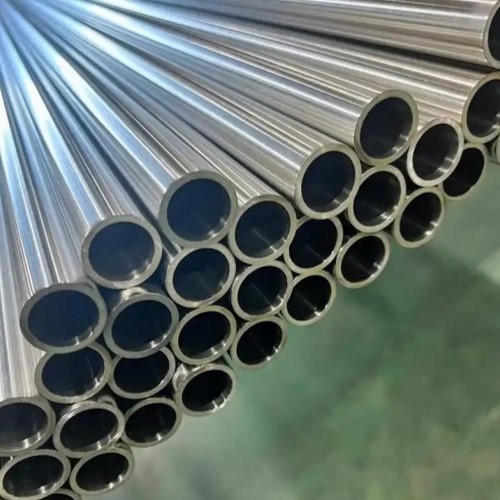
Buyers compare grades with PREN, the pitting resistance equivalent number. It weights chromium at one and molybdenum at about 3.3, so 316 scores roughly 24 to 26 against 18 to 20 for 304. That difference is what keeps a marine grade stainless steel sheet free of pitting in salt spray chambers and, more importantly, on real coastlines.
In practice, 316 handles:
- Salt spray and splash zones on coastal and offshore structures
- Brackish water in desalination and water treatment plants
- Many organic acids and dilute inorganic acids in chemical service
- Chloride-bearing cleaning chemicals in food and pharma plants
Where 316 still needs care
No stainless survives bad detailing. Warm, stagnant seawater and crevices under gaskets or fouling can still pit 316, and full immersion in warm seawater is a job for duplex 2205. Cut edges should be dressed and passivated, fasteners should be matching 316 so galvanic corrosion has nowhere to start, and horizontal faces should drain. Get those three things right and the sheet lasts decades.
Mechanical and physical properties
These are the ASTM A240 minimums for annealed 316 at room temperature. Your mill test certificate shows the actual results for the heat you receive.
| Property | Value |
| Tensile strength | 515 MPa min (316), 485 MPa min (316L) |
| Yield strength (0.2% offset) | 205 MPa min |
| Elongation | 40% min |
| Dureza | 217 HB max |
| Density | 8.00 g/cm³ |
| Melting range | 1375 – 1400 °C |
Two numbers are worth memorizing. Density of 8.00 means you can price any flat product in your head: thickness in mm times 8.00 gives kg per square metre, so a 3 mm marine grade sheet runs about 24 kg/m². And 40% minimum elongation is why the sheet forms cleanly into pressed panels, rolled cylinders and deep draws without cracking.
Working temperature
316 performs from cryogenic temperatures around -196 °C up to roughly 800 °C for short-term exposure. For sustained high heat with welding, a stabilized grade such as 321 holds up better.
Sizes: what a marine grade stainless steel sheet costs and weighs
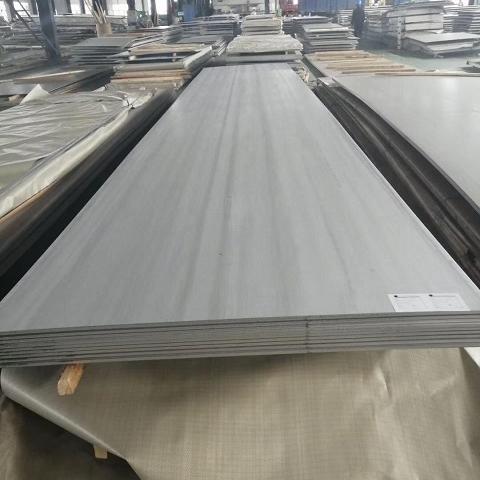
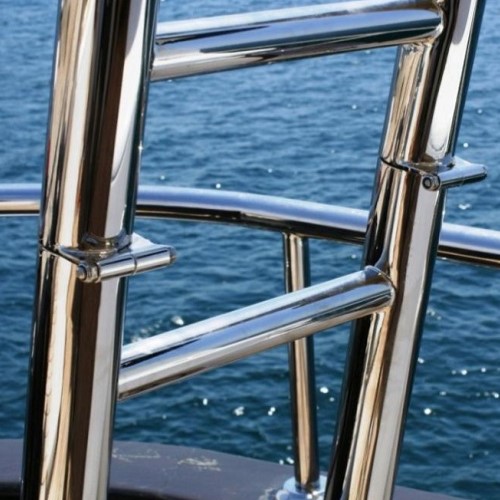
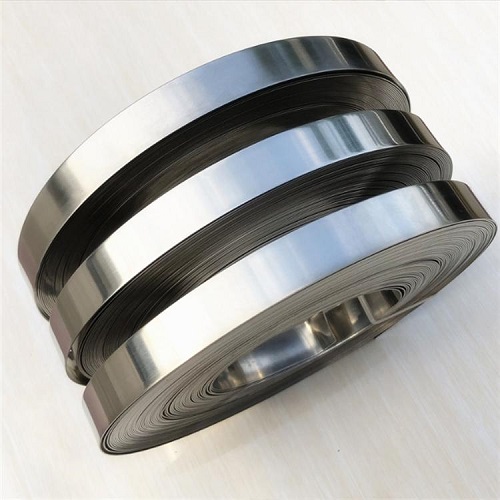
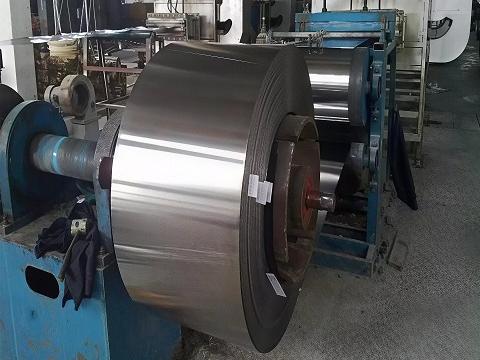
Our 316 stainless steel sheet stock runs:
- Thickness: 0.13 to 6.0 mm
- Width: 600 to 1250 mm
- Length: 1 to 12 m, cut to order
- Finishes: No.1, 2B, BA, HL and No.4
- MOQ: 15 tons;
- Delivery: 7 to 15 days after deposit
Weight quick reference
Weight = thickness (mm) × 7.93 kg/m², before cutting.
| Espesor | Weight (kg/m²) | Sheet 1200 × 3000 mm |
|---|---|---|
| 1.5 mm | 11.895 | 42.822 kg |
| 3 mm | 23.79 | 85.644 kg |
| 4 mm | 31.72 | 114.192 kg |
| 6 mm | 47.58 | 171.288 kg |
Sheet vs plate: the 3 mm line
The alloy does not change at 3 mm, the form does. Under 3 mm the material is cold-rolled sheet with tight tolerances and clean sheared edges; over 3 mm it is hot-rolled plate with torch or plasma cut edges. If your part is thick, load-bearing or welded into a vessel, our 316 stainless steel plate page covers 3 to 120 mm stock, and we cut to drawing.
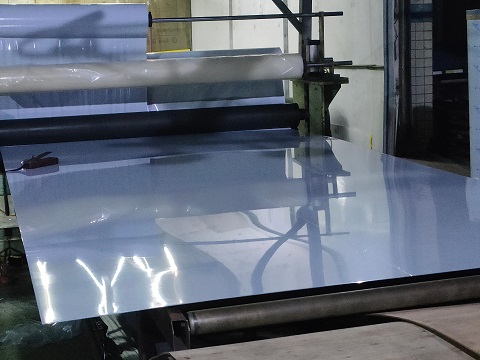
Surface finishes for marine work
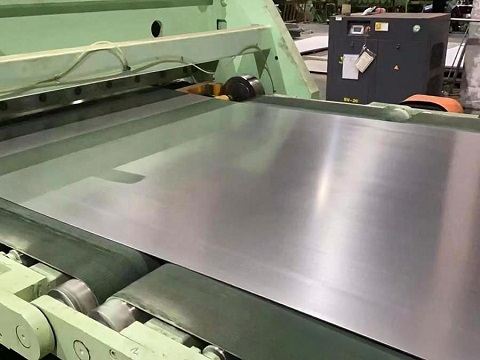
The finish changes the face, not the alloy. For a marine grade stainless steel sheet the usual choices are:
| Finish | How it is made | Typical marine use |
| 2B | Cold rolled, annealed, pickled, light pass | Liners, hidden faces, base for polish |
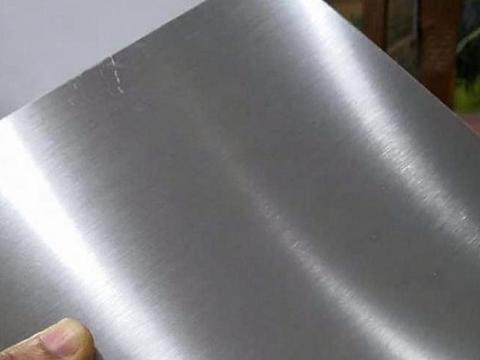
| No.4 | 2B brushed with 150-240 grit belts | Public-facing panels, kitchens, railings |
| BA (2R) | Bright annealed in low-oxygen furnace | Decorative trim, reflective panels |
| HL | Fine long-grain brushing | Premium architectural cladding |
| No.1 | Hot rolled, annealed, pickled | Industrial faces, plate default |
Two practical points. First, No.4 hides fingerprints and light scratches far better than BA, which is why it dominates marine hardware and cladding that people touch. Second, any brushed or polished face should be passivated after finishing to rebuild the chromium layer. We passivate No.4 and BA before packing. Our stainless steel surface finish guide compares roughness values and cost adders in detail.
Where marine grade stainless steel sheet gets used
Anywhere salt is part of the environment, this sheet shows up:
- Boat and yacht fittings: cleats, rails, hardware, interior panels
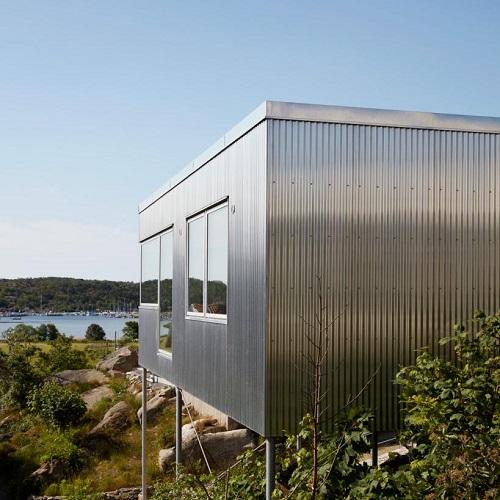
- Coastal architecture: cladding, curtain walls, roofing accents, balustrades
- Offshore platforms: walkways, enclosures, handrails, cable trays
- Desalination and seawater intake equipment
- Port machinery panels, control cabinets and enclosures
- Marina pontoons and dock hardware
- Food and pharma plants using brines or chloride cleaners
The pattern is simple: the closer to salt, the stronger the case for 316 over 304. For inland, fresh-water or indoor work, 304 stainless steel sheet is the more economical call and we supply it in the same finishes.
316 vs 304 vs 316L: the one-table comparison
| Point | 304 | 316 | 316L |
| Molybdenum | none | 2-3% | 2-3% |
| Carbon max | 0.08% | 0.08% | 0.030% |
| PREN | ≈ 18-20 | ≈ 24-26 | ≈ 24-26 |
| Salt spray / coastal | stains | holds up | holds up |
| Heavy welding | use 304L | sensitization risk | safe |
| Relative cost | baseline | +10-20% | +10-20% |
The short version: salt exposure moves the job from 304 to 316, heavy welding moves it from 316 to 316L, and everything else is budget. If a project sits on the boundary, price both grades; the 316 premium is usually smaller than one repaint cycle on rust-stained 304.
How to order: RFQ checklist
Send us these points and we quote the same day:
- Grade: 316 or 316L, to ASTM A240 or EN 10088-2
- Thickness, width and length, or a drawing for cut-to-shape work
- Finish: 2B, No.4, BA, HL or No.1
- Quantity, edge work, holes or bending
- Certificates: EN 10204 3.1 MTC is standard; SGS or BV inspection on request
- Destination port
Stock sizes ship within a week; special thicknesses and finishes run three to five weeks including rolling and certification. Our ASTM A240 certified stainless steel sheet page explains the MTC and PMI process step by step.
Ready for a price? Send your spec through the contact page and we will return a per-ton quote with MTC terms included.
Preguntas frecuentes
Is marine grade stainless steel the same as 316?
In practice, yes. Marine grade is a nickname; the alloy behind it is almost always 316 or 316L. Ask for ASTM A240 type 316 on the PO so the standard, not the nickname, governs the supply.
Will a marine grade stainless steel sheet rust?
Localized rust is possible in warm stagnant seawater, under gaskets, or where carbon steel particles contaminate the surface. Good detailing and passivation prevent nearly all of it. Light staining from iron pickup is a surface issue, not a grade failure.
Is 316 sheet food safe?
Yes. 316 is standard in food, dairy and pharma plants because it cleans well and tolerates chlorides in brines and cleaning chemicals. No.4 is the usual finish on product-contact faces.
316 or 316L for welded panels?
316L. The low carbon stops sensitization at the weld seam, the main corrosion risk on fabricated 316. Past about 6 mm thickness we quote 316L by default.
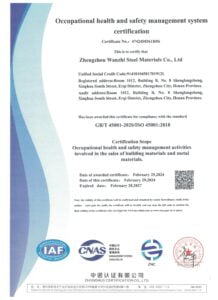
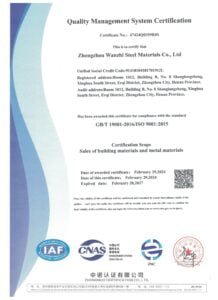
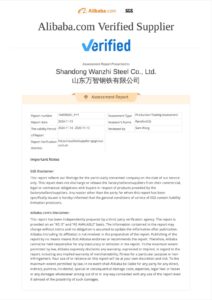
Our Certificates


Customer Affirmation

Contacto
WhatsApp: +86 18736065220
E-mail: [email protected]
Website: https://wanzhisteels.com
FábricaCiudad de Binzhou, provincia de Shandong, ChinaArtículo de lista
Compañíadistrito, ciudad de Zhengzhou, provincia, China
Etiquetas populares: 316 stainless steel, 316L, 316 stainless steel sheet, SS316 sheet, Marine grade stainless steel sheet manufacturers suppliers, factory, price, for sale
 English
 Русский
 العربية
 Español
 Français
 فارسی
 繁體中文
 O‘zbekcha
 Tiếng Việt
 Українська
 Türkçe
 ไทย
 日本語
 한국어
 简体中文